Thursday, 24 July 2014

Roots Psychedelia: There's More to Psychedelic Music Than Sounding Like The Black Angels (Editorial)


In my recent interview with Nik Rayne of Sky Lantern Records, we spoke of the label's response to current psychedelia as a whole, and touched upon what is happening in the modern psychedelic scene - "in some ways [the label was] a specific response to what I've seen happening in the field of contemporary psychedelia, which is an extraordinary general collapse into banality". Now whilst I don't totally agree with this analysis, the current scene including many thousands of acts, all with a slightly different take on what it means to be a 'psychedelic band', Nik's comment did get me thinking about what it means to sound generally psychedelic.

Nowadays, depending on the school of thought you subscribe to, an opinion of what classifies something as 'psychedelic' could vary quite massively from person to person. My understanding is that originally what classified something as 'psychedelic' was more easily identifiable - if you were to produce something weird that didn't sound like the general rock music of the day, it was considered unconventional, and that unconventionality was (or thought to be) brought about by the use of psychedelic substances, such as LSD (hence the term 'Psychedelic music' was derived).

However, as the years have progressed, and the psychedelic scene has both flourished, and fallen into disrepair at certain points, the definition of 'psychedelic music' has become considerably hazier. Some feel that to be psychedelic means the same as it always has 'someone who indulges in psychedelic, and other hallucinogenic drugs, and then creates music of this' -  a band like the Brian Jonestown Massacre would fall into this definition, the band's leader, Anton Newcombe, often citing his use of illegal substances in the creation of the band's albums. In contrast though, some feel that psychedelic drugs actually have little to do with the music itself, and that the music is the drug - A psychedelic state can be brought about by certain sonic qualities in the music itself, and can (but, not necessarily) render the need for often illegal, and sometimes dangerous, drugs useless. For example: a band whom have advocated this in certain interview include the psychedelic statesman themselves, The Black Angels. 

Whilst there are other schools of thought about, (please feel free to comment your own opinion in the section below, or on Facebook's comment section) these are the two main ones I have heard of. I myself fall into the latter category, tending to see the creation of psychedelic music as a resource that any one can enjoy, no matter whom they are, without the necessary need for additional substances. This definition can as a result encompass a much larger range of music, due to the fact that the music itself then becomes a personal experience, and not a set of followed rules in it's creation. In a sense, most music created with the idea of helping the listener transcend into a metaphysical state (essentially experiencing a theme or motif as delivered by the vehicle of sound) can be considered 'psychedelic'.  

So to get the crux of the matter, bearing all this previous information in mind, I feel I understand the malaise Nik feels at the some of the things happening in the current psychedelic scene. I good deal of band's trying to enter the world of modern psychedelia seem to feel like there is a 'right' and a 'wrong' way to make psychedelic music. Many seem to believe to sound like a good psychedelic band you need to turn the reverb up, put on as much delay as possible, and light up a joint and write down whatever nonsensical gibberish comes to mind.  Although none of the techniques are at all 'unpsychedelic', this way of approaching the music misses the point of psychedelic music, and lacks creativity, and understanding. 

Psychedelic music does not need any of the aforementioned to be credible, or considered 'good', it is all about the experience. Innovation, and a desire to work outside the box, is needed if you truly wish to connect with the listener and make them feel the feelings you desire for them to feel. Inevitable stagnation and decline lies ahead of us on the road to psychedelia if we do not reconnect with the core principles of the art form. It is an abstract thought, and tool of communication, and as such, cannot be approached with an underlying sense of conventionality. 

Going back to the original point, I chose to name this post 'Roots Psychedelia' because it is one of the shining examples of how unconventionality is the key tool in the psychedelic musicians bag. Artists such as Montibus Communitas, Kikagaku Moyo, and Sheldon Siegel, offer an incredible example of how many pivotal elements of what may be considered the most 'far-out' psychedelic bands by some can actually be totally unneeded (not to say they are universally redundant, though) - e.g: Reverberated electric guitars, Farsifa organs, ect. 

To conclude, to prevent banality in the modern psychedelia, listeners and musicians alike need to realise that psychedelic music isn't a specific sound that can just be tapped into with a set of key elements. It is an abstract concept that anyone can create.  Any person, or set of people, can only be truly psychedelic in the music they create if they realise this. To embrace psychedelia is to want to convey an experience, and put most simply, to share with another a communication of honesty, innovation, and truth. 

Do You Even Psychedelic would like to thank you for being with us this evening, we hope that in some small way we gave been able to add to your pleasure, comfort, and relaxation. 

Picture credit: Montibus Communitas - Pilgrim to the Absolute (album cover)


Written by Daniel Sharman on 20/7/2014.

Friday, 18 July 2014

Sky Lantern Records Interview with Nik Rayne!


Earlier this year Nikolas Rayne, of the Myrrors fame (see our earlier interview with Nik about the Myrrors here), opened a new, independent called Sky Lantern Records. This new label aims to seek out the most rootsy, and raw, psychedelia currently around. Some of the current acts out on the Sky Lantern roster are folk-collective, Montibus Communitas, Japanese psych-rock outfit, Kikagaku Moyo, and Swedish garage band Centralstödet. More fantastic bands are promised to be sourced, so make sure to like the Facebook page as soon as possible to keep up to date, and to check the label's Soundcloud, and Bandcamp, pages too, so you don't miss any new pieces when they go up.

-----------------------------------------------------------------------------------------------------------

Dan: Most people know you from your band the Myrrors, but now you've started 
your own label, Sky Lantern Records. When did it begin, and why did you choose to start a label?

Nik: I started Sky Lantern earlier this year pretty spontaneously, though the idea had been in the back of my mind for several years. I'm a pretty intensive music listener, and it has always seemed as though I was discovering these little gems of music buried beneath the weight of a capitalist music industry. There are so many wonderful artists at work around the world who rarely get heard because their music does not operate on anyone else's terms.

As far as the label becoming what it did, it was in some ways a specific response to what I've seen happening in the field of contemporary psychedelia, which is an extraordinary general collapse into banality.


Dan: The label seems to be slanted towards a desert-like, almost wild sound, putting out bands with very instrumental and fluid styles. Does the label have any specific aim with the music it chooses to release?

Nik: The other day I was joking with Brayan from Montibus [Communitas] that we're starting a new movement: the New Organic Music Society, or “environmental psychedelia.” Perhaps more than anything, the music I gravitate towards is that which exudes an honest, natural spirit. That isn't to say I prefer acoustic music - Centralstödet is a good example of how a heavy, electric ensemble can tap into something raw and earthy. Honesty and improvisation, I think, play a good part in that, as does a musician's ability to function as a concentrated reflection of their natural environment.


Dan: How do you find bands for the music you release?

Nik: The internet is, of course, an invaluable resource, especially when it comes to discovering low-profile international artists. A lot of the musicians I have been in contact with, however, have actually been directed to me by other artists!

Dan: How does the collaboration between the label and band usually work?

Nik: It's a back and forth process, though Sky Lantern is a pretty hands-off label when It comes the music we release. As per the old ESP-Disk philosophy, “the artists alone decide what you will hear.”


Dan: All your current releases have a very distinct, 'collect-them-all' art style, who does the designs for the records?

Nik: I'm a big fan of labels with a distinct identity to them, from early free jazz labels like BYG Actuel and ESP-Disk to contemporaries like Sloow Tapes. As such, I knew when I started Sky Lantern that I wanted to create an immediate artistic statement that would carry that tradition while also emphasizing the organic roots that I mentioned earlier. All four of our first tapes were drawn and designed by myself in collaboration with the artists, though for our forthcoming batch the artists have come up with some of their own illustrations in the same spirit.

Dan: When it comes to the perfect medium...Cassette, vinyl, or CD, and why?

Nik: Vinyl, but it's expensive. Presuming that the label manages to get its economic feet off the ground in the near future, I absolutely plan to move in that direction, but as it stands I'm operating on a pretty non-existent budget, and for those purposes I've stuck to releasing tapes. Not only does the format allow me to release a variety of albums in small runs, but it is also very affordable for fans. Six dollars is even cheaper than most digital albums are priced, and there is a free download of each Sky Lantern tape included in the purchase! Even if you don't have a cassette deck then you at least get something physical to go along with the music tucked away on your hard drive.


Dan: As a man who puts out records, you must have some of your own, what are some of your most prized record possessions?

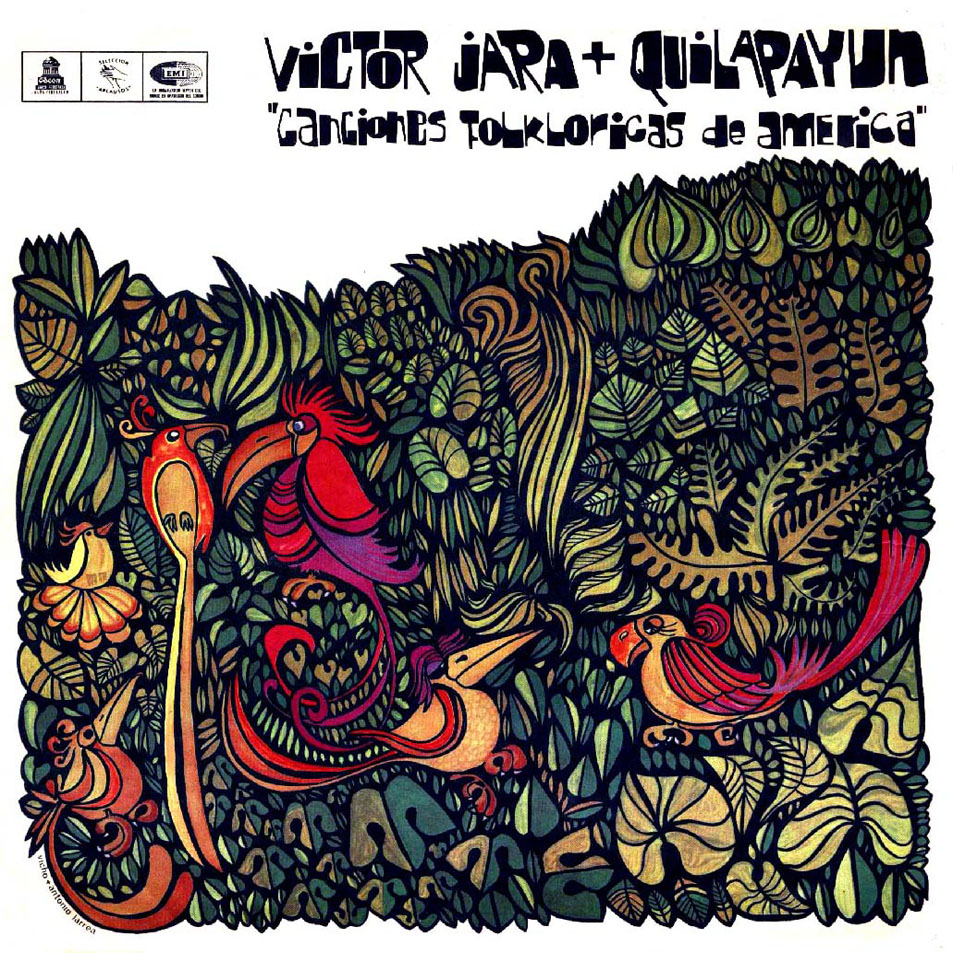
Nik: Man, that's a tough one really. I've never been a collector in the sense that I buy expensive or rare records, I don't have nearly enough money to throw down that way. A few albums that I do prize highly, for a variety of reasons (most tied to assorted memories and times in my life), would be a copy of Quilapayún and Víctor Jara's Canciones Folklóricas de América, a beautifully illustrated compilation of Moroccan Sufi music, a played-to-death Jazz Composer's Orchestra box set, and an original thrift-store copy of Captain Beefheart's first 45, Moonchild.


Dan: Do you have advice for prospective label entrepreneurs?

Nik: I'm not sure I've been in the game long enough to go around offering advice, but I suppose we could go with: be true to the music you love, trust the artists to do what they do, and by no means get into the game with money on the mind. You are there for the musicians, not the other way around!

Dan: Lastly, are there any shout outs you'd like to make?

Nik: Much love to all of the artists that have contributed their time and music, and endless thanks to all of the folks who have bought tapes! Obviously this label wouldn't exist without them, and their support and encouragement has made this little project of mine a real joy so far.


-----------------------------------------------------------------------------------------------------------

Like the Sky Lantern Records on Facebook here.
Check out the label's full catalogue here.
The label's Soundcloud page can also be found here.

Do You Even Psychedelic? would like to thank Nik for taking the time out to complete this interview.

Interview conducted by Daniel Sharman

Friday, 13 June 2014

Interview and Rig Rundown with Stereo Siberia's Vladimir Stepura!!!


An interview with one of the mind's behind the otherworldly psych-rock powerhouse, Stereo Siberia, Vladimir Stepura


Early in 2014 I caught up with Vladimir to ask him a bit about what the band were doing this year, how they put together some of their latest recording's, and where they plan to go next. Due to Vladimir's Russian heritage I have changed some grammatical inaccuracies(which were few considering the difference between the English, and Russian language), at his request. I will include a full, unedited transcript of the interview at the bottom of the article.


''The Cube Session'' EP
--------------------------------------------------------------------------------

Dan: Would you like to start the interview? 

Vladimir: Right on! Thank you bro Yes, I can give an interview. Online only hardly succeed. I am not a native English speaker. So I hope for your prudent adjustment. Cheers, Vladimir. 

Dan: No problem my man. Just say when you have a free
minute. 

Vladimir: Yes, I'm ready. 

Dan: So where are you guys located? 

Vladimir: We are located in the northern capital, on the delta of the Neva River. St. Petersburg interesting city with its rich history and atmosphere. Living in it, we get a good experience. Many artists of this city attracts here more than a century. We came from far and mighty Siberian city of Omsk. All of us from Siberia: Vladimir Stepura (guitar), Katya Stepura (vocals), Veronika Fedortsova (drums), Anton Gurievsky (bass). Our first attempts with my wife Katya collect any band in Omsk to no avail. So we decided to put together a new band now living in Petersburg. My sister Veronica started playing the drums. Then we were joined as bassist Anton.


Dan: So, what guitars were you using on this latest album? 


Vladimir: I play the Ibanez Artcore semi-hollow body electric guitar. I Like 13s [Gauge] thick strings for a solid sound, when a strong gain sound is not needed. You just do not be lazy and play with heart. Anton uses some GDR-s no name Precision bass. Unknown to science is the beast. 

Dan: And what amps were used for these guitars?  


Vladimir: In this session we used a Yerasov Bulldozer, and Anton used a Orange AD 200 Bass MK3. Of the pedals I've used, there were several different guitar overdrives, a Boss Digital Delay 6, and a Tremulus Luna Pro Seemann Custom. Anton used a Boss RV, and a Pro Co Rat. 

Dan: And were there any other instruments used on the album? 

Vladimir: Our first EP, we decided to record while playing live. Vocal, guitar, bass and drums. With minimal mixing and overlay effects. Although, the last track "Summer" and hidden track on vocals has imposed tremolo and delay. 


Dan: Where did this latest album get recorded?

Vladimir: It happened at The Cube Studio, which is now closed. Recorded with Pavel Kardakov, a guy too from Omsk, aka Naked Sound.

Vladimir: Do you understand what I write? 

Dan: Just about yeah, ahaha. Lastly, what is next Stereo Siberia? 

Vladimir: We want to release our EP on a label, but most labels only manufacture full Long-players. So, we are composing material for full length. On the other side, we record stuff live too, like "The Cube Session" material to maintain the integrity of the music we create. Next month we will think about some concerts in St. Petersburg. Thanks for the interview. 

Dan: Is there anything else you'd like to say? 


Vladimir: Yes. Thanks to everyone who helped us! Well, cheers, and thankyou! 

Dan: Cheers to you too sir!

--------------------------------------------------------------------------------

Find a link to the band's début EP, ''The Cube Session'': Here (full album) 

Do You Even Psychedelic? blog would like to thank Vladimir for taking the time to carry out this interview. 


Interview conducted by Daniel Sharman in March, 2014.

Saturday, 10 May 2014

Ride Into The Sun: Interview

After interviewing Aussie psychedelists, The Citradels, recently, I thought I'd interview another Australian psych music outfit to try and expose people to even more of the music that this side of the globe has to offer...


So, guys, who is in the band and who plays what?
There are four of us in the band now, myself (Ant) play guitar and sing, Jordan on bass, Yuk on Drums and Luke on Guitar. We have had a lot of past members, myself now being the only original. Ex members couldn't commit, or we couldn't get along etc, etc.

Where do you guys hail from?
We are in little old Adelaide, South Australia. A great place to write music but makes it harder for touring, you gotta drive or fly a fair distance for other shows. We try to get out of Adelaide as much as we can because Adelaide is small, the problem with Adelaide is that you can over play here which will effect a bands turn out to a show. But is a beautiful city and has a great music scene... A tight music scene.

What guitars were used on the last few albums and singles?
Our most recent single I was using an Eastwood Sidejack Baritone tuned to open C, really nice full sound. Jordan was playing a 76 fender precision Bass. In previous recordings I was using x2 2010 Mexican Fender Telecaster, one set to open D tuning and the other standard, and also Epiphone Sheraton II. Nothing too vintage but with having so many past members we have had lots of guitars come and go. The Eastwood i picked up whilst on tour in the USA, we went guitar and pedal shopping an hour before our set at Austin Psych Fest, so once on stage it was fingers crossed for it to sound nice, it saved me that day and has become my favourite since.Also being

a left handed guitarist it can be hard to find something really nice you know, especially being a small city too, I have to import stuff which means the price can go right up.

What about the amps and effects pedals?
I run a DL4 Line 6 delay modeller, Boss Fuzz, T-Rex Reverb, Line 6 Tremolo, Valco come again? delay for my vocals and a few other gems. Right now Jordan is running a Electro Harmonix English Muff'n.

What about any other instruments used on the albums?
In the past we had been using a Korg MS-20, 60's Vox Teardrop among a bunch of other stuff.

Where was some of the material recorded?
2010, we recorded at Toyland Studios in Melbourne, we did a mini LP there, with Alex Mass (The Black Angels) & Brett Orrison (live sound/producer of The Black Angels) producing us, just one of those life experiences working with the greats in the music world today. Our recent single "Johnny Blossom" was recorded at Twin Earth Studios here in Adelaide, awesome little studio, here we produced the songs ourselves.

What have you learnt after recording music up to this point?
Just keep pushing, keep writing, keep loving, its always a great feeling releasing something new, clean and special but it's greater doing it again and again.

What is next for Ride Into The Sun?
We have some shows coming up here in Australia, couple shows in Adelaide, then Melbourne and Sydney. Then we have plans to hit Europe and see where the wind carries us next.


Do You Even Psychedelic? would like to thank the band for taking the time to do this interview.

Interview conducted by Dan Sharman on 10/03/2014.

Tuesday, 1 April 2014

The Movements: Interview + Rig rundown on the gear used on Move Like Elephants 2!!!


Recently, Sweden-based band The Movements released their latest LP - 'Move like Elephants 2'. We caught up with the band to talk about where they come from, who they are, and what exactly they put into their latest sonic adventure. 


"So, guys, who is in the band and who plays what?"
"Hello! The band consists of David Henriksson (vocals), Christian "Krita" Johansson (guitar), Gustaf Gimstedt (keyboards), Daniel "Dolly" Petersson (bass) and Thomas Widholm (drums)."

"Where do you guys hail from?"
"Göteborg, Sweden"

"What guitars were used on the album?"
"We´ve used some different guitars, both acoustic as well as electric. But mainly Krita plays on a Fender Jaguar into a Twin Reverb."

"What amps were used on the album?"
"The albums (both part 1 and 2) has been recorded on different studio sessions during two years with some gaps of time in between, so it's hard to know exactly...
But, I think that guitars we´re mainly through the Twin Reverb, though some add-ons might have been on other amps. Studio Music-a-matic where we recorded is a really cool place with loads of classic vintage equipment in store. For the organs we've used a Farfisa amp and sometimes a Lesley.  Only effect pedals used has been distortion, fuzz, delay and wah-wah. Can´t remember which brands unfortunately."

The band working late in 2012.
"What other instruments were used on the album?"
"We´ve used a variety of keyboards, both Farfisa, Philicorda and Hammond. Also some Korg MS10 synthesizer, Wurlitzer electric piano and a Hohner clavinet. And some acoustic piano."

"There are also add-ons such as percussion, violin, recorder and Arabic lute. Plus a guest musician, Anna Brånhede, playing the lap-steel on one song.
And of course bass and drums."


"Where was the album recorded?"
"The albums were recorded in Studio Musicamatic here in Göteborg, produced by Micke Nilsson. Plus some tracks which we recorded ourselves in our own Parkeringshuset Studio."


Inside Musicamatic, Sweden.
"What have you learnt after recording the album?"
We've learned a lot about elephants communicating by telepathy, which is pretty cool! And we've learned that Micke is a fantastic producer, we´re really happy about the sound-scape on both of the albums."

"What is next for The Movements?"
"Plan now is to tour as much as possible on the albums and to become more like elephants, bit by bit, day by day."

"Thanks for the taking the time to do the interview guys!"
"Cheers"

Find out more about The Movement's latest LP: 'Like Elephants 2' here.


Like the band's Facebook page: here.


Interview conducted by Dan Sharman on 22/03/2014.