Showing posts with label Brayan. Show all posts

Friday, 31 October 2014

Paraíso Flotante interview with Anna Cuadra and Pedro Fukuda!!

Continuing onwards with my series of Peru-based band interviews, I take a step back of sorts to delve into the minds of two ex-Montibus Communitas (a band whose interview kicked off this series) now performing together in their new group, Paraíso Flotante - a similarly experimental improvisational group. - Interview conducted by Daniel Sharman.

Dan: Where do you guys hail from, and who is in the band?

Anna: Well, for me, this kind of question is long to explain.  my place of birth was in Lima Perú but grew my whole life in Bogota Colombia. It’s was basically  me and Pedro, though before Pedro had been playing with other musicians under the same name. After a while it was hard to get everyone together so it established more between the two of us.

Dan: What were you doing previous to this band, and what inspired you to form Paraíso Flotante?

Anna: I had just arrived from Argentina a while ago and was recording my songs and playing with some local bands. Practically Pedro invited me to play in an acoustic & live environment, the day we had met in Brayan's place for the first jam, we had a real connection in our improvisation that day and we wanted to keep the same rhythm but exploring other “air” spaces.


Dan: Being an improvisational group, how do you go about writing? I mean to say, what inspires you and gives birth to the music you produce?

Anna: For me, is the need to play, then later we manage to remember and write in a creative unstructured way the things we want to rescue from our jams. Though, unfortunately we never recorded any of our jams together with Pedro.

Dan: What sort of bands, and records influence you? I think I heard some Gong-esque chants in gan/río prohibido.

Anna: Normally I listened to Soft Machine, Fleetwood mac, Gong, and King Crimson, whilst going to school,  but also, Herbie Hancock, Jaco Pastorius, Laurie Anderson, John Zorn, Mike Patton etc. and composers like Steve Reich, Arthur Russell, Arto Lindsay, Jun Miyake, Eyvind Kang, Raul Zarate, Brian Eno and the list goes on & on. I listen to albums like “Dark side of the Moon” by Pink Floyd; “The Youngs” by The Youngs; “Tierra” by Julieta Rimoldi; and “Parallelograms” by Linda Perhacs.

Pedro: I like Gong, but I don't really know their music that well. We all have different music that we like in this band. I like the art ensemble of Chicago, they have an influence on me. Secret Chiefs 3, Masada, Hamid Drake is one of my favourite drummers. I'm also into Baba Sissoko, Konono (the mbira band) and Oumou Sangare. Lately, I mostly listen to podcasts and audiobooks like the Church of What's Happening Now and the Illuminatus Trilogy audiobook on YouTube, which is brilliantly performed.


Dan: How/where were the albums recorded?

Pedro: So 'Gan Rio Prohibido' was recorded in my apartment by a friend's (the Singer) laptop . I don't have any kind of studio set up here it's just a rehearsal space, so the sound is not the best. I think you can hear the same dog  barking through the whole session which I kind of like. This particular session features my long time friend's Tete Leguia who is a brilliant bassist, and composer as well, who plays in many bands, and Carlos French who is a singer that also plays a lot electronic keyboards like Moogs and such.

Dan: What were some of the instruments used on the recordings? E.g: percussion, strings, ect.

Pedro: The instruments on that song I don't remember that well, but there's an acoustic nylon guitar  played with drumsticks (like Cairo Heroin-infused Street musician style); Tete on bass, there's an irish flute, a quena, drums, and we all sing.


Dan: What is next for Paraíso Flotante?

Anna: We have plans of recording virtually, but most important now is playing on live. Meanwhile, I guess Pedro will continue in Perú and me here in Argentina.

Pedro: I don't know. We´re not active now, although Nik Rayne [of Sky Lantern Records) is releasing a tape of our's. But, everyone from the band is playing, doing their own thing. I play in a crazy jazz trio with the bass player and Marco Mazzini - an amazing clarinet player from here. Carlos has his doom band. El Jefazo and I still play with Chicho who was a mayor presence in Montibus Communitas too.

Dan: Right, so you are an ex-montibus communitas member, can you tell me about that time?

Pedro: I met Brayan, who at that time called himself Brayan Buckt (his real name is Brayan Tipa), at this concert in Lima and I asked him to play, we jammed at his place and the second time I went there I met Anna and Sergio and that's when we recorded the material on the first LP. I started playing a lot with Anna and Chicho after that around that time Montibus had its first gig in Koca Kinto, which in my opinion is the only really good gig we ever played. After that people got excited and we wanted to rehearse and share ideas but Brayan said ''NO''! He said that the band was free-wheeling, that there would be no rehearsals... So we  kind of went fuck that and did our own thing.


Dan: We reviewed Pilgrim to the absolute recently, what do you think of that record?

Pedro: Well, now we're not in the Stone age there is Google. You know one time I went in there and put Montibus Communitas into search and there was all these interviews saying anybody could be in that and that we are mystics living at the edge of a river and that's when I got upset. No one ever asked if we liked that name Montibus Communitas. And it was a band with fixed members since Chicho played with us, Brayan brought in another bassist who didn't really click with us. 

Also most of the parts I played are credited under Brayan's name. After that we all left and we don't know anything about the band and we don't receive anything for any releases.

Dan: Lastly, is there anything else you would like to say?

Anna: Let there be more musicians able to risk their oneself to become one with music. Fashion and fame are good and motivating, but it comes and goes as fast as the wind. Kill your own idols & maintain yourself to be true to your real own essence.

Do You Even Psychedelic? would like to thank Anna and Pedro for taking the time to complete this interview. 

Make sure to like the band's facebook page here.

You can hear the band's music on their Soundcloud, here.


Monday, 15 September 2014

Montibus Communitas: The Pilgrim to the Absolute Review

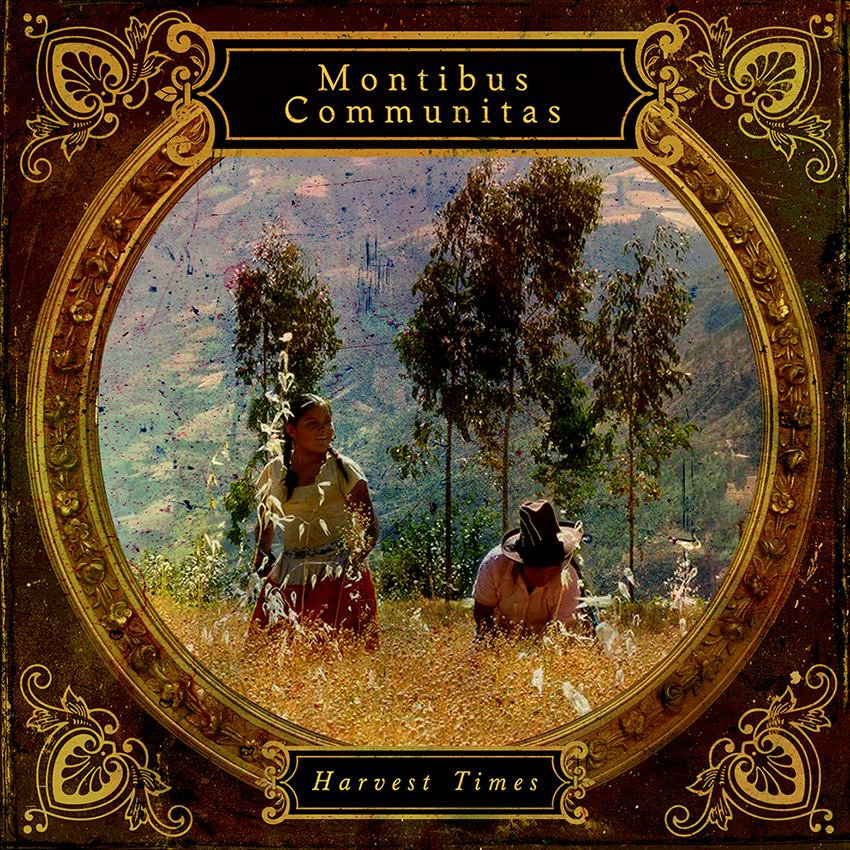
Following up their 2013 release, Harvest Times, Montibus Communitas are back with an immersive, sonic experience compiled from past jams and improvisational sessions. Prepare to be taken on a journey like no other, and become a pilgrim to the absolute. - Written by Daniel Sharman.


{Read our interview with Montibus Communitas here}


Released in: September 2014
Genre: Roots Psychedelia
Record Label: Beyond Beyond is Beyond
Medium: Digital download, Black Vinyl, Glow-in-the-dark Vinyl (limited edition), CD
Recorded at: Member's Home Studio

Before listening to this record, I strongly advise wearing headphones as the LP focuses heavily of sonic manipulation to give a rich, and immersive experience. To pick up on the detail and nuances contained within the record, headphones really are the only way to listen.

Being a concept album (based upon a book written by one of the band members), Pilgrim to the Absolute melds the track listings with geographical locations to give the illusion that you, the listener, are in fact a pilgrim on a journey to an unknown location. In doing this, it makes for a relaxing and calming experience, reminiscent of a guided meditation or suchlike.

The record kicks off with 'The Pilgrim Under Stars', and 8 minute opener that sets the tone and pace for the rest of the record. The track utilises several post-recording techniques such as added reverb, panning, drones, and I wouldn't be surprised to hear some of the environmental sounds such as the gushing river, or chirping birds, were added in after-the-fact also. The tracks starts off in a slow, nature-orientated ambience before slowly rising into a gentle crescendo, incorporating shakers, flutes, organ, and calm electric guitars. 

After this 'setting-of-the-scene', and putting you on the course of your journey, you come to The Woods. This Woods is a seemingly more sinister, or possibly more wild, environment than that of the stars with a blistering opening set of guitar phrases. A bongo beat then leads into a second, this time western-esque, crescendo. This latter crescendo being reminiscent of the musical scores which accompanied so many final-act duels in the golden era of cinema. 

The Shrine carries on much of the motifs contained within The Woods, using a consistent drum beat to create a canvas for playful flutes, violins, and chants to dance upon. However, The Source, the first single released from this new album, creates a somewhat different atmosphere with a chugging, delayed guitar riff. This electric guitar being an instrument not too commonly heard on Montibus Communitas' records. The riffage leads to almost trance of sorts, a call to the ritualistic Shaman drumming conducted within so many Native American and African tribes.

Our last sonic stop before we reach The Absolute, and complete our journey, is The Light Masters. Going back to the effects used on the first track of the LP, we experience more post-recording elements such as panning, and ultra-sound. Cascading rhythmic shaking, and groaning warbles, give the track an odd tranquillity, evocative of some far-eastern temples of worship. 

Eventually, we reach the eponymous Source, completing our pilgrimage. This closing track lives up to its name by boasting an expansive sound, filled with reverberated bird calls, monastery-esque organ work, and airy flute passages. The organ's chords keep the return of the gurgling river in its place, and small, assorted chordophone phrases keep the track moving onwards.

Critic's Comment: A conceptual album such as this could seem pretentious and needlessly lofty to those on the receiving end of this album's recommendation, but once you begin listening, and give yourself over to the unusual presentation of the record, Pilgrim to the Absolute is a thoroughly enjoyable listen. If you don't favour hard-hitting psychedelia that is always looking to grab you by the throat, then this could be an LP for you. Worthy of the title 'psychedelic', this is a record that can transport you away from your usual time and place, and into a foreign continuum. 

You can pick up the new record here, out on Beyond Beyond is Beyond (read our interview here).

Friday, 25 July 2014

Montibus Communitas Interview: Anthony talks recording, playing, gear, and more! (with 1 year anniversary post)

1 Year Anniversary Foreword

As if in the blink of an eye, Do You Even Psychedelic?'s first year has already come to pass. On this exact day, last year, the blog was officially launched with the posting of my first ever piece of released material - a band 'case file' on space rock quartet, Wooden Shjips. That post can be found here, and I feel that it still holds quite well, 365 days after its being published (although, it could do with some new formatting!). 

As the blog has developed, I've been presented with several astounding chances to not only review some brilliant albums, and material, but to also interview some of the most genuinely interesting people around in music today. Furthermore, I am pleased to say that things are only looking up from this point onwards; I've been fortunate enough to land interviews with bands such as Kikaguka Moyo, The Dunes, The Social End Products, The Night Collectors, Savage Blush, and many more artists! Additionally, I have many, hopefully exciting editorial pieces in the pipeline, that might just inspire something in you all, and help you all better make sense of this crazy world we're living in today. 


I would like to thank family, friends, all my reader's, Bear Peterson, Rebbeca Williams, Brayan, Anthony, Nikolas Rayne, Connor Gallagher, Bra Bea, Joshua Schultz, Klemen Breznikar, It's Psychedelic Baby! Magazine, Dave Cambridge and Cardinal Fuzz Records, Phil Dickson, the guys over at Guitarforums.com, Riley McBride, and anybody who did the little things to help the blog continue.
--------------------------------------------------------------------------------

Dan: You don't hail from the usual locations of our interviewees, where is Montibus Communitas located?

Anthony: Here, there and everywhere.

Dan: The band has an unusual setup, a partly solo project, whilst also a partly collective project also. How does that dynamic work in terms of members of the band ?

Anthony: There’s definitely a kind of unprofessional/uncompromising/anarchist approach in the way that things are done, so there aren’t really members or something like that, people come and go. On gigs whoever will like to join us could do it, like on the gigs for the live album, in which some people asked us to play with us like 5 minutes before going on stage and they ended up on the record haha. It’s pretty chaotic, but it’s pretty nice too.
I think that uncompromising is the key word, because it’s been something that me or anyone else involved on this haven’t really pay attention, it was like a weird side project that ended up involving so many people that played and then moved on with their own projects, so I guess it’s just way too free, up to the point that I don’t really know what this is. Call it what you want. Then it’ll be yours, and you’ll be it. 

Dan: Your records seem to vary quite a bit from one to the next, for example: Harvest Times is great because it is just you creating the piece, but on a recording such as Offerings For The Destroyer there is large presence at work. How do you like the two setups when compared with one another?

Anthony: It’s all about the context. If it can be just me then it’ll be just me, if it can involve more people, then it’ll involve more people. I don’t like to force things too much, its better when they just happen, and that’s how most of this have happen so far.
When it’s just me, I tend to approach it like if I’d jam with myself in different dimensions, so I go to the drums, jam out some cool beats, then I pick the bass and I jam over the recorded drums, and so on with the rest of the instruments, so I don’t really know where I’m going, and that’s kind the fun part, and that’s why the songs have a kind of free flow jam vibe.


Dan: What sort of equipment are you usually using for guitars on your records?

Anthony: For the first album I used an epiphone casino, for the second one I used an unbranded acoustic guitar from my cousin, a really cheap and extremely shitty one, that sounds like it would have some sort of distorsion built inside haha, but I just love it, it sounds really raw. For the live album

I used the casino, a 2nd hand walden acoustic guitar and one that I borrowed from one of the bands that played that night, can’t remember the brand, but It was a sort of stratocaster imitation.

For Harvest Times I only used a cheap Peruvian handmade guitar, an extremely cheap and shitty one. It was the first electric guitar I ever had, and I used to think it was sooo shitty until one day, while I was cleaning my room, I found it over the closet. Dunno why I grabbed it, I plugged it in and voila! It turned out that it had a really nice 60’s sound, like those cheap teisco/guyatone guitars that some bands used to have back in the 60’s, so I just bought some new strings and started recording with it. Guitarists here hate that guitar, I haven’t seen not even one band playing with those cheap Peruvian (or national, as we call them here) guitars, so I guess that’s a good sign haha.

Dan: And amps, and effects?

Anthony: I use a Line 6 combo amp (I live on a department, so I can’t make too much noise), which again, most of the people I know hate those amps, but I just love them haha.  It has a really nice saturation that sometimes reminds me of the Bo Anders Persson’s guitar sound on Pärson Sound’s 10 minutes, pretty crunchy but still comprehensible. About effects, I usually use the ones built inside the amp (like sweep echo and chorus) but I also used a cheap Digitech that has some really crazy sounds, like some sort of weird wah wah sounds that reproduce what you’re playing backwards, some really nice vibratos, etc. I recently got an analog guyatone tape-echo , which was gifted to me by one of the coolest dude I’ve ever met, Daoud, the guitarist of Kikagaku Moyo, while he was in Lima. I still need to get it fix, but I’m sure it’ll sound amazing on the new albums for sure. Don’t Daoud it.


Dan: How about other instruments? From listening to Harvest Times I could tell you are obviously a man with a range of instruments at his fingertips.

Anthony: About instruments, I’m kind a maniac for instruments, so I keep buying weird stuff that I don’t know how to play but I just fool around with it until it sounds nice to me, so you might find some stuff like charango, quena, zampoña, andean bass drum, chacchas, organ, toy pan flutes, donkey jaw, tambourine, electric tampura, tampura quilmeña, bongos, wiro, rain stick, didgeridoo, andean harp, synths, traverse flute, etc. There are also some sounds on harvest times that are made with my hands, a sort of flute/birds sounds made by blowing my hands. Also, some percussive sounds were made in a similar way.

Dan: And how do you usually create your albums in terms of writing, and collaboration with other artists in the collective? I read that you write as you interpret your music.

Anthony: I think there’s no writing process. It’s more like a flow of ideas, I don’t really think on what I’m going to record, I just go on with the guitar or the drums or whatever is that I’m playing at the moment, and, as I keep recording, suddenly the songs start to dictate me what to do, what notes I should play, which instruments I should add. When it’s collaboration with other people, we just jam out and see what happens. That’s how most of the stuff has been coming out.

Dan: Going back to Harvest Times, and other such albums, how does the recording get carried out, and differ between records? Is it hard to capture a live sound well?

Anthony: It’s all pretty unprofessional, and I just love to do things that way haha. It’s all mostly done on a small room  that serves as a dining room, library, study room, party room and, just sometimes, recording studio. I have all my instruments there and some microphones, so I just try to make things work within that small room of the size of a bathroom haha. It’s easier when it’s just me, but when there are other persons, we try to make everybody fit on the room to play whatever they’re playing at the moment. If there are too many people then we move the mics and the instruments to the living room.

About the recordings, I mostly try to capture the room rather than each instrument. I like that kind of ambient feeling on recordings. I like when I can feel the space in which people are playing.  When I record alone is quite easier up to some point, because you can go crazy with the options that you have now with technology for mixing audio, and that’s when things can go pretty fucked up. When recording with other people live it may look like harder to capture the ‘’live’’ sound, but when you got it, it’s like the live feeling speaks for itself. I can’t really get to make that much mixing game since I don’t really record each instrument, so when I get a nice volume for everything, that will be pretty much it. So yeah, both ways are tricky in their own way, but both ways are pretty fun. I have tons of fun while trying to figure out how to make the recordings work.

Dan: Obviously being from Peru you are going to have some alternative influences to our usual interviewees too, what are some of them?

Anthony: There’s definitely lots of folk music going on in Peru. I actually like peruvian folk musicians like Pastorita Huaracina and Jaime Guardia, also bands like Los Hijos de Lamas. Somehow you can hear those influences on Harvest Times. Besides that, I guess I’m more open to any kind of band of any kind of genre; I don’t really have a strict musical taste, so I listen to all kinds of things like afrobeat, Mongolian folk music, ambient/new age, classical music, classical indian music, japanse folk music, Tibetan throat singing, tribal/percussive music, drone, etc. I like to keep listen new stuff, especially music that I haven’t heard yet, cause’ that’s when I feel more inspired to push my own mental boundaries into territories that I haven’t explored yet and I can get to explore and add new elements to my music.


Dan: And what is your favourite, current band putting out music right now?

Anthony: There are so many cool bands right now! I feel really honoured of being part of amazing record labels like Beyond Beyond is Beyond, Trouble in Mind, Cosmic Eye, Sky Lantern, Inner Islands, Reverb Worship, etc. because they’re releasing some of the most amazing music right now. Lots of bands I’ve discovered lately has been because of those labels, like Krakatau, Kikagaku Moyo, The Myrrors, Queen Elephantine, Stag Hare, Ashan, Our Solar System, etc.

Dan: Lastly, What's next for Montibus Communitas, any new albums upon the horizon?

Anthony: On September 29th, the US record label will be releasing the new album ‘’The Pilgrim To The Absolute’’, a conceptual album based on a book I wrote some time ago. It’s probably one of the most far out records I’ve produced in terms of sculpt songs and sounds under a pretty define concept and vibe. Trippy is key word haha.  It’ll be released on LP and CD. You can check the 
BBIB web page for more information: http://beyondbeyondisbeyond.com/


Besides that, there’s some more stuff going on, like some recordings with Kikagaku Moyo’s Daoud, a split with a cool psych band that you’ve already interviewed [Check that out here] and some more recordings I’ve been making during this year. Then I’ll keep recording as usually, so the music is there. Nothing concrete in terms of releases, but we’ll see.
--------------------------------------------------------------------------------
Do You Even Psychedelic? would like to thank Anthony for taking the time out to do this interview.

You can find the full Montibus Communitas Discography here.

Also, make sure to like the band's Facebook to stay up to date, that page can be found here.

Foreword written, and interview conducted, by Daniel Sharman.