Showing posts with label Desert Rock. Show all posts

Saturday, 25 October 2014

The Social End Products Interview with Sta Stea!

Tired of sampling your rock and roll only from the American school of musical psychedelia? Well, threat no more as we take a journey into the mind of Athens-based  quintet, The Social End Products. Drawing from the golden era of European psychedelia, the group captures all the pop rock spook-psych charm of the generation, but modernises it into a fresh, Greek package. - Interview conducted by Daniel Sharman.

Dan: Hi Sta, would you like to introduce yourself?

Sta: I'm the drummer and lead vocalist of the band. I also write the lyrics and some of the music.

Dan: Who else is in the band, and where is the band situated?

Sta: Manos plays guitar and performs vocals, Sara performs guitar/organ/vocals, Themos performs bass/vocals, and Myrto plays flute.


Dan: The band name 'Social End Products' is a very poignant name, where does it originate from?

Sta: We took our name from the title of the song of the same name by New Zealand's THE BLUESTARS. It represents us!

Dan: You guys have a sound reminiscent of the old, European psych groups of the sixties. What are some of your influences?

Sta: I would say we are more influenced from the American bands of the 60s and even more from the South American ones like Aguaturbia, Laghonia, etc. and also very much from sixties Greek bands like Peloma Bokiou, Nostradamos, etc. I feel those influences are more obvious to our new recordings.


Dan: On the band's facebook page, many interesting pieces of vintage gear can be seen. What guitars where you using on your latest sonic outing, Nutre Tu Cabeza?

Sta: Yes we love vintage instruments and when we find something interesting (and cheap) we buy it! Unfortunately, when we were recording our LP didn't have all that so we used a Fender Jaguar and a Fender Jazzmaster. But, on our new recordings we used our EKO guitar collection! 12-string Cobra, Auriga and Melody.


Dan: And how about amps, and effects?

Sta: We have a Fender Twin Reverb and an EKO Herald IV. We use a lot of effects, but think the most interesting is our sixties EKO Multitone.

From left to right: (top) Twin Reverb, EKO Cobra,
Fender Jaguar. (bottom) EKO Auriga. 

Dan: What about any other instruments, such as keyboards, drums, ect.?

Sta: We also use a 70s EKO Tiger Junior Organ.

Dan: Where did you record the latest album?

Sta: We do all our recording's at FEEDBACK SOUND STUDIO in Athens. It is the best for a vintage sound and our producer Harris Zourelidis is a true master of sound!!!


Dan: What have you learnt from Nutre Tu Cabeza's completion?

Sta: It's been very nice in the studio and tripping in the world of sound. Especially when you want to reproduce a sound of the past, you get to have a journey through time.


Dan: What's next for the Social end products?

Sta: We are recording new songs now. Two of them 'FEELS MUCH BETTER ON THE OTHER SIDE' and 'UTOPIA' will be on a 7". That will be out next month on Garden Of Dreams Records, the coolest label in Greece right now. The rest will be in a full LP, which is coming some time in spring. We also have some gigs this month with TOMORROWS TULIPS in Athens and with ALLAH-LAS in Thessaloniki.


Dan: Lastly, are there any shout-outs you would like to make?

Sta: We would like to thank everyone supporting us worldwide. 

Do You Even Psychedelic? would like to thank the band for taking the time to complete this interview.

Find the band's latest LP, and their past 7", here.

You can hear the single from the band's upcoming 7", Utopia, here.

Make sure to keep up to date with their Facebook page here.


Saturday, 4 October 2014

Captain Beefheart: Electricity (Single Review)

Released in: September 1967
Genre: Blues psychedelia/Desert rock
Record Label: Buddah Records
Medium: Vinyl, CD, Cassette, Digital Download 
Recorded at: RCA Studios, LA

Let's dive back to the past for a slice of quintessential, late-sixties madness from the Captain and his Magic Band. Released on their stunning début album, Safe As Milk, (the album which I still see as Beefheart's magnum opus, in spite of what the general consensus might say), this track is a perfect example of the insanity of the Captain being held down and vocalised in a way more accessible than his later material by a band of only slightly less crazed musicians. 

The track opens with a tumbling open riff, before sliding into eerie, reverberated slide guitar accompanied by atmospheric cymbal crashes and the morose vocal delivery of Beefheart himself (this is an opening phrase typical of the group, juxtaposing one lively upbeat melody with another, more sinister, one). Once these first few lines are finished, Van Vliet cries out the tracks namesake in his signature, Howlin' Wolf-esque tone, plunging the track into momentary silence. However, this purely works as a precursor to the kick off of the main body of the track, the thumping bassline picking up and driving the percussion and guitar sections into more familiar blues territory. 

Beefheart's vocal is now accompanied by wailing theremin, an instrumental display which evokes the soundtracks of many 50's, and 60's, horror and sci-fi films (it is said that Beefheart originally wanted the sound of grinding buzzsaws, but due to to limitations in technology had to settle for theremin instead). The lyrics of the songs are, like much of Beefheart's music, mostly nonsensical, and strive more to conjure up a wild atmosphere of electricity and thunderbolts, than a distinct vocal narrative.  

The pace of the song picks up at certain points to give the song a more structure feeling, but descends into a dust-covered freak breakdown in the end, with the theremin adopting a wobbling, staccato attack, and Beefheart simply groaning and wailing along to the beat. 

It is worth noting that the grounded feeling of the song is largely due, I believe, to the bass work of Jerry Handley, whom actually left the group when he felt the music being created for Trout Mask Replica, widely accepted as Beefheart's greatest work, was too avant-garde. It is also worth noting that the track suffers greatly from the fact that it is recorded to 4-track tape (apparently due to the engineer finding the higher-track equipment in the planned studio for the record too confusing), making it sound quite thin and weak. For this reason, searching out a live version, or a demo of the song, is a worthy endeavour. 

Review written by Daniel Sharman.

Friday, 26 September 2014

The Night Collectors Interview with Connor Gallagher and Jeff Lownsbury!!

All hail the sinister groove, and the propagators of the reinstatement of unbridled, dust-induced human savagery. Or something like that. Prepare to delve into the minds of one of Arizona's best new, up-and-coming desert psychedelia acts, The Night Collectors. Currently, the band's discography boasts several extended instrumental jams which, if indicative of what is to come, make me incredibly pleased to offer an insight into the development of this fantastic rock quintet. - Interview conducted by Daniel Sharman.

Dan: You guys are based in Tuscon, Arizona. How many of you are in the band, and how did you meet?

Jeff: There are five of us and room for one (for now) honorary member--we're really all huge jazz fans and prefer to keep our group open to unique sessions. We've all been friends for years and have played together extensively. I met Connor Gallaher (guitar/ vocals) in 2008 outside of the venue formerly known as Plush. We were both watching and listening to a muffled Silver Jews set. I had snuck in and gotten kicked out, he was just calmly watching from the street. I met Casey Golden (drums) through the skateboarding scene and we've been buddies for years now. I met Adan Martinez-Kee through some painterly friends when I first moved to Tucson seven years ago. He's really into cinematography and we became great friends gradually as we found out we had a lot of mutual friends. I met John Bullock through some skateboarding friends in 2009, he was playing with Connor and some of our friends in a group called Via Entrada that was going through a break-up (this band would later become Dream Sick) at the time. Connor, Casey, and Adan play with me in another group called Secret Highway Secrets... but that's another story...

Dan: Your sound is psychedelic, rock, blues, jazz, avant garde, ect. What are some of your influences? 

Connor: A big influence is Les Rallizes Denudes (Hadaka no Rallizes), also where we got our name. Jeff and I actually started the band as a Les Rallizes Denudes cover band originally.


Dan: I hear a lot of John Cipollina and Michio Kurihara in your guitar playing, I'm guessing those guys influence you in one way or another?

Connor: Yeah, totally! Ray Russell is another big one. He played with Bill Fay, and he also did a bunch of jazz and free jazz stuff. Loren Connors is also a huge influence for me (Ray Russel - http://youtu.be/wpVBwPjKvhg Bill Fay - https://www.youtu.be/psyKpeB2n9Q )

Dan: Those two fellas are quite a bit more avant garde than Cipollina and Kurihara. The Night Collectors boast some lovely gear rigs, would you say you get your influence for tone from those guys?

Connor: I guess, a lot from those guys, and then just experimenting with sound. Playing pedal steel has definitely influenced my guitar playing and vice versa.


Dan: I'm not familiar with pedal steel playing myself, how does that inspire you with your guitar work?

Connor: I guess mostly in terms of feel. Also there's the volume pedal too. I listen to a lot steel guitar music which influences my steel playing as well as my guitar playing.

Dan: Sweet, will we hear any pedal steel on any later Night Collectors recordings?

Connor: I hope so at some point.


Dan: This is a bit of a stranger question, but how do you feel about special effects being used in psychedelic music? I mean you guys play damn well with your effects, but some guys just let the effects do the work for them.

Connor: Ahh... Yes, I don't know I guess it can be cool sometimes, but yeah there's definitely things that can get overused.  A lot of bands today seem to just drench everything in delay and reverb thus making their music "psychedelic". I think effects are great as a way of adding colour, though. 

Dan: Your latest record, Voice of the cicada, gives the impression that your instrumentation is somewhat planned, but also fluid and free-moving. How do you normally go about writing a Night Collectors song?

Connor: We definitely work a lot off of improvisation. Our track Maybe Tomorrow was a completely improvised piece that just happened at the beginning of a prectice. With a lot of our stuff we kind of start out with a basic idea and move from that. We also have some songs now that have a more traditional structure. We definitely find a lot ideas from just jamming.


Dan: The guitar playing on the recordings is a big part of the sound, what guitars have you been playing through?

Connor: My main guitar is a Gibson SG3 with a Bigsby. I also play a Fender Stratocaster XII occasionally. Jeff plays a telecaster and John and Adan play an Epiphone SG bass. 


Dan: How about amps, and effects? 

Connor: We only play through AIMS amplifiers, they were a company out Phoenix, Arizona that only lasted a few years in the early 70's. I play through the Eclipsor which is 4x12 stack. Jeff uses the Dual Twelve which is a 2x12 combo and the bass goes through the Vocalsonic IV which is a PA that has two 4x10 towers. All of them have the same tube setup and are around 120watts. They're basically high powered twin reverbs. Sometimes Jeff plays through a Fender Super Reverb if the Dual Twelve AIMS is on the fritz. My pedalboard mostly consists of lots of FUZZ! I use a rotating cast of different fuzz pedals. Pedals that are always on my board are a Wattson FY-6 which is a Shin-ei SuperFuzz remake, a Sarno Earth Drive, Zvex Super Duper, a Vox wah wah, Fulltone Deja Vibe and a Space echo pedal.


Dan: Any comments on additional instruments, playing or otherwise?

Connor: Some of the saxophone playing on Voice of the Cicada seems to have roots in traditional free-jazz. Mostly just guitars and the sax for now, but maybe more in the future. As I said, I also play pedal steel guitar and definitely want to incorporate that in at some point. Yes, there is definitely roots in free jazz.

Dan:How were all these instruments recorded (by that meaning how was the song recorded in general)?

Connor: All the recordings that are up on our Bandcamp were recorded live on my phone and then mixed in Garageband or Logic.


Dan: A question about the latest recording itself (correct at time of interview). What was the importance of the cicada to the track itself?

Connor: In the Sonoran Desert, for months every year there are cicadas that hang out in the mesquite trees and buzz incessantly. The polyphony of thousands of cicadas buzzing at the same time can be likened to mind-melting drone music. The cicada, like a lot of insects, is a sort of pan-cultural symbol; they live on almost every continent and are a natural constant reminder of the power of vibrations.

Dan: Additionally, living in an arid climate such as Arizona, how would say the desert atmosphere shapes your, and other bands, distinct sound?

Connor: I think it definitely has a big effect. Being here in the summer is rough. The heat will definitely take a number on you. With that I think a lot of bands from here have a certain hallucinatory aspect to their sound.


Dan: What's next for the night collectors?

Connor: I'm not sure right now, we're kind in a state of reconfiguration. Two of the guys are really busy with school, but we have a couple shows coming up so hopefully we'll be able to work on some new stuff. We have some recordings from the beginning of the summer that we need to mix and finish.  We also want to record more because we've changed a little bit since then. We also want to tour as soon as possible!

Do You Even Psychedelic? would like to thank Connor for taking the time to complete this interview. 

Make sure to check out the band's music here, all on free download. 

Also make sure to like the band's Facebook page here, to stay up to date.


Sunday, 14 September 2014

The Night Collectors: Voice of the Cicada (Single Review)

Released in: 1 May 2014
Genre: Desert Rock/Wilderness Rock
Record Label: Self-release
Medium: Digital download, Cassette
Recorded at: Unknown

Voice of the Cicada was Do You Even Psychedelic?'s single of the month a while back, and with good reason too. I've pretty much played this record to death, and I'm still not bored of it. Spanning a whole cassette, Voice of the Cicada was released as a sort of LP in its own right, and currently holds a considerable amount of my cerebral focus.

Spanning 15:11, Voice of the Cicada is a hearty offering of raw desert instrumentation, born from the dusty plains of the Arizonan Sunbelt. Lead guitarist, Connor Gallagher, delivers a piercing guitar performance, laden with gingerly chosen delay, fuzz, etc. immediately giving structure to the thudding, tribal beat of the percussion section. Greasy, wild saxophone also accompanies the guitar work, giving a free jazz element to the tracks persona, and evoking the work of fellow Tuscon-based band, the Myrrors (see Romana Parra). The bass work is heavy, and creates an up-and-down, waving beat which the percussion section hazily follows. From this symbiotic energy which the bass and drums create comes a fusillade of drones and chants, some reminiscent of tribal expression, and some evocative of the eponymous Cicada's voice.

As the track progresses, the tempo of the song gradually increases, and so does the instrumentation with it. The guitar sections become more overdriven, starting to align themselves more and more with the aforementioned Cicada. Wailing vibrato bends litter the crescendo beat at 7:00, conjuring up imagery of the savage desert winds, and transforming the song's structural being into a sonic lather. 

This energy keeps building, increasing the tension of the song, and the guitar section becomes more and more violent (pure bliss for anyone who is really looking to dig an effects-soaked guitar played well tastefully for a change). The beat dissipates, and the track slows down, at around 10:00. It is at this point we hear a recording of an actual cicada, closing the song in genuine dust-driven noise. A genuine reminder of the power of vibrations.  

The track is currently up for 'Name Your Price' on Bandcamp, so make sure to head over and get a copy now, and support these guys. Link here. The band also keeps home-made cassette copies of the song, so if you are ever available to hit up one of their gigs..make sure you do! (Facebook page with all events on here).

It also worth mentioning that the band recently did a live recording for radio of the song, which is a slightly different version, so if you are hardcore, check it out here

Review written by Daniel Sharman.

Tuesday, 29 July 2014

Montibus Communtias and Ø+yn: Offerings For The Destroyer Review

Review of Offerings For The Destroyer, "the long-awaited collaboration between Peruvian psychedelic collective Montibus Communitas, and Argentina's premier improvisers Ø+yn" - Written by Daniel Sharman. 

{Read our interview with Anthony of Montibus Communitas here}

Released in: October 2013
Genre: Roots Psychedelia
Record Label: Sky Lantern Records
Medium: Digital download, Cassette
Recorded at: Live at Círculo Bar 

The first thing to note before anything is said about this record is that it is not your archetypal album in any stretch of the imagination. It is, more simply put, a somewhat insane, and abstract piece. To go into it with ears that expect conventionality is altogether misguided, and to a greater extent, prohibitive to a desired listening experience. 

Offerings for the Destroyer is most unlike some psychedelic LP's you may hear this year, and this particular aspect works most certainly to it's favour. The record consists of only a single song, or what should better be referred to as free-form jam, clocking in at 35:42. For some, this duration may seem slightly short, when compared to some other psychedelic offerings, but Offerings for the Destroyer, or to give the recording its actual name, Prepare the Bhang at Dawn, actual feels quite epic, and endless, in its length. Time melts away, and you are graced with a wholesome psychedelic atmosphere to surround yourself with, one which is notable for its ability to clear the mind of current issues, and ideas, and replace them instead with emotion, and feeling.

Recorded live, in the early hours of the morning, Offerings for the Destroyer adopts a totally fluid approach to instrumentation. The recording features no real editing, and certainly no overdubs or added effects like reverb, and this once again adds to the experience. If anything, it provides a real breath of fresh air in a psychedelic community that normally focus too heavily on effects, and sonic manipulation. Furthermore, the instrumentation being played is very intuitive, and the raw skill of both of the bands playing is clearly shown for all to see, never is the sound too abrasive, or the instruments being played to conflicting. 

However, it is worth noting that this is not a record that you can be quickly listened to off the cuff , or even digested in a single sitting. Offerings for the Destroyer offers a rich and immersive experience which will require multiple relistens before it can be fully appreciated, and is best enjoyed in a relaxed environment in which it can be heard in its entirety. 

Critic's Summary: If you are finding yourself pining for a more raw, and true, psychedelic experience day after day, Offerings for the Destroyer could very well be the perfect record for you. It's minimal editing, total lack of formality, and fluid instrumentation makes for a sonic delight that is not easily topped by its contemporaries. If in one of these hot, summer nights, you find yourself with a free half hour, do not hesitate to lay back, peel open a banana, and chow down on this seriously psychedelic, rootsy recording. 

Friday, 25 July 2014

Montibus Communitas Interview: Anthony talks recording, playing, gear, and more! (with 1 year anniversary post)

1 Year Anniversary Foreword

As if in the blink of an eye, Do You Even Psychedelic?'s first year has already come to pass. On this exact day, last year, the blog was officially launched with the posting of my first ever piece of released material - a band 'case file' on space rock quartet, Wooden Shjips. That post can be found here, and I feel that it still holds quite well, 365 days after its being published (although, it could do with some new formatting!). 

As the blog has developed, I've been presented with several astounding chances to not only review some brilliant albums, and material, but to also interview some of the most genuinely interesting people around in music today. Furthermore, I am pleased to say that things are only looking up from this point onwards; I've been fortunate enough to land interviews with bands such as Kikaguka Moyo, The Dunes, The Social End Products, The Night Collectors, Savage Blush, and many more artists! Additionally, I have many, hopefully exciting editorial pieces in the pipeline, that might just inspire something in you all, and help you all better make sense of this crazy world we're living in today. 


I would like to thank family, friends, all my reader's, Bear Peterson, Rebbeca Williams, Brayan, Anthony, Nikolas Rayne, Connor Gallagher, Bra Bea, Joshua Schultz, Klemen Breznikar, It's Psychedelic Baby! Magazine, Dave Cambridge and Cardinal Fuzz Records, Phil Dickson, the guys over at Guitarforums.com, Riley McBride, and anybody who did the little things to help the blog continue.
--------------------------------------------------------------------------------

Dan: You don't hail from the usual locations of our interviewees, where is Montibus Communitas located?

Anthony: Here, there and everywhere.

Dan: The band has an unusual setup, a partly solo project, whilst also a partly collective project also. How does that dynamic work in terms of members of the band ?

Anthony: There’s definitely a kind of unprofessional/uncompromising/anarchist approach in the way that things are done, so there aren’t really members or something like that, people come and go. On gigs whoever will like to join us could do it, like on the gigs for the live album, in which some people asked us to play with us like 5 minutes before going on stage and they ended up on the record haha. It’s pretty chaotic, but it’s pretty nice too.
I think that uncompromising is the key word, because it’s been something that me or anyone else involved on this haven’t really pay attention, it was like a weird side project that ended up involving so many people that played and then moved on with their own projects, so I guess it’s just way too free, up to the point that I don’t really know what this is. Call it what you want. Then it’ll be yours, and you’ll be it. 

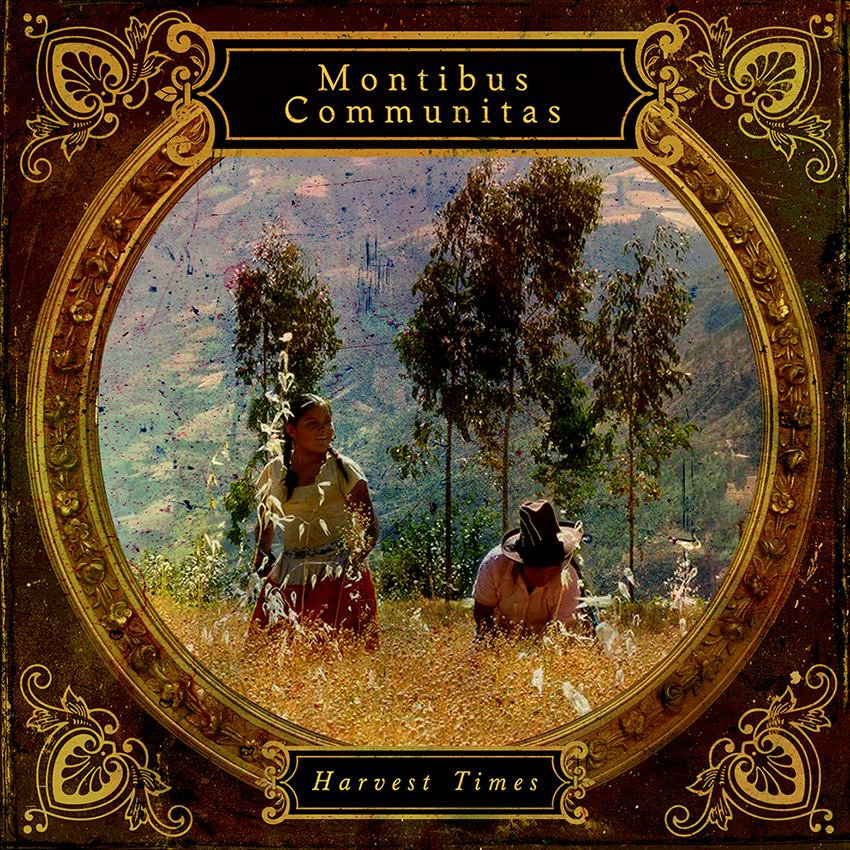
Dan: Your records seem to vary quite a bit from one to the next, for example: Harvest Times is great because it is just you creating the piece, but on a recording such as Offerings For The Destroyer there is large presence at work. How do you like the two setups when compared with one another?

Anthony: It’s all about the context. If it can be just me then it’ll be just me, if it can involve more people, then it’ll involve more people. I don’t like to force things too much, its better when they just happen, and that’s how most of this have happen so far.
When it’s just me, I tend to approach it like if I’d jam with myself in different dimensions, so I go to the drums, jam out some cool beats, then I pick the bass and I jam over the recorded drums, and so on with the rest of the instruments, so I don’t really know where I’m going, and that’s kind the fun part, and that’s why the songs have a kind of free flow jam vibe.


Dan: What sort of equipment are you usually using for guitars on your records?

Anthony: For the first album I used an epiphone casino, for the second one I used an unbranded acoustic guitar from my cousin, a really cheap and extremely shitty one, that sounds like it would have some sort of distorsion built inside haha, but I just love it, it sounds really raw. For the live album

I used the casino, a 2nd hand walden acoustic guitar and one that I borrowed from one of the bands that played that night, can’t remember the brand, but It was a sort of stratocaster imitation.

For Harvest Times I only used a cheap Peruvian handmade guitar, an extremely cheap and shitty one. It was the first electric guitar I ever had, and I used to think it was sooo shitty until one day, while I was cleaning my room, I found it over the closet. Dunno why I grabbed it, I plugged it in and voila! It turned out that it had a really nice 60’s sound, like those cheap teisco/guyatone guitars that some bands used to have back in the 60’s, so I just bought some new strings and started recording with it. Guitarists here hate that guitar, I haven’t seen not even one band playing with those cheap Peruvian (or national, as we call them here) guitars, so I guess that’s a good sign haha.

Dan: And amps, and effects?

Anthony: I use a Line 6 combo amp (I live on a department, so I can’t make too much noise), which again, most of the people I know hate those amps, but I just love them haha.  It has a really nice saturation that sometimes reminds me of the Bo Anders Persson’s guitar sound on Pärson Sound’s 10 minutes, pretty crunchy but still comprehensible. About effects, I usually use the ones built inside the amp (like sweep echo and chorus) but I also used a cheap Digitech that has some really crazy sounds, like some sort of weird wah wah sounds that reproduce what you’re playing backwards, some really nice vibratos, etc. I recently got an analog guyatone tape-echo , which was gifted to me by one of the coolest dude I’ve ever met, Daoud, the guitarist of Kikagaku Moyo, while he was in Lima. I still need to get it fix, but I’m sure it’ll sound amazing on the new albums for sure. Don’t Daoud it.


Dan: How about other instruments? From listening to Harvest Times I could tell you are obviously a man with a range of instruments at his fingertips.

Anthony: About instruments, I’m kind a maniac for instruments, so I keep buying weird stuff that I don’t know how to play but I just fool around with it until it sounds nice to me, so you might find some stuff like charango, quena, zampoña, andean bass drum, chacchas, organ, toy pan flutes, donkey jaw, tambourine, electric tampura, tampura quilmeña, bongos, wiro, rain stick, didgeridoo, andean harp, synths, traverse flute, etc. There are also some sounds on harvest times that are made with my hands, a sort of flute/birds sounds made by blowing my hands. Also, some percussive sounds were made in a similar way.

Dan: And how do you usually create your albums in terms of writing, and collaboration with other artists in the collective? I read that you write as you interpret your music.

Anthony: I think there’s no writing process. It’s more like a flow of ideas, I don’t really think on what I’m going to record, I just go on with the guitar or the drums or whatever is that I’m playing at the moment, and, as I keep recording, suddenly the songs start to dictate me what to do, what notes I should play, which instruments I should add. When it’s collaboration with other people, we just jam out and see what happens. That’s how most of the stuff has been coming out.

Dan: Going back to Harvest Times, and other such albums, how does the recording get carried out, and differ between records? Is it hard to capture a live sound well?

Anthony: It’s all pretty unprofessional, and I just love to do things that way haha. It’s all mostly done on a small room  that serves as a dining room, library, study room, party room and, just sometimes, recording studio. I have all my instruments there and some microphones, so I just try to make things work within that small room of the size of a bathroom haha. It’s easier when it’s just me, but when there are other persons, we try to make everybody fit on the room to play whatever they’re playing at the moment. If there are too many people then we move the mics and the instruments to the living room.

About the recordings, I mostly try to capture the room rather than each instrument. I like that kind of ambient feeling on recordings. I like when I can feel the space in which people are playing.  When I record alone is quite easier up to some point, because you can go crazy with the options that you have now with technology for mixing audio, and that’s when things can go pretty fucked up. When recording with other people live it may look like harder to capture the ‘’live’’ sound, but when you got it, it’s like the live feeling speaks for itself. I can’t really get to make that much mixing game since I don’t really record each instrument, so when I get a nice volume for everything, that will be pretty much it. So yeah, both ways are tricky in their own way, but both ways are pretty fun. I have tons of fun while trying to figure out how to make the recordings work.

Dan: Obviously being from Peru you are going to have some alternative influences to our usual interviewees too, what are some of them?

Anthony: There’s definitely lots of folk music going on in Peru. I actually like peruvian folk musicians like Pastorita Huaracina and Jaime Guardia, also bands like Los Hijos de Lamas. Somehow you can hear those influences on Harvest Times. Besides that, I guess I’m more open to any kind of band of any kind of genre; I don’t really have a strict musical taste, so I listen to all kinds of things like afrobeat, Mongolian folk music, ambient/new age, classical music, classical indian music, japanse folk music, Tibetan throat singing, tribal/percussive music, drone, etc. I like to keep listen new stuff, especially music that I haven’t heard yet, cause’ that’s when I feel more inspired to push my own mental boundaries into territories that I haven’t explored yet and I can get to explore and add new elements to my music.


Dan: And what is your favourite, current band putting out music right now?

Anthony: There are so many cool bands right now! I feel really honoured of being part of amazing record labels like Beyond Beyond is Beyond, Trouble in Mind, Cosmic Eye, Sky Lantern, Inner Islands, Reverb Worship, etc. because they’re releasing some of the most amazing music right now. Lots of bands I’ve discovered lately has been because of those labels, like Krakatau, Kikagaku Moyo, The Myrrors, Queen Elephantine, Stag Hare, Ashan, Our Solar System, etc.

Dan: Lastly, What's next for Montibus Communitas, any new albums upon the horizon?

Anthony: On September 29th, the US record label will be releasing the new album ‘’The Pilgrim To The Absolute’’, a conceptual album based on a book I wrote some time ago. It’s probably one of the most far out records I’ve produced in terms of sculpt songs and sounds under a pretty define concept and vibe. Trippy is key word haha.  It’ll be released on LP and CD. You can check the 
BBIB web page for more information: http://beyondbeyondisbeyond.com/


Besides that, there’s some more stuff going on, like some recordings with Kikagaku Moyo’s Daoud, a split with a cool psych band that you’ve already interviewed [Check that out here] and some more recordings I’ve been making during this year. Then I’ll keep recording as usually, so the music is there. Nothing concrete in terms of releases, but we’ll see.
--------------------------------------------------------------------------------
Do You Even Psychedelic? would like to thank Anthony for taking the time out to do this interview.

You can find the full Montibus Communitas Discography here.

Also, make sure to like the band's Facebook to stay up to date, that page can be found here.

Foreword written, and interview conducted, by Daniel Sharman.

Friday, 28 February 2014

Band Case File: The Myrrors

Ever wondered what Terry Riley would of sounded like if he'd ditched his Yamaha organ, picked up an electric guitar and turned the reverb up to 11? Well, wonder no more.The Myrrors, hailing from Arizona in the U.S, are a band which this blog has reviewed and interviewed several times before, the band being a pinnacle of the neo-psychedelia in my opinion. Get ready to experience a band that manages to capture the essence of the wilderness, and still make you feel right at home. 

The facts that you need to know:
  • Claira Safi (who has now left the band) - Bass, Electronics 
  • Grant Beyshau - Drums, Percussion 
  • Cesar Alatorre-Mena - Guitar, Vocals 
  • Nik Rayne - Vocals, Sitar, Piano, Percussion, Guitar, Harmonica 

The band in 2013.


Where do they come from?
Tuscon, Arizona, U.S.A.

What is there specific style?
Drone, desert psych-rock with Eastern influences. 

For Fans Of?
Electric Moon, Liquid Visions, Weird Owl, Night Beats and Shapes Have Fangs.

Their Labels?
The band has self-released its current works, but now has also gained the backing of several other, third-part record labels. These include: Fuzz Club Records, Merlin Nose Records, Rewolfed Gloom Records, and Strange Design Records. 

What Have They Released? 
One full-length LP, 'Burning Circles in the Sky' and a limited-edition cassette containing three live jams titled 'Solar Collector'. A two-sided, digital single has also been released, but is yet to enjoy a psychical edition, this contains the song 'Ramona Parra' b/w 'Nobody's Children'. 


Do You Even Psychedelic's review of Solar Collector can be found here: http://doyouevenpsychedelic.blogspot.co.uk/2014/01/the-myrrors-solar-collector-review.html

Our Interview with the band's guitarist, Nik Rayne, can be found here: http://doyouevenpsychedelic.blogspot.co.uk/2013/08/interviewgear-review-with-nik-rayne-of.html

Written by Dan Sharman.

Wednesday, 8 January 2014

Song Review: The Desert (Has a Place for You) byShapes Have Fangs

Shapes Have Fangs - The Desert (has a place for you)
Album - Dinner in the Dark


Analysis of song:
Released in 2011 by Austin-based rockers, Shapes Have Fangs (which 3 years on are still waiting to receive the same recognition for their talents as similar psychedelic-blues acts, such as Night Beats), this jangly, melodic melt-out is a perfect example of how a song can capture the essence of an environment and make you feel the geography as if it were your own. The presence of both a rhythm player and a lead player on this track, which is almost a rarity in most popular psychedelic rock at the moment, causes the song to hark back to a structure not unfamiliar to something such as 'Run, Run, Run' by the Velvet Underground, the attacking, reverberated lead licks giving structure to the dusty madness of the rhythm section of the song. When combined with the song's video, getting carried away to the sandy destination of the song's namesake isn't hard. Enjoy.

Where to buy:
'The Desert' is taken from The Shape Have Fang's début LP, Dinner in the Dark, which can be purchased in several formats. The 140g 12" vinyl version of the LP has long been out of print now, but,  you may still be able to find a copy on Ebay or Discogs. A digital copy of the album can still be purchased several internet stores in 320 KBSP MP3 format, and lastly, a cassette version of the full-length can also be found, put out on the band's own label, Trade Gothic Records (limited to 300 pieces). 

Saturday, 16 November 2013

Travelling Circle: Interview + extensive rig rundown!!!

From left to right: Dylan Maiden; Josh Schultz and Charlie Freeman.

Last year pysch-rock power trio Travelling Circle released their latest album, 'Escape From Black Cloud'. A fantastic fuzz driven thrill-ride, the LP was notable for it's inspiring tonal flavours. Wanting to find out more, Do You Even Psychedelic? caught up with the band to find out more about the gear used on the record...

(This article is a follow-up to DYEP's review of the aforementioned 'Escape From Black Cloud', which can be found here.)

Note: images taken from Google Images, some instruments/pictures may vary from that of the actual band's gear arsenal. 

What guitars were used (with addendum regarding other instruments)?:
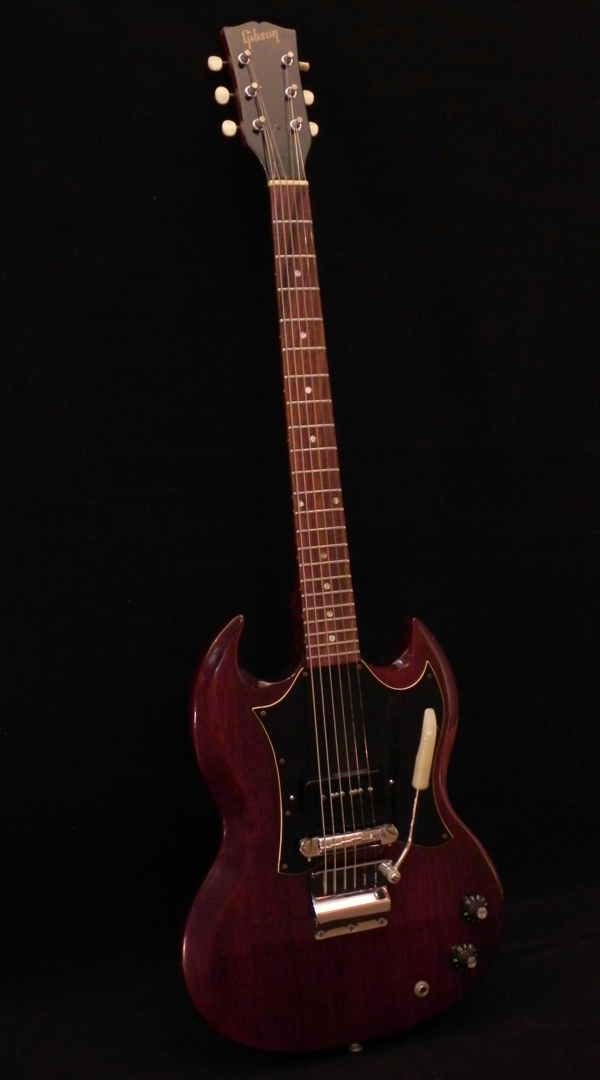
1967 Gibson SG
Dylan: I played my original Cherry Red 1967 Gibson SG Junior. It has a single P90 soapbar pickup.
The guitar speaks for itself and practically plays itself.   

Josh: I played an early stop sign badge Gretsch drum kit. Some unusual elements of my kit include a very resonant 24-inch bass drum and 14-inch deep marching snare (Ludwig blue and olive badge). I use a (synthetic) wool lined cork bass drum beater, which makes for a very boomy sound. Personally, I love my ride cymbal, I have had it since I was 12 or 13. But what about the bass, Charlie?

Charlie: I played a Fender P-Bass with flat wound strings. I much prefer the tone of flats over rounds and I think they suit our sound really well. On “Willow Tree Fair,” I played a Farfisa student piano that Josh gave me. Thanks again Josh! Dylan and I played a Fender Rhodes Piano on “Newborn Shadow” as well.

Early stop-sign badge Gretsch drum kit
without Schultz's modifications.
Josh:  I found that thing on Craigslist for only $25 and it 
made it on the record!  Sounds great too! I had to take the Long Island Rail-road out to Ronkonkoma to pick it up. Actually scoring my drums involved a Long Island trip as well. The guy I bought them from had been in a band that released some major label records a long time ago but he wouldn't tell me the name of the band! 

Dylan: This album also features Theremin arrangements by Matt Dallow and additional keyboard arrangements by producer extraordinaire, Gordon Raphael, who played an Arp Odyssey.


Josh: This is the synth part on “Tears From The Soul.” I actually didn't know Gordon used an Odyssey, I just knew it sounded great. Sweet!!!!!


What amps and pedals were used?:
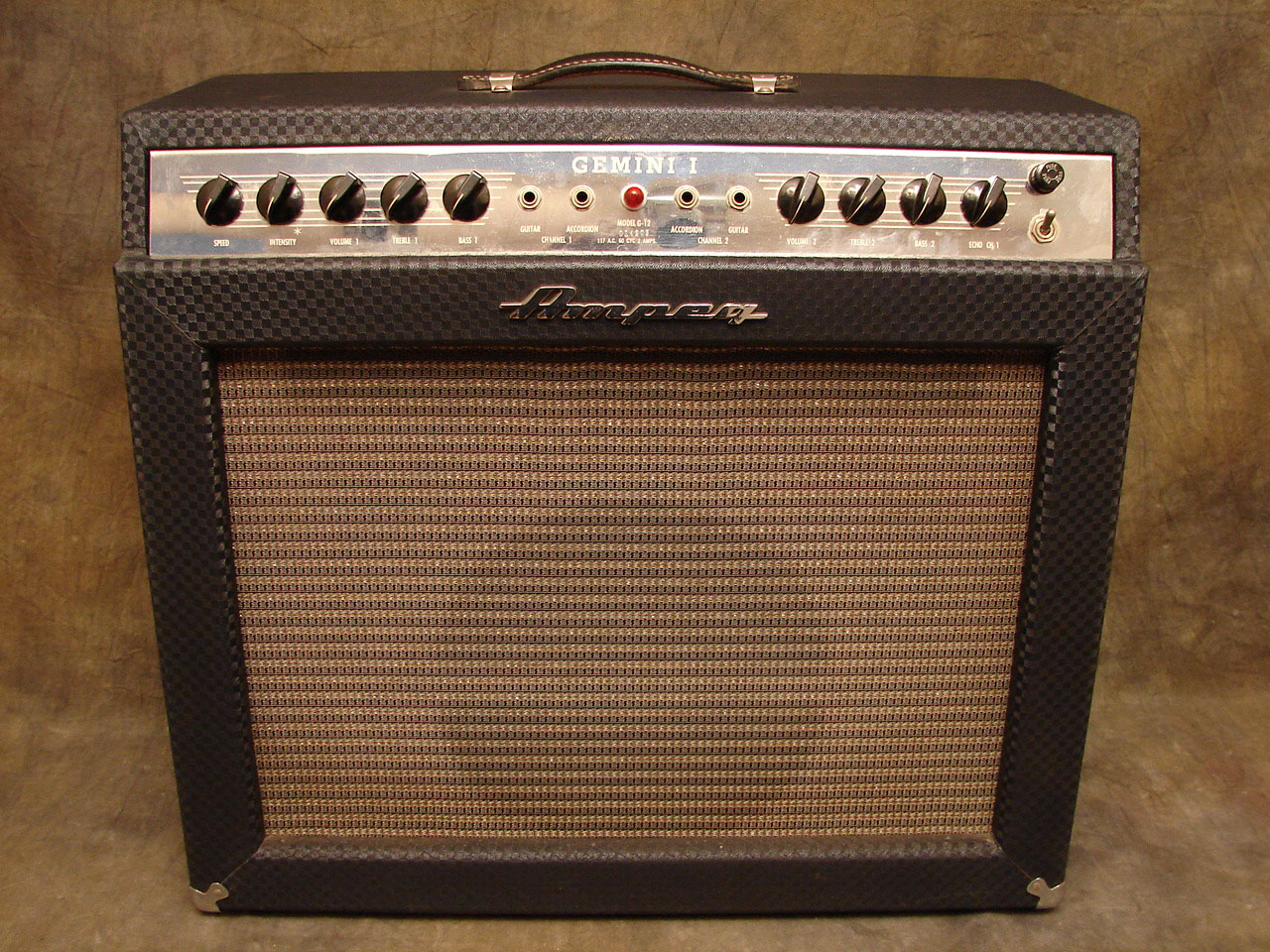
1960's Ampeg Gemini I
Dylan: I used a dual guitar amp configuration. On the left was a 90’s reissue Fender Twin Reverb and to the right a 1960’s Ampeg Gemini I, with my SG inputted through the reverb/tremolo and accordion channels, respectively. My pedal arsenal included a 1980’s Electro Harmonix Big Muff, mid 1970’s MXR Flanger, 2000’s MXR Carbon Copy, 2000’s Electro Harmonix Hum Debugger and 2000’s Morley Splitter, which allowed me to create a stereo and quadrophonic effect on demand, ranging from reverb, fuzz, delay to flanger.
Josh: Dylan is a feedback wizard! I love the Gemini. I have been looking for a Gemini II, which has a 15-inch speaker, for my own dark purposes.

A vintage Kustom 250 Tuck & Roll.
Charlie: Dylan’s set-up is pretty epic. I played through a late 60’s Kustom 250 Tuck and Roll amp, running through an early 70’s Plush cabinet. I used a 1970’s Ross distortion pedal on some songs but very minimally.

Dylan: Yeah, but when you did use that Ross pedal Charlie, it was pretty fucking awesome. Minimal, but fucking awesome.

Details about the Escape from Black cloud sessions: e.g: Where/how it was recorded, ect. 
Josh: Both our records were recorded at Seaside Lounge in Brooklyn, NY with our friend Mitch Rackin. That place is the best!!! 


Dylan: Yes! Polish sandwiches and beers a block away.


Inside Seaside Lounge recording studios, Brooklyn.
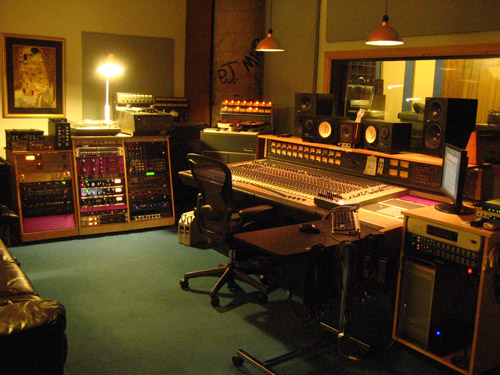
Josh: They record to tape and have tons of cool stuff like the Roland Chorus Echo, a Rhodes, a Wurly, a Hammond, spring reverb, plate reverb -everything! Mitch is the best too!!! He put out a record a few years ago with a band called Heavy Hands (not the Scottish HC band) which is great if you can get your hands on it. His list of recording credits is long and he has worked on some sweet stuff. We recorded the basic guitar, bass and drum tracks for Escape from Black Cloud all in one big room but with a lot of mic options, room mics etc. Then Dylan and Charlie recorded their vocals and Charlie added some great keys. The Theremin was recorded in my apartment. We found Matt Dallow via craigslist and he came in and did a great job. Gordon Raphael took the tracks from there and mixed them and added a few bits somewhere between Berlin and Texas. He did a really great job. I am really happy with how it all turned out!

A Roland 'Space Echo' unit, just one of the many cool things
at Travelling Circle's disposal when recording the new LP. 
Dylan: We kind of removed ourselves from the whole process of post-production and just left it to Gordon. When I first heard what he had done I was a little challenged to be honest. There were aspects I was uncomfortable with in terms of the overall depth. But in retrospect he really helped capture what we were thinking and feeling when we wrote those songs.

Josh: Mixing remotely was a real interesting process. We had to be pretty sure of the changes we asked for because then Gordon would have to go back to work and then get us another version. He was really easy to work with though and patient with us. He put more bass in the mix than probably would have been done if we were all sitting with him in the control room, and when I heard it I thought wow, these songs really move!!!! It changed my thoughts about the place for bass in a mix. Gordon deservers a lot of credit for the density and drive these mixes have.

Follow up and new material: e.g: lessons learned, new projects,ect.
Dylan: Right now I'm working on songs for a new project in Australia. The style is very song-writerly and sort of arrangement-driven with elements of cinema, country, folk, psychedelia, space rock and undeniably some vestiges from my experiences with Travelling Circle. It’s all virtual session work on Protools at the moment. But once the songs are ready, I'm sure I’ll be calling on Josh and Charlie for assistance. The three of us are kindred souls when it comes to writing music. We share similar musical propensities. When I'm playing with these guys, they just know what to do.

Youth of the Beast's latest album; 'Seventy Seven'.
Josh: I am going to be playing drums with some friends on some recordings they will be releasing in the next few months. Their band is called Youth of the Beast. It’s not psych but it has been fun to work with them. I also put some combo organ tracks down on the demo's. I will be curious to see if the organ parts survive to the final mixes!  They sound good though so maybe they have a 50/50 shot at surviving! I constantly make noise at home but nothing really shareable. I picked up a Realistic Concertmate MG-1 for a great price recently so I have been messing with that a bunch, going down the dark road of analogue synthesizers. I'm certainly up for helping on some D. Maiden jams! We (Travelling Circle) got an offer to do a song for a comp from the great psych radio program Trip Inside This House from Saint Louis. I haven’t actually discussed it with Charlie and Dylan yet. Do you guys want to do it?

Charlie: Let’s do it! I've been working on some projects at home too, trying to strengthen my song-writing skills. They’re pretty much just simple, folksy, hippie songs. I would love to try some long-distance recording sessions with these guys though. I think we could come up with something pretty far out.

Dylan: I'm definitely up for some tri-coastal session work.

Josh: Well in that case, keep an eye out for our track on an upcoming Trip Inside This House compilation!  

You can find the whole of Travelling Circle's new album here: Here!

This is what we said about Escape from Black Cloud: ''★★★★ - Very good, This album exceeds expectations in nearly all areas, begging the question, why is this the first we've heard of Travelling Circle? Get ready for a fully-stereo, fuzz driven thrill ride that will sit snugly into your Sunday evening and beyond...and yes, it's true bypass.''

Like the band's Facebook page to keep up with events: Here!

Do you even psychedelic? would like to thank the band for this interview.

Interview conducted by Dan Sharman, posted on 16/11/2013.