Living in the 21st century, the connection between man and sound can often be seen to of been forgotten, or at least misremembered. Ancient lore is often steeped in mystique regarding the power of vibrations, and it is not hard to imagine prehistoric man crouched in a dark cave with nothing but a drum to acquaint him with the sonic abyss. Fast-forward to present day and susurrus folk/wilderness jazz outfit, Cloud Shepherd, are attempting to turn your office desk into that dank cave once again...
Dan: Who is in the band, and who plays what?
Mark: Cloud Shepherd is Joseph Noble on woodwinds and percussion, Andrew Joron on theremin, Brian Lucas on bass guitar, tapes, and percussion, and Mark Pino on Cloud Kit percussion.
Joe: Andrew Joron is on Theremin (waterphone too in earlier recordings). Brian Lucas is on bass, electronics, tape samples, waterphone. Mark Pino is on Cloud kit percussion, which consists of a wide variety of percussion instruments rather than a trap set. Also, waterphone, mbira/kalimba, an electronic device I don’t know the name of, and bamboo flute at times. Myself, Joseph Noble am on C-‐flute, alto flute, bass flute, soprano saxophone, alto saxophone, tenor saxophone, Balanese suling bamboo flute, Thai bamboo flute, various other flutes, bass clarinet, percussion (Chinese cymbal, bowls, etc.), waterphone.
Brian: I play electric bass (6 string Danelectro), electronics, and tapes.
Dan: Where are you guys located?
Joe: We play and record in my place which is currently in Berkeley (previously in Oakland). Andrew lives in El Cerrito; Brian lives in Oakland; Mark lives in El Cerrito.
Dan: How did the band start playing together?
Brian: Andrew and I (Brian) were playing very informally as a duo in our respective living rooms. This was in late 2009, I think. Around this time I met Joe at a friend’s party (Andrew already knew Joe from the Bay Area poetry scene—there are poets in this band!) where he played sax. Said friend encouraged the three of us to jam together, so we did. We were a trio called Free Rein for a couple years, playing mostly quiet, tonal, drone-based music. We played live with Voice of Eye once, did a little poetry/music tour in Colorado, and self-released a couple CDrs. We changed our name to Cloud Shepherd in 2010 (I think), a year before Mark was in the group. Not long before Free Rein started, Mark and I jammed with a guitarist a couple times until that dried up. In 2011 I asked Mark if he wanted to come jam with us. It’s worked out very well.
Joe: Cloud Shepherd started as a trio called Free Rein. The poet, Brian Strang, used to hold a salon called Second Mynd at his house in Oakland. Folks would come and read poetry, play music, show artwork, screen films. Andrew, Brian, and I all went to this salon. One time, I brought my alto saxophone and played an unaccompanied version of Lonnie’s Lament by John Coltrane. Brian came up to me afterwards and said that he and Andrew would get together sometimes and play music and asked if I would like to join them. So we began getting together at my place in Oakland. That was towards the end of 2008. Our sound was more droney and quiet at that point. Besides flutes and saxes, I also played more percussion then, as well as waterphone (which all three of us played then); Mark wasn't with us at that time.
Dan: When, and why, did Mark join the band? He isn't credited as playing on the first album, but I noticed he took the photo used for that album cover, also I see he is on some albums and not on others. How does he interact with the band?
Mark: I joined Cloud Shepherd in 2011. The photo that you are referring to was taken by me while listening to Cloud Shepherd during a break at work in 2011. I absolutely loved the sound of the band, and really, really wanted to participate. Thankfully, Cloud Shepherd took me on, and I am a full time member.
Brian: He joined us quite some time after we started. Early summer, 2011. Mark didn’t play on the first physical album, Helioscript and a few digital albums only because he wasn’t in the group. As I mentioned I knew Mark for a couple years before he joined in. I think he sent the futureNOW photo to me. I don’t recall. Often Joe or I would play percussion in Free Rein and early Cloud Shepherd. I wondered what it would be like to have a full-time percussionist ala Jamie Muir: flexible, a sensitive listener, inside/”out” player, and a maniac; someone who could adapt to what Cloud Shepherd was already doing, create new dynamics, and open unseen/unheard sonic pathways that may not have been found otherwise.
Joe: Mark joined the band in 2011, after we changed the name from Free Rein (from the title of a book by André Breton) to Cloud Shepherd (named after a poem and sculpture by Hans/Jean Arp). So he’s not on Helioscript and the early albums on our BandCamp site: http://cloud-shepherd.bandcamp.com. Cloud Shepherd is a group improvisation band, so Mark interacts as an equal voice with Andrew, Brian, and myself. We all listen to each other and what’s going on collectively and proceed from there.
Mark: Cloud Shepherd’s music is improvised. Sometimes we may use an agreed upon “theme” with which to map our pieces (there is one on Xenoglossia), but for the most part they occur spontaneously.
Brian: We write poetry, we don’t write music. What you hear on the recordings is what we created at that very moment. Sometimes we are distracted and the sounds don’t cohere, but more often than not we get into The Zone and it all flows. Listening is key. Allowing oneself to travel outside the comfort zone, giving room/laying back in order for others to ascend and descend as they experience what is happening, actively exploring the inside of what is organically streaming from us individually and how that sound is transformed by the collective. We are sometimes amazed at what we come up with, it’s as though a fifth member is there as a conduit for our (supposedly) separate selves. We are at once intimately connected to what we’re playing, but sometimes we are outside the sound looking into it as an entity that is apart, outside, The Other. Sometimes we just laugh after playing…it’s the only possible reaction.
Dan: Also for writing, how do you name your songs? Something that has also interested me with instrumental music.
Mark: The songs are most often named by Joe, as are the titles. He does a TON of work in the background, sort of post-production stuff, once we’ve recorded songs and agree upon their being released in whichever format.
Brian: Joe often names the songs. Often we’ll each title a song. Xenoglossia’s song titles are from Finnegan Wake. Titles are based on whatever imagery the song induces in my mind that I then translate into words.
Dan: How would you define the music you create? It's obviously drone-based, but I have a hard time putting a finger exactly on it. It has an environmental quality that makes me think wilderness jazz/folk, but I wonder how you view it yourselves.
Mark: I define Cloud Shepherd music as Improvised Chamber Jazz. We just try to listen to each other and create solidly formed examples of such.
Brian: There’s a drone, or pulse at times, but it isn't constant and is always prone to disruption. Our music is more episodic than confined to a drone, which is, as I understand it, one long extended note. We don’t do that. There may be a drone that gets things started, but it gets corrupted at some point. We have, in a way, created a singular world of sound.
Dan: Your Bandcamp cites you are influenced by Classical and jazz music. I certainly here both in your sound, and it is certainly unusual to hear a band I'm interviewing are influenced by classical stuff. I'm sure you are influenced by many other genres to. Can you elucidate on your influences a bit more?
Mark: I know that Joe is very much influenced by Classical and Symphonic music. My playing in Cloud Shepherd is influenced by many years of listening to Improvised Music and Jazz. Cloud Shepherd was my first opportunity to pursue these interests publicly, and I’m eternally grateful for it.
Brian: One or two of us are Classical music appreciators, although I prefer 20th Century composers such as Morton Feldman, Giacinto Scelsi, Penderecki, and Pärt. I like everything from Terry Riley to Art Ensemble of Chicago to King Crimson, CAN, Sun Ra, Black Flag, Eno, Factory records, and the music of Africa, South-east Asia, and India, etc. Tons of stuff.
Joe: I was the one mainly responsible for including classical and jazz in our list of influences on our Band Camp site. Those are the genres of music that I mostly listen to and play. In classical, I listen to and have been influenced by everything from early music to contemporary; in jazz, mainly from bebop to free jazz . Andrew, Brian, and I are also poets, and I have two books published that deal with music and show some of my influences: An Ives Set, that’s inspired by the music of Charles Ives, and Antiphonal Airs, that consists of three series of poems, all dealing with music, including one section dealing with early baroque, Italian composers, and another section that has poems inspired by diverse composers and musicians like Ornette Coleman, Lee Konitz, Thelonious Monk, Anthony Braxton, Steve Lacy, (all five of which have been big influences on my improvising), and Luigi Nono, Gian Francesco Malipiero, Gianluigi Trovesi, and Pat Martino. And when I practice on my own, I play a lot of Bach and jazz standards, as well as pull patterns from Slonimsky’s Thesaurus of Scales and Melodic Patterns. All of this music informs my playing, sometimes simply there in the background, flavouring what I’m doing, sometimes more at the fore, such as many times with the flutes when I draw on twentieth century French flute music. But in the past, I also played electric bass in a Cream-influenced power trio (so there’s the psychedelic influence), and acoustic guitar for Bob Dylanish folk music, so I’m sure some of that music works its way into my playing too. There’s a folk element to my flute playing at times, especially with the bamboo flutes.
Dan: Theremin...that's not too common to hear on usual psychedelic records either. What one(s) are you using and what got you into playing it? It is certainly a big part of the Cloud Shepherd sound
Andrew: While the theremin - a gesture-activated electronic instrument - may be less commonly used in psychedelic music than other instruments such as synth and guitar, these days it's probably used more often in psych and space rock than in other musical genres. The otherworldly sound of the theremin is certainly appropriate to psych. Invented in the early twentieth century by the Russian engineer Leon Theremin, the box-shaped instrument with two antennas (one for pitch, the other for volume) was at first used mostly for performing classical music. It fell into disuse during the two world wars, then was rediscovered by Hollywood composers and used throughout the fifties in the soundtracks of noir and science-fiction films. In the sixties and thereafter, it has mostly been used by rock musicians, especially those playing space rock and psych (e.g., Hawkind, Tangerine Dream, the Stones' Satanic Majesties), and rock experimenters such as Captain Beefheart. Very rarely, the theremin has been used in jazz settings (as in Yusef Lateef's "Sound Wave" on his album A Flat, G Flat and C). As for how I picked up the theremin: almost ten years ago, a state-of-the-art Moog Etherwave theremin was given to me by friends who noticed my enthusiasm for the sound of the instrument. My main activity at that time was writing poetry influenced by science fiction and surrealism; I'd written a piece entited "Constellations for Theremin" which prompted their gift of the instrument. I taught myself to play it, with guidance and encouragement from my fellow poet/musicians Brian Lucas and Joseph Noble. We formed a drone trio called Free Rein that, after some years, evolved into Cloud Shepherd. We were soon joined by Mark Pino and our sound subsequently deepened and diversified (although drone remains a significant part of what we do). I've written an essay, "The Theremin in My Life," about the relation between my poetic and musical activity.
Joe: You’ll have to refer to Andrew’s answer for this question. But I will say that, yes, the theremin is a big part of our sound. Andrew weaves it in and out and between notes, and he definitely has his own sound and approach to the instrument that is unique. He’s a bit of a tonal gymnast.
Dan: Carrying on with instruments, what other instruments are being used on your records?
Mark: Waterphone, found percussion, flutes from various regions of the world, etc.
Joe: I laid this out in my answer to the first question, but, yes, we do have quite a variety of instruments, and very different ones played by each member of the group. The most unusual ones of mine are probably the alto and bass flutes, and the suling and Thai bamboo flutes. They don’t turn up in most groups, period. Mark has a whole array of percussion instruments that he uses, and Brian creates all kinds of aural environments when he does his tape/electronic thing, creating sound washes/maps that the other three of us move within and without. And, of course, then there’s the theremin.
Dan: Also, Can you tell us a bit more about Mark's 'Cloud Kit' percussion array?
Mark: The Cloud Kit was initially a floor-based assemblage of various percussion instruments that I played while sitting on my knees. It was conceived pragmatically, as the space in which I had initial rehearsals with Cloud Shepherd was quite cramped. In hindsight, I feel that it was also a temporary rejection of the tradition drum kit, which I’d been playing for many years. I had gotten really tired of its limitations and certain contemporary aspects of its aesthetics. The Cloud Kit is now a kind or morphed drum kit; I have to sit on a regular drum throne, as my back can no longer take the slumping and bending that I was doing to start out. I use the term “Cloud Kit” as a way of differentiating Cloud Shepherd from the various other bands/projects that I play in. This is done as a tribute to the band, which I cherish.
Brian: It used to be played on the ground: gongs, cymbals, Korean tom tom, effect pedals, metal, bongos…now Mark’s sitting on a chair and playing a slightly more conventional kit, but with Roto-toms, and no snare.
Dan: I sense that you guys might not be deliberately trying to be psychedelic, but obviously I think you are in part, haha. Would you see what you create as psychedelic? And what are your thoughts on the whole 'psych' scene?
Mark: I feel that we are just deliberately trying to make the most creative music that we can. I love the worldwide Psych Music scene, and I salute all creative musicians and artists and listeners that are involved with it. Corporate Rock (and Jazz) Still Sucks!
Brian: I’ve been playing some form of “psychedelic” or improvised music for 25 years. Cloud Shepherd certainly plays a form of “psychedelic” music, although it wouldn’t be the first term to enter my mind if someone asked what kind of music we played. And I doubt if we’ll ever be invited to play at the Austin or Tokyo Psych Fests! But if free, expansive, and ritualistic are considered “psychedelic” then we definitely are. (As for the psych rock scene now: Gnod and Dagha Bloom are two recent favorites.)
Dan: As the band has progressed, has it become a more serious, formal arrangement? Earlier tracks like Snails seem more wimsical, whereas the latest release, 'Xenoglossia', seems more 'proper' and official.
Mark: It’s my feeling that Cloud Shepherd is just like many other bands, in that our sound has morphed over time. I can definitely agree that the earlier stuff had a bit more whimsy. Believe me, our recording sessions are just as loopy as ever! Xenoglossia definitely has more percussive drive more progressive bass guitar playing. It’s my hope that every Cloud Shepherd recording is different, but imbued with quality.
Brian: We seriously enjoy playing together. It’s a fairly formal arrangement: we are a quartet, but we have invited others to play with us from time to time. Xenoglossia is certainly our only album to attract such a wide (for us) response. It’s probably helped that folks already know about Sky Lantern and that Nik promotes the albums.
Joe: I don’t know if we’ve become more serious. There are always both serious and playful dimensions to our music. But it has changed. Part of the change was when Mark joined the band, and the sound changed a lot, got louder, fuller, with more dimensions to it, than our earlier trio work which was quieter, softer, more drone based, and maybe more moody. And I think that there was a certain exploratory tentativeness to the early work – we were just getting to know each other musically – that had a certain delicacy to it. Snails is more whimsical, especially the track titles, which came from Brian. (On “Wailing Snails,” listen to Andrew’s maniacal snail calls on theremin while Brian [waterphone and electronics] and I [bass flute and percussion} provide environmental ambience). With Xenoglossia, Nik Rayne was kind enough to ask us for an album to release on his label, Sky Lantern, so we got together to record music specifically for that album, so there was more deliberateness to our playing for that particular project. But, yes, things have evolved and changed; we talk about how things go in sessions or after gigs and discuss what we want to be doing. And what we play and what instruments we play has changed. Speaking for myself, I play percussion hardly ever any more – now with Mark’s expert drumming. Also, I do less vocals now than before, favouring the instrumental instead, and I might be a little more aggressive and complex in my improvisational lines than before. Also, I’ve evolved how I use electronics myself with my woodwinds, especially with the flutes, hopefully becoming more proficient with the electronics and realizing their potential more. But it’s always a process of evolution. I’m sure the other guys will say how their own playing has changed over time too. We’ve been together now for six years.

Dan: Talking of Xenoglossia, it's nice to see you guys getting some recognition for your great work! How did the collaboration with Sky Lantern Records come about?
Mark: We are so grateful to Nik for reaching out to us and releasing a Cloud Shepherd cassette on Sky Lantern. As far as I know, he contacted Brian, and Brian did the project management of getting the recordings to Nik. Again, Joe did a ton of work in post production, in order to get the initial recordings shaped, named, and formatted.
Brian: Nik found us on Bandcamp and contacted us, which was so unexpected. I can’t thank him enough for having an interest in our music.
Joe: Yes, it was very nice of Nik to ask us for an album and to write such kind words about our music. We are very appreciative of him and what he is doing.
Dan: Lastly, What's next for Cloud Shepherd?
Mark: Hopefully, we’ll continue to record and play shows! We don’t have any sort of grand plan; it’s just one step at a time.
Brian: Some of the music on Xenoglossia was recently used as a soundtrack for a short documentary called “A Bridge Between Worlds: The Myth of the Silk Road” by Michael Dean. It can be viewed here: http://vimeo.com/107389518 I don’t think we have any solid plans at the moment, although if someone wanted to book a European tour for us... But a local gig would be fine, too.
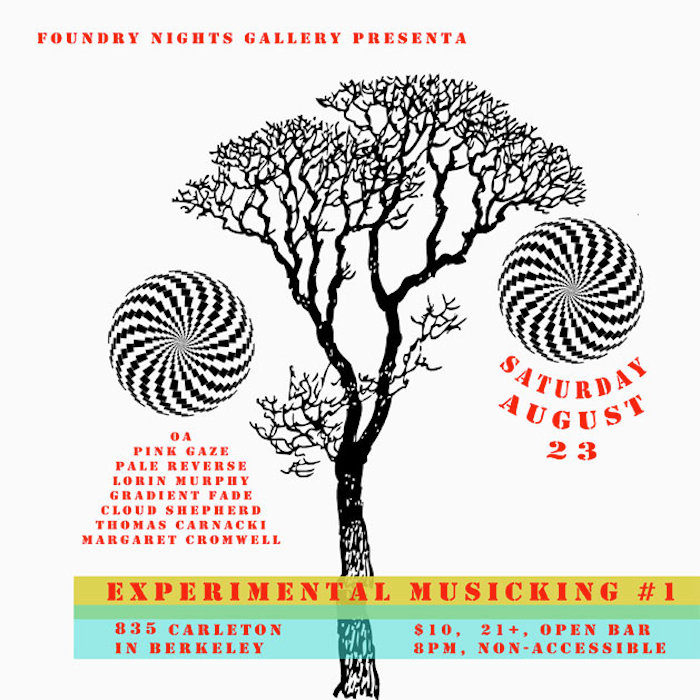
Joe: On our Band Camp site, we have a new album that contains our performance at Foundry Nights in Berkeley, CA, on August 23, 2014, and an “album” of videos of some of our performances. Our two week tour of Saturn is coming up in November, and after that we will hitch a ride on Voyager to the outer rim.
Mark: Thanks, Daniel, for giving us a public platform with which to express ourselves.
Do You Even Psychedelic? issues a huge thanks to all of the guys in the band, an interview worthy of academic status!
Find Cloud Shepherd's latest release here, out on Sky Lantern Records (interview here).
Find the band's full discography here, (includes all of their records - live and studio).
Also make sure to like the band's Facebook page here so you can keep in the loop with this awesome band!

Interview conducted by Daniel Sharman.
Dan: Who is in the band, and who plays what?
Mark: Cloud Shepherd is Joseph Noble on woodwinds and percussion, Andrew Joron on theremin, Brian Lucas on bass guitar, tapes, and percussion, and Mark Pino on Cloud Kit percussion.
Joe: Andrew Joron is on Theremin (waterphone too in earlier recordings). Brian Lucas is on bass, electronics, tape samples, waterphone. Mark Pino is on Cloud kit percussion, which consists of a wide variety of percussion instruments rather than a trap set. Also, waterphone, mbira/kalimba, an electronic device I don’t know the name of, and bamboo flute at times. Myself, Joseph Noble am on C-‐flute, alto flute, bass flute, soprano saxophone, alto saxophone, tenor saxophone, Balanese suling bamboo flute, Thai bamboo flute, various other flutes, bass clarinet, percussion (Chinese cymbal, bowls, etc.), waterphone.
Brian: I play electric bass (6 string Danelectro), electronics, and tapes.
Dan: Where are you guys located?
Joe: We play and record in my place which is currently in Berkeley (previously in Oakland). Andrew lives in El Cerrito; Brian lives in Oakland; Mark lives in El Cerrito.
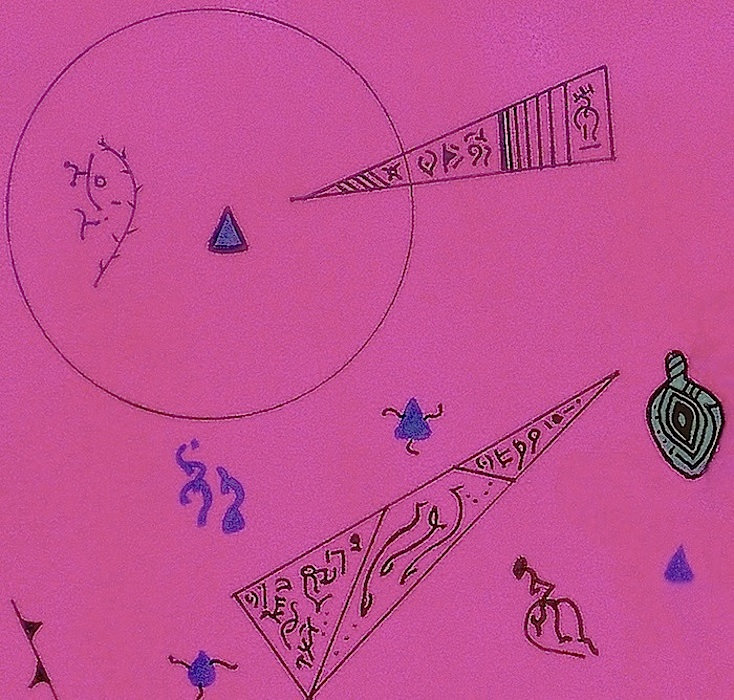 |
| From Cloud Shepherd's latest live album (artwork: Joseph Noble) |
Dan: How did the band start playing together?
Brian: Andrew and I (Brian) were playing very informally as a duo in our respective living rooms. This was in late 2009, I think. Around this time I met Joe at a friend’s party (Andrew already knew Joe from the Bay Area poetry scene—there are poets in this band!) where he played sax. Said friend encouraged the three of us to jam together, so we did. We were a trio called Free Rein for a couple years, playing mostly quiet, tonal, drone-based music. We played live with Voice of Eye once, did a little poetry/music tour in Colorado, and self-released a couple CDrs. We changed our name to Cloud Shepherd in 2010 (I think), a year before Mark was in the group. Not long before Free Rein started, Mark and I jammed with a guitarist a couple times until that dried up. In 2011 I asked Mark if he wanted to come jam with us. It’s worked out very well.
Joe: Cloud Shepherd started as a trio called Free Rein. The poet, Brian Strang, used to hold a salon called Second Mynd at his house in Oakland. Folks would come and read poetry, play music, show artwork, screen films. Andrew, Brian, and I all went to this salon. One time, I brought my alto saxophone and played an unaccompanied version of Lonnie’s Lament by John Coltrane. Brian came up to me afterwards and said that he and Andrew would get together sometimes and play music and asked if I would like to join them. So we began getting together at my place in Oakland. That was towards the end of 2008. Our sound was more droney and quiet at that point. Besides flutes and saxes, I also played more percussion then, as well as waterphone (which all three of us played then); Mark wasn't with us at that time.
 |
| Is the band's dress-code indicative of their sound? You decide. |
Dan: When, and why, did Mark join the band? He isn't credited as playing on the first album, but I noticed he took the photo used for that album cover, also I see he is on some albums and not on others. How does he interact with the band?
Mark: I joined Cloud Shepherd in 2011. The photo that you are referring to was taken by me while listening to Cloud Shepherd during a break at work in 2011. I absolutely loved the sound of the band, and really, really wanted to participate. Thankfully, Cloud Shepherd took me on, and I am a full time member.
Brian: He joined us quite some time after we started. Early summer, 2011. Mark didn’t play on the first physical album, Helioscript and a few digital albums only because he wasn’t in the group. As I mentioned I knew Mark for a couple years before he joined in. I think he sent the futureNOW photo to me. I don’t recall. Often Joe or I would play percussion in Free Rein and early Cloud Shepherd. I wondered what it would be like to have a full-time percussionist ala Jamie Muir: flexible, a sensitive listener, inside/”out” player, and a maniac; someone who could adapt to what Cloud Shepherd was already doing, create new dynamics, and open unseen/unheard sonic pathways that may not have been found otherwise.
Joe: Mark joined the band in 2011, after we changed the name from Free Rein (from the title of a book by André Breton) to Cloud Shepherd (named after a poem and sculpture by Hans/Jean Arp). So he’s not on Helioscript and the early albums on our BandCamp site: http://cloud-shepherd.bandcamp.com. Cloud Shepherd is a group improvisation band, so Mark interacts as an equal voice with Andrew, Brian, and myself. We all listen to each other and what’s going on collectively and proceed from there.
 |
| The Maniac, Mark Pino, showing us that facial hair is always more rock and roll. |
Dan: How do you go about writing? Is it purely instrumental, or do you come up with themes and motifs and then work off of them to jam out a complete piece of music?
Mark: Cloud Shepherd’s music is improvised. Sometimes we may use an agreed upon “theme” with which to map our pieces (there is one on Xenoglossia), but for the most part they occur spontaneously.
Brian: We write poetry, we don’t write music. What you hear on the recordings is what we created at that very moment. Sometimes we are distracted and the sounds don’t cohere, but more often than not we get into The Zone and it all flows. Listening is key. Allowing oneself to travel outside the comfort zone, giving room/laying back in order for others to ascend and descend as they experience what is happening, actively exploring the inside of what is organically streaming from us individually and how that sound is transformed by the collective. We are sometimes amazed at what we come up with, it’s as though a fifth member is there as a conduit for our (supposedly) separate selves. We are at once intimately connected to what we’re playing, but sometimes we are outside the sound looking into it as an entity that is apart, outside, The Other. Sometimes we just laugh after playing…it’s the only possible reaction.
Joe: Our music is
generally instrumental, though some of us have been known to vocalize at times.
We don’t write compositions. Cloud Shepherd is a free improvisation quartet. We
generate each piece new at each session. We do sometimes set a certain framework.
For instance, on Xenoglossia, we have a few pieces in which we decided
beforehand who plays when, e.g., two band members would start playing, then
stop, and then the other two members would begin, or we did a round robin
thing. But most of the time we don’t do that. Most of the time it’s free improv
with a lot of listening to each other.
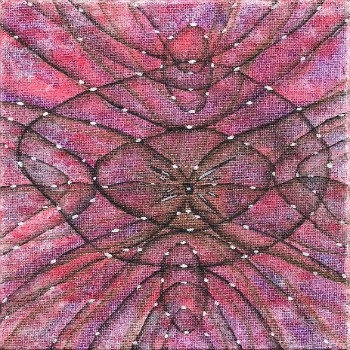 |
| The aforementioned 'Helioscript' |
Dan: Also for writing, how do you name your songs? Something that has also interested me with instrumental music.
Mark: The songs are most often named by Joe, as are the titles. He does a TON of work in the background, sort of post-production stuff, once we’ve recorded songs and agree upon their being released in whichever format.
Brian: Joe often names the songs. Often we’ll each title a song. Xenoglossia’s song titles are from Finnegan Wake. Titles are based on whatever imagery the song induces in my mind that I then translate into words.
Joe: Sometimes we each
name individual tracks, sometimes we collaborate on names, sometimes I come up
with names and ask the other guys if they’re ok with them. I’m the one who
records our sessions and now generally masters/edits them, so it’s sometimes
easier if I come up with name suggestions. Brian mastered/edited and posted the
earlier albums and also named many of the tracks on those albums.
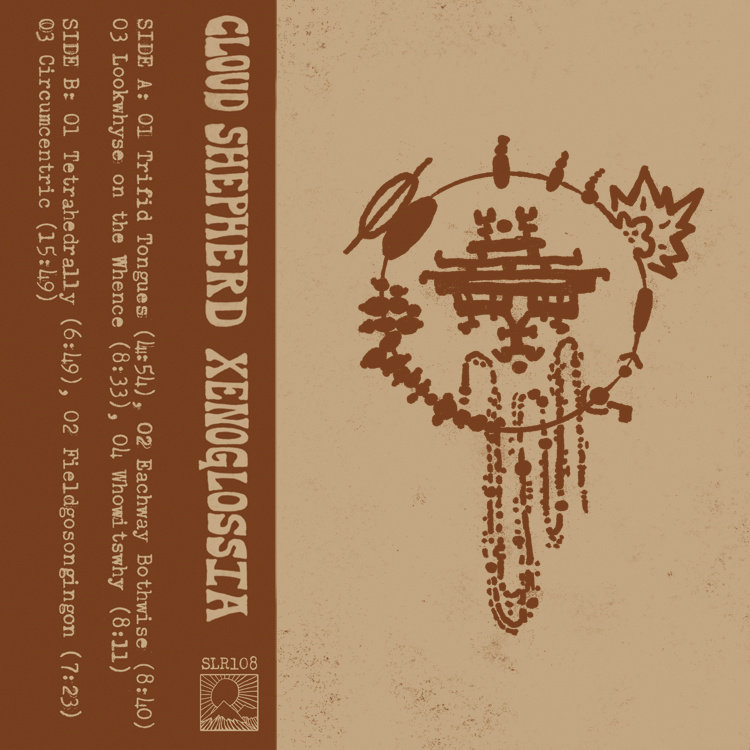 |
| Cloud Shepherd's latest release, out on Sky Lantern Records. |
Dan: How would you define the music you create? It's obviously drone-based, but I have a hard time putting a finger exactly on it. It has an environmental quality that makes me think wilderness jazz/folk, but I wonder how you view it yourselves.
Mark: I define Cloud Shepherd music as Improvised Chamber Jazz. We just try to listen to each other and create solidly formed examples of such.
Brian: There’s a drone, or pulse at times, but it isn't constant and is always prone to disruption. Our music is more episodic than confined to a drone, which is, as I understand it, one long extended note. We don’t do that. There may be a drone that gets things started, but it gets corrupted at some point. We have, in a way, created a singular world of sound.
Joe: I like that
description: “wilderness jazz/folk”! Wow, that’s good! Very applicable to what
we do. How to describe our music? Besides wilderness jazz/folk, I’d say: free,
collective improvisation; tribal; drone; avant garde; experimental. The four of us have very
different backgrounds musically, so we bring very different interests,
influences, and traditions to our collective improvisations. I think we do
create “environments,” as you put it. What we do has a certain motion and
directionality, a life of its own born of the moment. There’s a kind of
sculptural, dance quality to each improvisation. The listening we do to each
other is really important and one of the joys of playing in the band: hearing
where things are going, moving in that direction, following someone’s lead,
taking the lead, leading with the others simultaneously.
 |
| Transonal Topographies LP (Artwork: Brian Lucas) |
Dan: Your Bandcamp cites you are influenced by Classical and jazz music. I certainly here both in your sound, and it is certainly unusual to hear a band I'm interviewing are influenced by classical stuff. I'm sure you are influenced by many other genres to. Can you elucidate on your influences a bit more?
Mark: I know that Joe is very much influenced by Classical and Symphonic music. My playing in Cloud Shepherd is influenced by many years of listening to Improvised Music and Jazz. Cloud Shepherd was my first opportunity to pursue these interests publicly, and I’m eternally grateful for it.
Brian: One or two of us are Classical music appreciators, although I prefer 20th Century composers such as Morton Feldman, Giacinto Scelsi, Penderecki, and Pärt. I like everything from Terry Riley to Art Ensemble of Chicago to King Crimson, CAN, Sun Ra, Black Flag, Eno, Factory records, and the music of Africa, South-east Asia, and India, etc. Tons of stuff.
Joe: I was the one mainly responsible for including classical and jazz in our list of influences on our Band Camp site. Those are the genres of music that I mostly listen to and play. In classical, I listen to and have been influenced by everything from early music to contemporary; in jazz, mainly from bebop to free jazz . Andrew, Brian, and I are also poets, and I have two books published that deal with music and show some of my influences: An Ives Set, that’s inspired by the music of Charles Ives, and Antiphonal Airs, that consists of three series of poems, all dealing with music, including one section dealing with early baroque, Italian composers, and another section that has poems inspired by diverse composers and musicians like Ornette Coleman, Lee Konitz, Thelonious Monk, Anthony Braxton, Steve Lacy, (all five of which have been big influences on my improvising), and Luigi Nono, Gian Francesco Malipiero, Gianluigi Trovesi, and Pat Martino. And when I practice on my own, I play a lot of Bach and jazz standards, as well as pull patterns from Slonimsky’s Thesaurus of Scales and Melodic Patterns. All of this music informs my playing, sometimes simply there in the background, flavouring what I’m doing, sometimes more at the fore, such as many times with the flutes when I draw on twentieth century French flute music. But in the past, I also played electric bass in a Cream-influenced power trio (so there’s the psychedelic influence), and acoustic guitar for Bob Dylanish folk music, so I’m sure some of that music works its way into my playing too. There’s a folk element to my flute playing at times, especially with the bamboo flutes.
 |
| Cloud Shepherd live, with Mark's 'Cloud Kit' in its current incarnation. |
Dan: Theremin...that's not too common to hear on usual psychedelic records either. What one(s) are you using and what got you into playing it? It is certainly a big part of the Cloud Shepherd sound
Andrew: While the theremin - a gesture-activated electronic instrument - may be less commonly used in psychedelic music than other instruments such as synth and guitar, these days it's probably used more often in psych and space rock than in other musical genres. The otherworldly sound of the theremin is certainly appropriate to psych. Invented in the early twentieth century by the Russian engineer Leon Theremin, the box-shaped instrument with two antennas (one for pitch, the other for volume) was at first used mostly for performing classical music. It fell into disuse during the two world wars, then was rediscovered by Hollywood composers and used throughout the fifties in the soundtracks of noir and science-fiction films. In the sixties and thereafter, it has mostly been used by rock musicians, especially those playing space rock and psych (e.g., Hawkind, Tangerine Dream, the Stones' Satanic Majesties), and rock experimenters such as Captain Beefheart. Very rarely, the theremin has been used in jazz settings (as in Yusef Lateef's "Sound Wave" on his album A Flat, G Flat and C). As for how I picked up the theremin: almost ten years ago, a state-of-the-art Moog Etherwave theremin was given to me by friends who noticed my enthusiasm for the sound of the instrument. My main activity at that time was writing poetry influenced by science fiction and surrealism; I'd written a piece entited "Constellations for Theremin" which prompted their gift of the instrument. I taught myself to play it, with guidance and encouragement from my fellow poet/musicians Brian Lucas and Joseph Noble. We formed a drone trio called Free Rein that, after some years, evolved into Cloud Shepherd. We were soon joined by Mark Pino and our sound subsequently deepened and diversified (although drone remains a significant part of what we do). I've written an essay, "The Theremin in My Life," about the relation between my poetic and musical activity.
Joe: You’ll have to refer to Andrew’s answer for this question. But I will say that, yes, the theremin is a big part of our sound. Andrew weaves it in and out and between notes, and he definitely has his own sound and approach to the instrument that is unique. He’s a bit of a tonal gymnast.
 |
| Andrew's spectacular Moog Etherwave Theremin. |
Dan: Carrying on with instruments, what other instruments are being used on your records?
Mark: Waterphone, found percussion, flutes from various regions of the world, etc.
Brian: Wooden flutes,
saxophones, electric bass, [cassette] tapes, lots of percussion, pedal effects,
electronics…..Roto-toms!
Joe: I laid this out in my answer to the first question, but, yes, we do have quite a variety of instruments, and very different ones played by each member of the group. The most unusual ones of mine are probably the alto and bass flutes, and the suling and Thai bamboo flutes. They don’t turn up in most groups, period. Mark has a whole array of percussion instruments that he uses, and Brian creates all kinds of aural environments when he does his tape/electronic thing, creating sound washes/maps that the other three of us move within and without. And, of course, then there’s the theremin.
Dan: Also, Can you tell us a bit more about Mark's 'Cloud Kit' percussion array?
Mark: The Cloud Kit was initially a floor-based assemblage of various percussion instruments that I played while sitting on my knees. It was conceived pragmatically, as the space in which I had initial rehearsals with Cloud Shepherd was quite cramped. In hindsight, I feel that it was also a temporary rejection of the tradition drum kit, which I’d been playing for many years. I had gotten really tired of its limitations and certain contemporary aspects of its aesthetics. The Cloud Kit is now a kind or morphed drum kit; I have to sit on a regular drum throne, as my back can no longer take the slumping and bending that I was doing to start out. I use the term “Cloud Kit” as a way of differentiating Cloud Shepherd from the various other bands/projects that I play in. This is done as a tribute to the band, which I cherish.
Brian: It used to be played on the ground: gongs, cymbals, Korean tom tom, effect pedals, metal, bongos…now Mark’s sitting on a chair and playing a slightly more conventional kit, but with Roto-toms, and no snare.
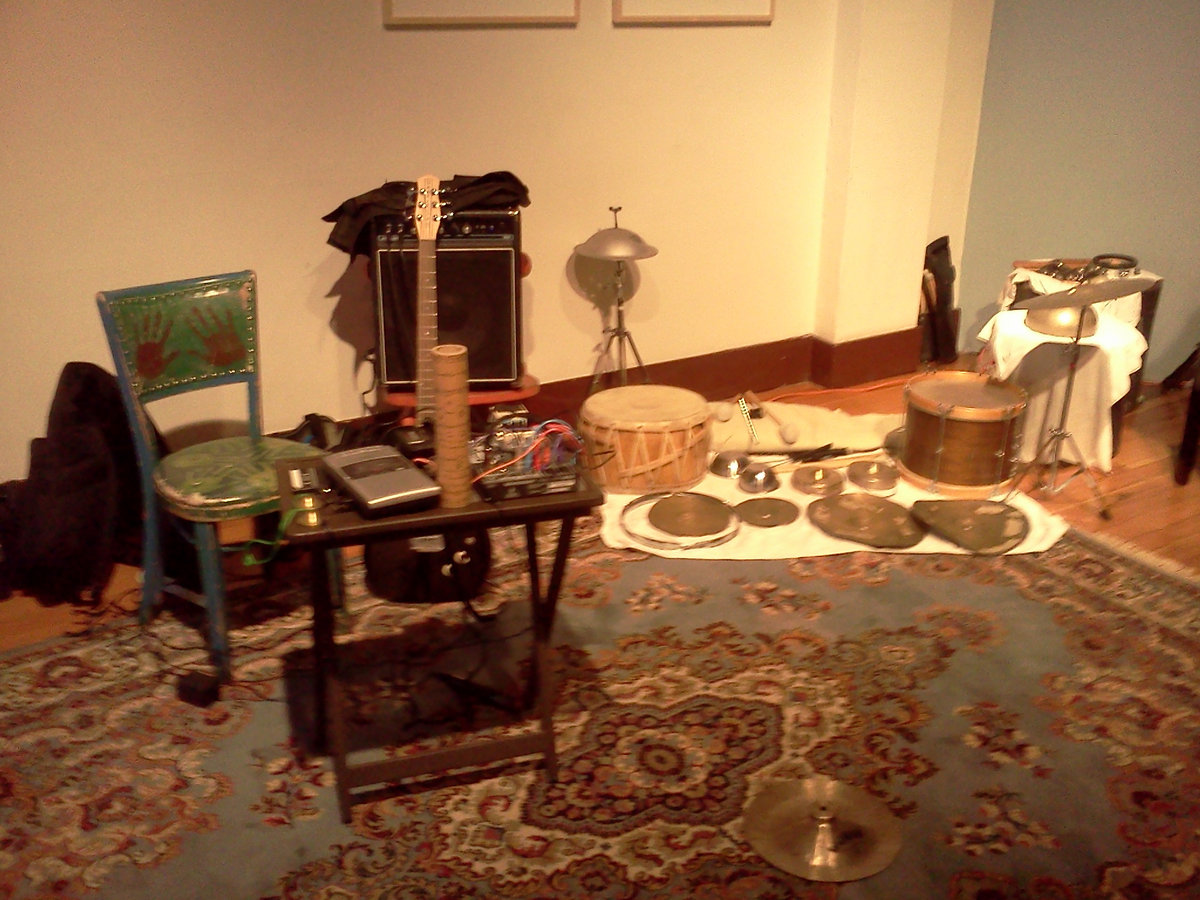 |
| The original incarnation of the 'Cloud Kit'. |
Dan: I sense that you guys might not be deliberately trying to be psychedelic, but obviously I think you are in part, haha. Would you see what you create as psychedelic? And what are your thoughts on the whole 'psych' scene?
Mark: I feel that we are just deliberately trying to make the most creative music that we can. I love the worldwide Psych Music scene, and I salute all creative musicians and artists and listeners that are involved with it. Corporate Rock (and Jazz) Still Sucks!
Brian: I’ve been playing some form of “psychedelic” or improvised music for 25 years. Cloud Shepherd certainly plays a form of “psychedelic” music, although it wouldn’t be the first term to enter my mind if someone asked what kind of music we played. And I doubt if we’ll ever be invited to play at the Austin or Tokyo Psych Fests! But if free, expansive, and ritualistic are considered “psychedelic” then we definitely are. (As for the psych rock scene now: Gnod and Dagha Bloom are two recent favorites.)
Joe: Yes, I don’t think
we are deliberately trying to be psychedelic, but I can see how what we do can
fall into the psychedelic arena. In the power trio I played in when I was
younger, much of what we played was psychedelic, and I listened to psychedelic
music from the 1960s and 1970s when I was younger (and have been going back to
some of that stuff now too). Like a lot of that music, Cloud Shepherd performs
long space jams. We don’t base our improvisations, though, on a song form, or
start from that, but the whole thing is improvisation. And the drone dimension
lends itself to psychedelia.
Dan: As the band has progressed, has it become a more serious, formal arrangement? Earlier tracks like Snails seem more wimsical, whereas the latest release, 'Xenoglossia', seems more 'proper' and official.
Mark: It’s my feeling that Cloud Shepherd is just like many other bands, in that our sound has morphed over time. I can definitely agree that the earlier stuff had a bit more whimsy. Believe me, our recording sessions are just as loopy as ever! Xenoglossia definitely has more percussive drive more progressive bass guitar playing. It’s my hope that every Cloud Shepherd recording is different, but imbued with quality.
Brian: We seriously enjoy playing together. It’s a fairly formal arrangement: we are a quartet, but we have invited others to play with us from time to time. Xenoglossia is certainly our only album to attract such a wide (for us) response. It’s probably helped that folks already know about Sky Lantern and that Nik promotes the albums.
Joe: I don’t know if we’ve become more serious. There are always both serious and playful dimensions to our music. But it has changed. Part of the change was when Mark joined the band, and the sound changed a lot, got louder, fuller, with more dimensions to it, than our earlier trio work which was quieter, softer, more drone based, and maybe more moody. And I think that there was a certain exploratory tentativeness to the early work – we were just getting to know each other musically – that had a certain delicacy to it. Snails is more whimsical, especially the track titles, which came from Brian. (On “Wailing Snails,” listen to Andrew’s maniacal snail calls on theremin while Brian [waterphone and electronics] and I [bass flute and percussion} provide environmental ambience). With Xenoglossia, Nik Rayne was kind enough to ask us for an album to release on his label, Sky Lantern, so we got together to record music specifically for that album, so there was more deliberateness to our playing for that particular project. But, yes, things have evolved and changed; we talk about how things go in sessions or after gigs and discuss what we want to be doing. And what we play and what instruments we play has changed. Speaking for myself, I play percussion hardly ever any more – now with Mark’s expert drumming. Also, I do less vocals now than before, favouring the instrumental instead, and I might be a little more aggressive and complex in my improvisational lines than before. Also, I’ve evolved how I use electronics myself with my woodwinds, especially with the flutes, hopefully becoming more proficient with the electronics and realizing their potential more. But it’s always a process of evolution. I’m sure the other guys will say how their own playing has changed over time too. We’ve been together now for six years.
Dan: Talking of Xenoglossia, it's nice to see you guys getting some recognition for your great work! How did the collaboration with Sky Lantern Records come about?
Mark: We are so grateful to Nik for reaching out to us and releasing a Cloud Shepherd cassette on Sky Lantern. As far as I know, he contacted Brian, and Brian did the project management of getting the recordings to Nik. Again, Joe did a ton of work in post production, in order to get the initial recordings shaped, named, and formatted.
Brian: Nik found us on Bandcamp and contacted us, which was so unexpected. I can’t thank him enough for having an interest in our music.
Joe: Yes, it was very nice of Nik to ask us for an album and to write such kind words about our music. We are very appreciative of him and what he is doing.
 |
| Left to right: Brian Lucas, Mark Pino, Andrew Joron, and Joesph Noble. |
Dan: Lastly, What's next for Cloud Shepherd?
Mark: Hopefully, we’ll continue to record and play shows! We don’t have any sort of grand plan; it’s just one step at a time.
Brian: Some of the music on Xenoglossia was recently used as a soundtrack for a short documentary called “A Bridge Between Worlds: The Myth of the Silk Road” by Michael Dean. It can be viewed here: http://vimeo.com/107389518 I don’t think we have any solid plans at the moment, although if someone wanted to book a European tour for us... But a local gig would be fine, too.
Joe: On our Band Camp site, we have a new album that contains our performance at Foundry Nights in Berkeley, CA, on August 23, 2014, and an “album” of videos of some of our performances. Our two week tour of Saturn is coming up in November, and after that we will hitch a ride on Voyager to the outer rim.
Mark: Thanks, Daniel, for giving us a public platform with which to express ourselves.
Do You Even Psychedelic? issues a huge thanks to all of the guys in the band, an interview worthy of academic status!
Find Cloud Shepherd's latest release here, out on Sky Lantern Records (interview here).
Find the band's full discography here, (includes all of their records - live and studio).
Also make sure to like the band's Facebook page here so you can keep in the loop with this awesome band!
Interview conducted by Daniel Sharman.