Showing posts with label drone rock. Show all posts

Friday, 21 November 2014

破地獄 Scattered Purgatory Interview with Li-Yang Lu!

The Temple of the Drone demands sacrifice, and so cometh Scattered Purgatory to deliver us from our sonic hunger, rising out of the earth with ambient brilliance. Or something like that. Either way, it is with much pleasure we are invited to share this improvisational trio's brain space, discussing the ins-and-outs of their music, and delving into the space behind the Drone. - Interview conducted by Daniel Sharman.

Dan: Where are you from, and who are the musicians in the band?

Li-yang: We’re all from Taipei, Taiwan, a country famous of it’s excessively long working hours.

Scattered Purgatory on this album are:

Lu – guitar, acoustic guitar, percussion, e-bow
Li-Yang – bass, guitar, percussion, chant
Lobo – synthesizer, computer programming, percussion

Dan: Scattered Purgatory is a fantastic name, and your latest record's name is also rather puzzling. What are their respective origins?

Li-yang: Our band name actually has no meaning in English, but in Chinese, 破地獄 (po-di-yu) it is taken from a Taoist ritual. Right after our first jam, Lobo showed us the ritual’s video clip on Youtube and it looked very, very cultist, easy to memorize, and resembles our music in some way, that’s it. And, for the album title, it’s quite geopolitical and historical. In short, there’s a volcano called Mt. Grass located in the north part of the region we’re living in. During The Ching dynasty in the 17th century, an ambassador 郁永河 (Yu-yong-he) was sent there to mine sulfur and other natural resources, he then wrote a book 稗海遊記, which means “Journal of the Miscanthus Ocean”, you can see our album as the soundtrack of his journalism or an expansion upon it. But, why “Miscanthus Ocean”? Literally there is sea of silver-grass during the autumn time on Mt. Grass, it’s breathtakingly beautiful.


Dan: What are some of the group's influences?

Li-Yang: Doom, drone, sludge metal, traditional folk, krautrock bands like Popol Vuh, and I was listening to Shinichiro Ikebe’s movie soundtrack before recording.

Lu: We have some similar music taste like kraut-rock, japanese psychedeliic. but we also listen to very different stuff, it's quite interesting.

Lobo : Cluster, Harmonia, Sunn O))), Kyuss, Alva Noto, Anouar Brahem.

Dan: How would you describe your music's sound?

Lu: Heavy and haunting... but I would say it sounds more like film soundtracks, and each song describes different stories.

Li-Yang : deep, hazy, brown note.


Dan: Some people upon hearing your latest record might just listen and think ''I just don't get it''. What do you think it is in your music that appeals to your listener's, in spite of its lack of conventionality?

Lu: Lots of people ask us why don't we find a drummer, but what we want is to create massive sounding without being disturbed by drums. so... I think it's more like psychedelic rock without drums??

Li-yang: Our existence in our local scene has always been controversial hahaha. We don’t care if people understand our music or not, because there’s no synthesis or purpose inside, though we called ourselves “Eastern Cult Drone Trio”. Yet we’ve seen some reviews and the comments are like “I saw a temple after I hit the bong listening to this”. Letting others tell you why your music appealed to them is always interesting.

Dan: What is the writing process for the band like? Is it a totally free-form ordeal or semi-improvised within a pre-written structure?

Li-yang: There’s no SOP for composing, it depends, sometimes riffs or ideas come up while testing new pedalboard settings, but sometimes we share stuff we found on web/in book as a vague concept for what it will sound like.


Dan: What guitars were used on your latest record, Lost Ethnography of the Miscanthus Ocean?

Li-yang: Fender American Precision bass special loaded with Lace Sensor “Man O’War” pickups + badass bridge, Standard A tuning. And Lobo’s own Fender Telecaster, all maple, drop C tuning.

Lu: I used a Gibson SG, and a acoustic guitar with some weird modifications, haha.

Dan: How about amps and effects? And how about synthesisers/keyboards (with addendum to other instruments)?

Li-Yang: In studio I use a vintage SWR bass amp and Ampeg SS-150. For pedals, I used Taipei’s local boutique pedal maker, 3Why FX’s, a Green Russian muff clone and a Proco Rat mod, oh, and  one of Mr. Black’s supermoon modulated reverb and some electro-harmonix pedals.

Lu: The main amp I used was a Vox Bruno, unlike the typical Vox amps, this one has lots of bass and it sounded really good. I used Mr. Black's supermoon as my core pedal all the time, it's an awesome reverb!


Dan: And how about synthesisers/keyboards (with addendum to other instruments)? 

Lobo: MicroBrute & Ableton, separately but all goes in to my own mixer, and send to reverb, delay, also multistop pedal then return, mixing the dry/wet.

Another interesting thing is I also used was a contact mic to make more free-improvised sound, especially when doing live shows, it’s more physical, one time I grabbed a plastic bottle and clipped the mic on it, then I used all my effort to tear it apart, it turned out pretty good.

Dan: Additionally, where was the album recorded?

Li-Yang: This album was recorded in Soundkiss studio, recorded and mastered by Alex Ives.

At first we really didn’t know who we could work with, but then we found Soundkiss studio, which is the only studio that do everything on tape in Taipei, since we wanted the sound texture of Bobby Beausoleil’s “Lucifer Rising” so we chose Soundkiss. Alex is a very careful person on sound, who gave us all kinds of advice and was willing to explore new ways of recording in the meantime.


Dan: You've released Lost Ethnography on Guruguru Brain. What was that like?

Li-Yang: We got the message from Go (of Kikagaku Moyo) through our mutual friend Molly back in March this year, they’re seeking bands who want to tour Japan or release an album on Guruguru Brain. And I was on a personal trip to Japan in April, so we hung out for a night in Tokyo, that’s how we met. Working on this album together has been smooth; the connection between us is rather strong compared to our previous label, so we can work in a very efficient way.

Dan: What's next for Scattered Purgatory? You have a show planned with Tolchock?

Li-Yang: We’ve been working on new materials and will start recording soon – this will sound very different from this album. And we definitely will be touring somewhere else in 2015. We recently started “Sub-Tropical Flashback”, you can check this out on Facebook, Tolchock & Minami-Deustch are the first two bands we arranged for touring Taiwan in December, which is also Tolchock's first tour abroad ever.

Dan: Is there anything else you would like to say?

Lobo: “Untill we see sound, hear light.” I really like this saying.

Li-Yang: I don’t play bass now.

Lu: ohh I think our first tape still have few copies left, if you are interested you can go https://valeurdusage.bandcamp.com to get one!

You can find Scattered Purgatory's latest release, Lost Ethnography of the Miscanthus Ocean, here.

Make sure to like the band's Facebook page to stay up to date, here. 


Saturday, 15 March 2014

Wooden Shjips Interview: Ripley Johnson talks of Back To Land gear

Ripley playing his Eastwood '59 reissue
Here at Do You Even Psychedelic? we have always been fascinated by the mysterious Wooden Shjips front man, Ripley Johnson. Often seen to be supporting an array of interesting guitar equipment, we caught up with him to find out about what he used to craft the band's latest sonic outing, Back To Land. 

"Hey Ripley, what gear did you use on the latest Wooden Shjips record, Back To Land?"
"Hey Dan, I used a bunch of different gear on the album, but my main stuff is an Airline '59 guitar (Eastwood reissue), a '68 Fender Twin Reverb, 
a MXR Distortion+ (early 80's), a MXR Phase 100 
(early 80's), a Electro Harmonix Deluxe Memory Man,
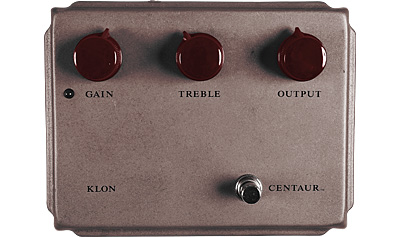
a Teese RMC3 wah, and a Klon Centaur. I also used a
1970's Fender Vibro-Champ on the [Back To Land] album. 
None of it is very rare, except maybe the Klon."

Ripley got satisfaction from his Klon Centuar
"Do you use any different gear live? I think I've seen an Ampeg and an SG?"
"Sometimes I play an SG, but otherwise it's the same."

"What type of SG are you playing on the stage?"
"It's an early 60's reissue."

"And did you get the Bigsby put on afterwards as an extra?"
"Nope."
Ripley onstage with his Gibson reissue

"How about amps, is that any different to than in the studio?"
I use a Twin [Reverb] most of the time. In the studio I've tried different things. 
I tend to like the Fender sound.

"Thanks for taking the time for the interview, man"
"No problem, dude."


You can find out more about Wooden Shjips' latest album, Back To Land, here.

Interview conducted by Dan Sharman.

Monday, 3 March 2014

The Citradels: Interivew

Hailing from Australia, drone-psych rockers, The Citradels, have been prolifically putting out music for the 4 years. Their ability to quickly write and put together songs is uncanny, and with their latest album just released, Droned And Rethroned, it can be seen as yet another improvement upon their sound. We caught up with the Citradels to hear more about how they put together their new experimental album... 

The Citadels at the FBI Social.

So, guys, who is in the band and who plays what?
Thomas De Vries - Guitar and Vocals
Curtis Goodfellow - Guitar and Vocals
Sam Heathcote - Bass
Archer Moore - Organ and Vocals
Connor Tolson - Drums

This is how the band performs live, however when it comes to recording it's whoever can give the best performance, as everyone in the band is capable of playing several instruments. When we were recording Droned and Rethroned, one of us may have had only a basic idea for a song, recording a bare scratch track and leaving space for other people's input. However some songs were almost entirely written and tracked by one person.

Where do you guys hail from?
The band was originally based in Geelong (Australia) but after about a year and several lineup changes the band relocated to Melbourne, were we've been for the past year and a half.

What guitars were used on the album?
We mainly used three different electrics; A 1966 Vox Phantom 12 string, a late '60s Tokai (a Gibson 335 copy) and a copy of a Vox Teardrop which was made by this guy in Melbourne. Some tracks also had a Yamaha acoustic on them, and the bass we used was a modified P bass with a jazz pickup and neck.

What amps and effects pedals were used on the album?
Vox Phantom 12-String
We used a Vox AC30VR, a Fender London Verb, a Fender Deville and an Alembic F1-X preamp for the bass. Some of the pedals used are EHX Hummingbird, Freeze and Holy Grail, Crossfire Tremolo, Boss RV3 Digital Reverb/Delay and OD3 Overdrive, ZVex Lo-Fi Loop Junkie and some other fuzz pedals, I know I've missed some. Curt has this really old analogue delay unit which is super cool and I have this D.I.Y. fuzzbox that's completely broken and makes all these fucked up squeals when you turn it on, so we used that bad boy as well. We did also do a heap of experimentation and explored different ways of recording guitar on this album, like running it straight into the desk with the gain flat out to try get that White Light/White Heat Sterling Morrison type sound.


What other instruments were used on the album?
We had a clear idea of how we wanted this album to sound. We picked twelve or so tracks that we believed best worked together and then worked on them each in detail. It kind of meant that some of the tracks that would have had a broader instrumental scope got left out this time around. So apart from the usual guitar, bass and drums, we used our Farfisa Bravo running through a heap of different effects and also a really old Gem upright organ for two tracks in particular. Sam laid down a fair bit of violin which was often manipulated in post-production to create drones and feedback. We also used a pungi (snake charmer), glockenspiel, harmonium and an array of percussion instruments.

Where was the album recorded?
Almost the entire of the album was recorded in one room at my house in Melbourne. It's a living room and shared practice space with my housemate's band. We have pretty much just done it this way since the first album. It's kind of the base for most of the things we do, we have all that is needed for us to record then and there, so it makes sense. On a couple of the tracks some additional overdubs for were done at Archie and Sam's place.

What have you learnt after recording the album?
Recording for this album was great. It's probably been our most collaborative album to date, but also the most refined and focused in terms of the overall sound. It's always great recording from home but after three albums in a row it seems like I've been recording and mixing an album for the last two years. We are going to move all our gear down to Curt's parent's beach house in June to record our fourth album. So it will have a pretty different sound and feel, but we're looking forward to the change. It also means that the entire band will be present for the recording sessions, whereas as at the moment it's very rare to have everyone there whilst we're tracking individual parts.

What is next for The Citradels?
We're currently finishing up writing tracks that will feature on the fourth album. At the same time we also have what could be called the fifth album or maybe an EP in the works. It's will be made up of acoustic tracks, so a lot of sitar, some tabla and more alternate instrumentation, maybe even a country song or two. This is something we're slowly putting together. As much as I'm glad to be taking a break from recording I also get edgy if I feel like I'm doing nothing, so it's going to be a slow process. About four songs are almost complete, I might upload one soon depending on how it's sounding. We are just looking forward to doing that and working on our live show. We have some really cool gigs coming up and will hopefully have a more extensive interstate tour later this year. We also have this little collab idea with our brothers (and sister), The Grease Arrestor that I want to see get up and running by midyear. I wont say to much but this idea is pretty new for us and I haven't seen it done before, so it's exciting.

Do you even psychedelic? would like to thank the band for taking the time to do this interview. 


Interview conducted by Dan Sharman on 03/03/2014.

Friday, 28 February 2014

Band Case File: The Myrrors

Ever wondered what Terry Riley would of sounded like if he'd ditched his Yamaha organ, picked up an electric guitar and turned the reverb up to 11? Well, wonder no more.The Myrrors, hailing from Arizona in the U.S, are a band which this blog has reviewed and interviewed several times before, the band being a pinnacle of the neo-psychedelia in my opinion. Get ready to experience a band that manages to capture the essence of the wilderness, and still make you feel right at home. 

The facts that you need to know:
  • Claira Safi (who has now left the band) - Bass, Electronics 
  • Grant Beyshau - Drums, Percussion 
  • Cesar Alatorre-Mena - Guitar, Vocals 
  • Nik Rayne - Vocals, Sitar, Piano, Percussion, Guitar, Harmonica 

The band in 2013.


Where do they come from?
Tuscon, Arizona, U.S.A.

What is there specific style?
Drone, desert psych-rock with Eastern influences. 

For Fans Of?
Electric Moon, Liquid Visions, Weird Owl, Night Beats and Shapes Have Fangs.

Their Labels?
The band has self-released its current works, but now has also gained the backing of several other, third-part record labels. These include: Fuzz Club Records, Merlin Nose Records, Rewolfed Gloom Records, and Strange Design Records. 

What Have They Released? 
One full-length LP, 'Burning Circles in the Sky' and a limited-edition cassette containing three live jams titled 'Solar Collector'. A two-sided, digital single has also been released, but is yet to enjoy a psychical edition, this contains the song 'Ramona Parra' b/w 'Nobody's Children'. 


Do You Even Psychedelic's review of Solar Collector can be found here: http://doyouevenpsychedelic.blogspot.co.uk/2014/01/the-myrrors-solar-collector-review.html

Our Interview with the band's guitarist, Nik Rayne, can be found here: http://doyouevenpsychedelic.blogspot.co.uk/2013/08/interviewgear-review-with-nik-rayne-of.html

Written by Dan Sharman.

Sunday, 1 September 2013

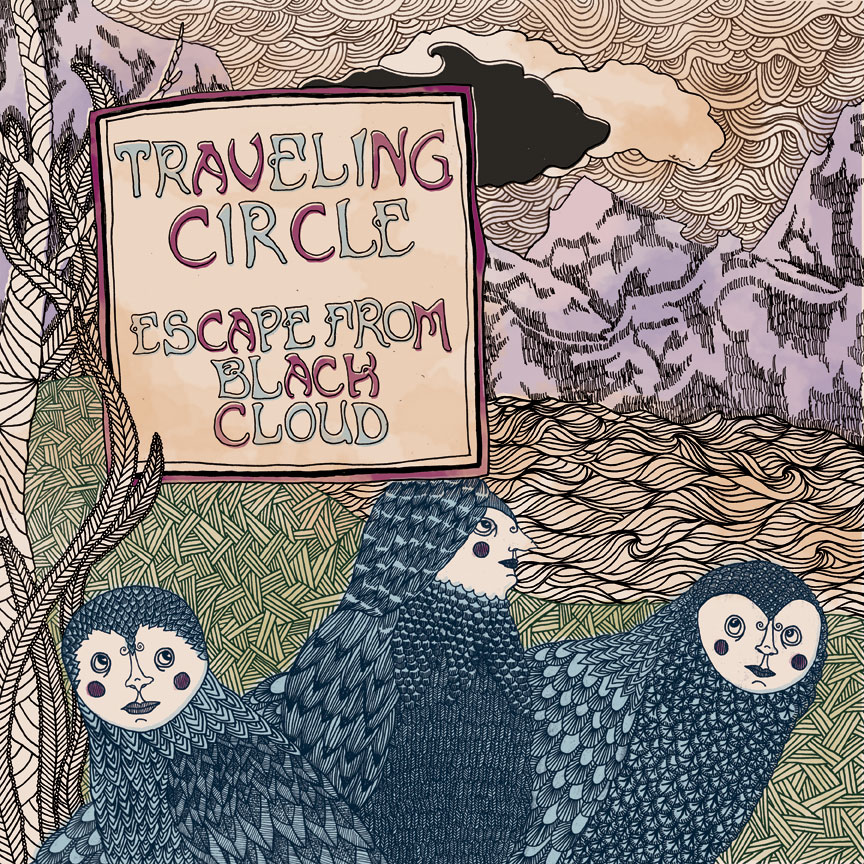
Escape From Black Cloud by Travelling Circle (album review)

Find yourself craving desert rock with a east-coast edge? Look no further than the new Traveling Circle LP, Escape From Black Cloud, ''an alchemy of disparate musical ingredients that will awaken your senses, clear the dormant catacombs of your mind and spin-cycle your neural fabric.'' - Review by Daniel Sharman.

Released in: 2012
Genre: Electric Progressive psychedelia/Desert rock
Record Label: Nasoni Records
Medium: Black Vinyl, Coloured Vinyl
Recorded at: Seaside Lounge in Brooklyn, NY

As of late, I've recently found myself craving some fresh, interesting desert rock to listen to, partly due to my recent interview with Nik Rayne of the fantastic Arizona desert-psych outfit, The Myrrors. To quote Dexter Romweber of the Flat Duo Jets, 'some things come your way when you want 'em', and much to my surprise, they have indeed it seems. 

Now, when I was first contacted by the Circle's drummer, Joshua Schultz, I wasn't quite sure what to expect judging from the band's name and ascetic, but like most bands, the music truly spoke volumes incommunicable by any of it's creators. Travelling Circle is one of those bands truly worthy of the phrase 'you've never heard of them but, you really, really should'. 

When I think Escape From Black Cloud, I think of a mellower, more melody-focused version of a Wooden Shjips LP. The outfit seem to evoke and forge the same sort of lulling, hypnotic vibe and spaced out grooves as the San Francisco four-piece but, by using a different mixture of ingredients.

Driving, sustained guitar leads are lush and plentiful in this album, often becoming the main basis for a songs rhythmic and melodic section, and rightly so, perfectly complementing the airy, falsetto vocals. It is clear that the band's guitarist, and the whole band in general for that matter, put a great amount of thought and care into their 'sound' and set-up, often being very tasteful with the effects imposed on the guitar sections and being sure not to over-expose instruments to modulating devices.

Even though opening tracks such as, Higher and The Candlelight Sway, provide intense, high-calibre bouts of fuzz and volume, later tracks such as, Newborn Shadow, adopt a calmer style, bestowing upon the listener a welcome change in pace and making the later tracks, which share the similar sound of the first two tracks, infinitely sweeter and more enjoyable.

It is also worth noting that most of the songs often tend to indulge themselves in their instrumental sections, normally dwelling on the relationship between the guitar and the drums. The drums, which, may I add, take a welcome approach tonally, not often heard on many rock records, opting for more of a Arabic, exotic sound.

If I had to harbour one complaint about the album, I would comment on the repetitiveness of the vocals, but due to the space-rock inclination of the band, simple lyrics tend to lend themselves to the rest of the music's rhythm section. And, even though the album does start to trail off towards the end, you have to understand, it's that kind of party.

If you find yourself, like me, yearning for a sizeable dose of solid, refreshing, effects-friendly desert-space rock, look now further than Escape From Black Cloud. Not only will this LP keep you entertained for a healthy 35 minutes, it's title track Higher has a vast amount of re-playability.

Critics Comment:  This album exceeds expectations in nearly all areas, begging the question, why is this the first we've heard of Travelling Circle? Get ready for a fully-stereo, fuzz driven thrill ride that will sit snugly into your Sunday evening and beyond...and yes, it's true bypass.

You can read Do You Even Psychedelic?'s interview with the band here!

You can find the whole of the new album here!

Like the band's Facebook page to keep up with events here!

Tuesday, 13 August 2013

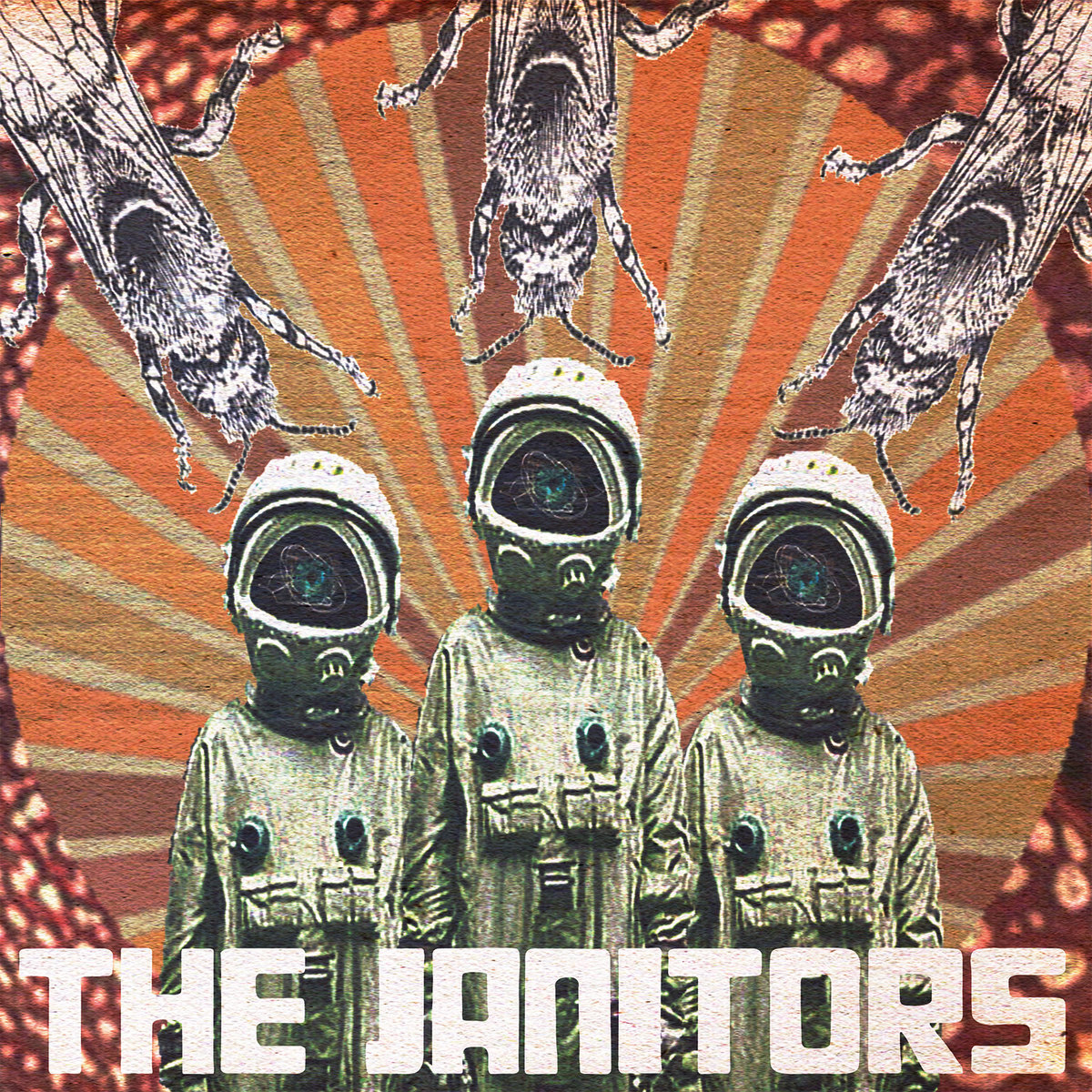
Drone Head - The Janitors (album review)


After Drone Head's release on Cardinal Fuzz Records on the 24th of June, D.Y.E.P catches up with the Swedish duo's latest sonic outing.

In the past, psychedelic music used to be a bit of an obscure obsession. I remember those driven pre-digital days, traipsing across town and dale in search of the latest EVA '60s garage comp, the hours spent lusting after the ridiculously expensive in-store used copy of Kaleidoscope's Beacon from Mars at the local hip record emporium, or the excitement I'd feel hearing "Tomorrow Never Knows" getting a rare spin on the radio. But with the dawning of the internet all that has changed, with today's generation becoming spoiled for choice; music of a psychedelic persuasion(in addition to just the original '60s stuff) is hard to miss any more and, as the sold out crowds at Tame Impala's US tour bear witness, it all suddenly threatens to become a bit too predictable. 


Music of a psychedelically inclined nature is what Sweden's, The Janitors, deliver in spadefuls. Their new double-LP Drone Head (Cardinal Fuzz, CFUL008), pairs the duo's two 2012 EP's Head Honcho and The Worker Drone Queen into one glorious gate-fold package on white vinyl. Hailing from Stockholm, this duo play what they claim is "Swedish evil shoegaze boogie woogie and stökpsych a go go!" Now my Swedish is a bit rusty these days, but last time I checked, stök roughly translates as "mess." Although I'm not entirely sure what mess-psych is, based on repeated listens to the menacing beauty that is Drone Head, I'm fairly certain these boys are fully cognizant of the messy and messed up legacies of their preferred musical genre. Indeed, they create a convincing and recognizably "psych" sound on this record, and one that fans of the likes of Spacemen 3 and Wooden Shjips will feel instantly familiar with.

Other reviewers have also taken note of the dark edge to this duo's distorted sound, their penchant for overdriven fuzz and reverb, the booming and sinuous throb of the low end that anchors the buzzing whip of the chainsaw whine throughout each of the record's songs. Take note: if you like your psych-rock heavy and dark, with a bit of demonic quarter-speed Bo Diddley pounding through the wash and wave of the froth and fuzz, then there's much to like here. Take the booming drum-driven intro of a song like "Strap Me Down" for example; its propulsive howl, perfectly timed pauses, and horror-echo vocals are so pitch-reminiscent of the epic psych melodrama of the Angels that you'll be sucked in from the outset. The song ends with a swirling, crashing tide of hypnotizing technicolored shimmer that puts me in mind of the sort of 'we-have-lift-off' opus that is the Austin Fab Four's luminous speciality. The last song on Drone Head is "Nevereverism," surely an homage--surely?--to the tune of nearly-the-same name on Directions To See A Ghost, and as it builds from a deliciously menacing stomp into a shredding, sparkling, guitar driven whirl we're snaking our way to the back of the blue bus and beyond. 


Listening to this, and tracks like the magisterial "A-Bow," all twelve-and-a-half elemental minutes of it, I'm dragged up that familiar kaleidoscopic psych-rock road right to the top of Holy Mountain, and it's clear that The Janitors ride their influences for all to hear. There are a few surprises on this record. The "Strssmmnt Remix" of "Coming Down" for instance, strays from the tried and tested formula of most of the rest of the songs for a slow hybrid burn that fuses electronica and shoegaze and puts me in mind of some of the more fanciful Tame Impala Innerspeaker remixes. And although I say "few surprises" like it's a bad thing, for a lot of psych-rock fans of course, 'few surprises' isn't a bad thing at all. We are after all fans of psychedelic rock. We enjoy its signature moves.

But isn't that surely a part of the problem of the aforementioned main-streaming of psych, it running the risk of becoming a set of musical cliches (reverberated vocals here, drone bliss-out there, backwards guitar bit over yonder, nirvanayada, yada), sonic transcendence rendered as corny cosmic shorthand? Holy Mountain as theme park. But also, wasn't it ever thus( . . . The Black Angels, Spacemen 3, and Wooden Shjips, after all . . .)? Or just maybe I'm one Binson Echorec shy of becoming a psych cynic? For all that, however, I'll always ever be the sucker for the epiphanic psychedelic catch phrase, and The Janitors do these up in style, and then some--and with heart too, it must be said. Simply put, if you love the flourishes of heavy psychedelic drone-esque spacerock and shoegaze then you'll absolutely love this record too.

Critics Rating: ★★★ - Good, no new suprises here, but ticks all the boxes for someone looking for straight up fuzz-heavy, drone rock to relax to at the end of a long day.


Written By Grow Fins (Phil Dickson) on 19:38, 13/08/2013.

Tuesday, 6 August 2013

The Flying Eyes Interview


The Flying Eyes are a psychedelic blues rock band from Baltimore, Maryland, USA, who brilliantly merge Jimi Hendrix style riffing, gravelly blues vocals and thumping drum beats with the atmospheric, acid-driven melodies of the sixties. After the recent release of their latest album, Lowlands, I caught up with Elias from the band to ask a little bit more about their thrilling sound...


The band's debut album.


D: What are some of your main influences, it is often cited that the band shares similar vocals with that of Jim Morrison?
E: Undoubtedly we are influenced by the psych-rock legends from the late 60s-early 70s such Pink Floyd, The Doors and especially Black Sabbath. This was the first music that inspired us to play rock n' roll. But throughout our career we've picked up plenty of modern influences like Sleep, The Black Angels, Spiritualized and The Black Keys which are now equally as important to our sound.
D: The new record, Lowlands showed more focus than the first two albums, was there a conscious effort to find that Flying Eyes sound?
E: Whenever we start recording a record we want to make it better than the last one and the process of making Lowlands was definitely more focused and disciplined than ever before. But we didn't consciously think about "finding a sound". We always try to let the song writing naturally evolve without trying to push it in a specific direction. That's why are albums have a diverse feel to them.

D: What genre would you say your current records fall under?
E: Again, we don't really consider our own genre when we write music. We don't really want to to be defined in terms that might limit us. We definitely draw influences from shoegaze, doom metal and stoner rock but I think the best way to describe us, although it's broad, is "psychedelic rock". We always use psychedelic effects combined with driving rock beats.
D: You get a good variety of tones on your recordings, what are some of the pieces of gear you use when in the studio?
E: We used a variety of interesting vintage and modern amps on Lowlands: Fender Bassman, Fender Twin Reverb, Fender Concert Amp, Fender Super Sonic…as you can we are big Fender fans. Producer Rob Girardi also turned us on to some awesome effects he had in the studio: an Echoplex tape delay pedal, an old Fender spring reverb box which was perfect for warm guitar reverb. I also was given an 80s analogue synthesizer, the Prophet 600, which I restored and used on the record for some textural sounds.
D: After Lowlands, what can we expect from the Flying Eyes?
E: Over the past 3 or so years we've been slowly working on a different sort of album that we plan to release next. It’s mostly an acoustic album driven by acoustic guitars, banjos, minimal percussion and vocal harmonies. I play a lot of harmonica. If you listen to “Leave It All Behind” on our album Done So Wrong you’ll get an idea of what it sounds like. Country, folk, blues with some subtle hints of psychedelia. It’s very different but we are proud of it. We also have about 5 new songs written for the next electric album, but no concrete plans yet to start recording that one.

D: If you weren't musicians, what jobs would you be doing?
E: Well, we all have other jobs. Me and Mac work in the same divey Mexican restaurant/bar, Adam works at the Wegman’s sub shop and Will is a professional plumber. If I wasn't doing music I would probably be involved in some other performing art, most likely theatre. I studied theatre from a very young age through college and I’m still involved whenever I can be. But with The Flying Eyes being so busy over the last few years I hardly have any extra time. But whatever happens I'm sure I’ll always be performing on-stage in come capacity.
The Band's latest album, Lowlands.
You can buy The Flying Eyes latest album, Lowlands, here.

Interview conducted by Dan Sharman on 20:45, 06/08/2013.

Thursday, 25 July 2013

Band Case File: Wooden Shjips

Ripley Johnson playing
his Eastwood Airline 3P.
Can space-rock also sound earthy? Listen to Wooden Shjips, the linchpins of the current San Francisco psychedelic scene, and the answer is definitely in the affirmative. The band's three albums show a great example of how Sci-Fi synthesisers, fuzz drenched guitars, driving bass-lines, pumping drum beats and reverb'd vocals can come together to make the freshest sounding space rock in years.

The facts about the band you need to know:

Who plays what?:

Ripley Johnson(second from left) - Guitar and Vocals
Omar Ahsanuddin(far left) - Drums
Dusty Jermier(far right) - Bass
Nash Whalen(second from right) - Keyboard/organ


Where do they come from?

San Francisco, U.S.A

What is their specific style?

Psychedelic rock, but more specifically, drone and space rock.

For fans of:

Their labels?

Their main labels include Holy Mountain, Thrill Jockey and Sick Thirst.
Some of their less used labels include Subpop, Mexican Summer and The Great Pop Supplement.

What have they released?

3 studio albums: Their self-titled debut(2007), Dos(2009) and West(2011).
They have also released several 10 and 7 inch vinyl singles, as well as two tour albums pressed only on vinyl.
In addition to the albums mentioned, Wooden Shjips have collected said vinyl singles onto two albums, 'Vol.1' and 'Vol.2', compilation albums which are more widely available and are available on formats such as CD and digital download.

(For a more complete Discography go here)


Time for the important part, the music; some of my personal favourites:

Black Smoke Rise from the album West (2011).


A Great track with a rhythm guitar so dripping with fuzz; it's enough to make your eyeballs melt! Also note the great backing synthesiser melody, which fattens up the track and really gives it a feel of elevation. Stick around until 1:27 for a soundscape seemingly comprised of laser beams which have been gathered, allowed to build up energy and then re-released as sound using just a Farfisa. It is safe to say, the sonic soloing from Nash and his keyboard, is enough to make up for the belated hypnotic mangling of Ripley Johnson.

Flight from the album West(2011).


Another stunner from the same album as Black Smoke Rise. This ethereal track once again taps into ideas of weightlessness and levitation, whilst at the same time showing the bands interest with themes and motifs such as exploration, an interest they have cited before as an inspiration behind West. The album taking it's name from the idea of the first white American settlers moving West to explore the Americas.


Down By The Sea from the album Dos(2007)
A song from Wooden Shjips that really lives up to their name, sailing down the river of your consciousness and dropping anchors at the heart of your mind. Much like a ship(or in this case a Shjip) lost out at sea on a stormy night, this track starts calmly and unsuspecting, going through 2 minutes and 48 seconds of peace before even the first note of a solo is played. Continuing with the sea metaphor, the track proceeds to slowly work its way up into a insane fuzz frenzy, much like the increasing wrath of rain, wind and thunder of a monsoon on a cold winter's night. This volatile, orgiastic solo progresses to dominate the rest of the song for the tracks remaining seven minutes, really making you feel as if you were in the centre of a storm, superb.

Just some other stuff worth knowing:
- Wooden Shjip's guitarist, Ripley Johnson, is in a great psychedelic two-piece, Moon Duo.
- The band have appeared at the AustinPsychFest, which is run by The Black Angels.
- Wooden Shjip's have a fantastic show on KEXP, currently on YouTube.
- Nash Whalen uses AceTones and Farfisas to record with, vintage organs that he processes     electronically. Onstage he plays an Alesis.

By Dan Sharman, 21:36, 25/07/2013.