Showing posts with label Interview. Show all posts

Saturday, 17 October 2015

Pandelindio Interview! / Entrevista Pandelindio!

Harking from over the hills and far away (Argentina to be precise), Pandelindio's shamanistic blend of meditational drone and invigorating Indian and Middle-Eastern currents provides a gateway to the Susurrus like no other. Employing a flute set up unique to the group, Pandelindio have a sound distinct from others, with a softer, more introspective edge than contemporary drone bands. Wishing to find out more, we caught up with the band to discover the roots, composition, and future of this most distinctive South American act. - Interview conducted by Daniel Sharman. 

Q.) Who is in the band and who plays what?

A.) At the moment we’re playing live as a trio. 

I play Bansuri, N’vike, Hulusi, Pythagorean harp and Bamboo clarinet. Juan Manuel Claro plays Dilruba, Duduk and Bawu and Corina Inveninato plays Tambura, Shruti box, Didgeridoo, Tibetan bowl and Citarina.

We’ve been playing kind of the same set with those instruments this year, but there are many other friends who participate in the recordings and have participated in previous gigs of Pandelindio.

Q.) It's great to interview a South American band, can you tell us more about where you are located?

A.) We're from Buenos Aires, Argentina and we live in Quilmes city. Quilmes is at the shore of the "Rio de la plata”, known as the widest river of the world. But in my opinion the most important thing in the city are friends and family. Besides that and sadly to say it's not much more interesting.


Q.) Pandelindio is an interesting name. What does it mean exactly?

A.) Pan del indio (Indian Bread) it’s an edible mushroom from the Patagonia. Its scientific name is Cyttaria harioti and it grows on trees, it’s orange and spongy like a tangerine,  I ate a few and it doesn't have much taste. The native tribes Yámanas o Mapuches they used to eat it fresh or elaborate an alcoholic beverage with it.


Q.) Who influences you as a group musically?

A.) Musically the album “Accordion and Voice” from Pauline Oliveros was a great influence at the time I discovered it and “Ayahuasca” from Pelt was another one. 

Also sharing time and playing with my friends like Golondrina Alfa (http://golondrinaalfa.bandcamp.com/) and O+yn (https://omasin.bandcamp.com/) gave me the shape of how to approach the improvisation.

Then, on a conceptual level of experimental music the documentary of the band “Reynols” Influenced me a lot. I believe it’s great, essential. (http://www.cinemargentino.com/films/914988456-buscando-a-reynols - English subs)


Q.) Your music focuses strongly on drone and drawn-out repetition. What attracts you to this compositional style?

A.) The hypnotic state that creates. To me the repetition it is fundamental to develop the melodic composition and sometimes the drone variations are enjoyable enough.

Q.) Are any of your songs ever pre-written or do you produce them on the spot as you play?

A.) I personally like to set up the scale or tonic in what we’re going to play and what instruments. The song or composition comes out always from an improvisation and then we develop that melody or form.


Q.) What part does Nature play in the creation of your music?

A.) A big one.

Some of my best experiences were listening to birds, crickets and toads singing altogether like a psychedelic trance orchestra or the bass drone of the water going down the creek bouncing on the walls. The natural environment always inspires me to listen deeply.
I enjoy a lot to do field recordings and use it in songs.


Q.) I noticed you described your music as meditational. Would you say music can ever help humans transcend the self?

A.) I don’t know if our music fits in the traditional genre of meditational music but it’s kind of my meditation. It helps me transmute emotions or quiet the mind but to transcend the self or take awareness I believe it takes more than music. Shamanic plants for instance, are a great ally of music and they work more intensive and deeply to take consciousness on the "self". But everyone has their own path so I couldn't say for sure.


Q.) Your music is incredibly rich in texture, can you tell us more about the instruments you use to create this?

A.) I'm a big fan of ethnic instruments, mostly from hindustani classical music. I don't have a musical heritage or try to represent any culture so I like to explore the combination of instruments from different places. For example, sometimes we mix the Mbira (African) with a drone-based Tambura (India) or we play the N'vike, which is a bowed string instrument from the indigenous "Toba" people, with the didgeridoo (aboriginal trumpet from Australia) and the Indian's violin Dilruba. Whatever sounds good to us, we try it.   


Q.) You're an instrument maker yourself. Can you tell about what that is like to do as a career, and how it impacts your music?

A.) I started to make instruments for myself. I made Didgeridoos for my friends and a couple of Bansuri (traverse flute from India) in pvc and later in bamboo. Luckily I found a passion in making instruments and I keep doing it since then. It's a great pleasure to make an instrument for someone, who's probably a musician or a music therapist. I'm very happy and grateful to make a living of it. I play mostly the instruments I made so it has a big impact on my music.


Q.) What is next for the band? Any upcoming albums or live shows?

A.) We have a new album coming out soon named "Mount Analogue". We recorded it with Pablo Picco and he also work very hard on the mix. And the amazing collaborations of musicians that I admire like Ulrich Rois from Bird People, the guitarist Mariano Rodriguez and my partner Corina Inveninato that was sick with fever when she recorded the piano tune. I'm very happy and excited and probably released it on tape next month. We're playing live this month on saturday 24th with Dario Dubois Duo (https://darioduboisduo.bandcamp.com/) an amazing drone-kraut band from Buenos Aires. And on november 6th we're playing next to Diente de Madera, one of my favourites band right now (https://dientedemadera.bandcamp.com/releases) and Nicolas Melmann too, I believe. He (http://melmann.bandcamp.com/) is a great minimal-ambient composer.

Do You Even Psychedelic? would like to thank Pandelindio for taking the time to complete this interview!

Make sure to like the band's Facebook page, and thus stay up to date, here.

Make sure to check out the band's work here. 

By Daniel Luke Sharman

Friday, 7 November 2014

Ray Russell Interview: Inside the Mind of Legendary Jazz Guitarist Ray Russell!

Boasting a career of more than 45 years of creative endeavour, Ray Russell's innovative and distinctly unique style of jazz fusion guitar work has inspired countless musicians and has produced a back-catalogue of work still appreciated today by jazz, rock, and folk, lovers around the world. I caught up with this living-legend to delve into his influences, playing, output, collaborations, and more. Interview conducted by Daniel Sharman.   

Dan: You mesh the influences of jazz and rock so seamlessly and have a tremendously distinct style of playing, who influences you and how do you allow these to culminate in your own playing?

Ray: The first three bands I was in professionally (John Barry 7, Georgie Fame and the Blue flames, Graham Bond organization) were all made up of  great musicians that played R&B and Jazz. The other common denominator is guitar! It's very hard not to influenced by modern music as the guitar is the main instrument in nearly everything.

Dan: Furthermore, were you directly influenced by any specific free, abstract jazz (or rock, etc.) musicians?

Ray: The first influence that comes to mind is John Coltrane. I wanted to recreate the sound and harmonic structures. I didn't see guitar as a softer sounding instrument. My take on J.C. Was that the guitar version would be a fiery full sound. Miles Davis, Jimmy Hendrix, Archie Shepp, lots of influences but apart from the harmonic knowledge is the Sonic signature. Gil Evans would say that “Everyone has their cry” . This means that people know it's you playing. Make things your own.


Dan: A large part of your discography was released as part of a 8 record deal you had with CBS, how did this come about and what caused them to sign you for 8 whole LPs?

Ray: I owe this to a forward thinking A&R man – David Howells. Unlike these days, the record companies would give the A&R guys a free hand.
David was really into starting the CBS realm label. This was his way of representing the new wave of British Jazz musicians. He did a great job In promoting the music, he was a true fan. Those albums have been re released and are still selling so the shelf life is still valid now.

Rock Workshop was a result of my R&B/rock influences. Again David heard a radio show we did for the BBC. It was a ten piece band that started with the late Alex Harvey as the vocalist. The solos could be very wild and break free of the rock format. This was a unique part of the bands identity.


Dan: You first stepped into the world of recording with your fantastic début album, 'Turn Circle', released in 1968. The album touched on cool modal jazz, and was much more restrained when compared to what was happening in the wider guitar scene at the time - Musicians like Jimi Hendrix trying to be anything but restrained. What motivated this album and can you describe the process of its creation?

Ray: Circle was a mix of styles. I was asked to play Footprints as it was a well known 'Jazz standard'. Some of the more 'cool' tunes were things we would play on BBC Jazz club. The programme felt more comfortable with a cooler approach. The album was a mix of both the older styles and a glimpse of things to come even though I might not have been aware of where it would go. It was music in flux.

Dan: The period of the seventies was a very creative time for you. 1971 saw one of your, in my opinion, best collaborations, which was with Bill Fay on his 'Time of Last Persecution'' LP. Can you tell us a bit about what your working with Bill on album was like, and how it came to happen?

Ray: That album has become legendary. You never think that thirty years later, people still love the way that album sounds. Bill encouraged us to play outside the circle and extend his songs. We recorded it over a weekend at Decca studios in North London. All live. I have just finished a new album with Bill for the Dead Oceans label. He writes great songs from the heart.


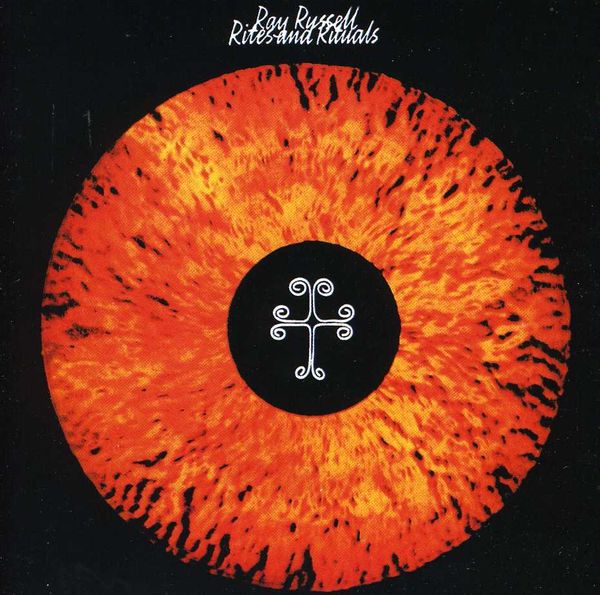
Dan: Furthermore, as you moved into the early seventies, your inclination on albums such as Dragon Hill, Rites and Rituals, and so on, became more angled towards crazy, free jazz. Can you tell what started this trend towards the abstract and how do you feel about your playing of this period?

Ray: How do I feel? It was a time of great learning. Playing that kind of music marginalised me with some of the Jazz community whereas the rock guys used to love it. I am proud of the albums produced then. Live at the ICA was a good album. RCA records reproduced a similar situation to CBS when Olav Wyper the head of A&R, made the ICA record and also an album by a more 'commercial' band we had at that time called 'Running man'.

Dan: Your playing repertoire of the time didn't just focus on free jazz, your 1972 band/album 'The Running Man' incorporated rock quite firmly into the mix. What inspired this album and did it allow you to express your rock influences in a way you hadn't had a chance to before that point?

Ray: The first sessions we did at Trident took a while to get the songs into the simulator feeling we had at rehearsals. We got there when we started to record All the fallen teen angels with Medicine Head. It was an interesting mix. We experimented with tracking a lot, going for a sound with lots of presence. I wasn't sure about some the outcomes originally but in retrospect, there was some good tracks. That record started with us being the Running men with a few arrows in our backs but by the end of a mix that was extremely loud, the wounds had healed.


Dan: Did you ever feel like you were ever going against the established mainstream jazz archetype over the course of your own releases? How do you feel about the state of modern jazz and free music?

Ray: An open approach to music would never cause a problem to the established or traditional way of things but living in the dark makes you question the light.

Dan: Speaking technologically for a moment, you've not always been the most conventional in your choice of music gear - for example, you are seen touting a Burns model guitar on front of your début 'Turn Circle' - How has your instrumental gear changed throughout your career? 

Ray: A Burns Trisonic which was my first solid body guitar. We went through a lot of great times together. Just guitar and amp at that time. I use a strat now. I have a great Bogner amp and some delay pedals for extra soundscaping. I have a few guitars but I seem to gravitate to the Fender as it just love the way it sounds even when it's unplugged you can tell by the wood it's going to be an empowering creative tool.


Dan: One last question that I've been dying to ask... On your 'Turn Circle' album, where does the 'A Day in the Life of a Slave of Lower Egypt' saga originate from?

Ray: I was reading about the pyramids and just thought that the music would depict some kind of ancient scene. It was a little tongue in cheek and the music was written first. Finding titles can be fun!

Do You Even Psychedelic? would like to issue a huge thank you to Ray for taking the time to complete this interview, and I would also like to wish him all the best on his and Bill Fay's new album.

Make sure to check out any of Ray's fantastic bands. These include: Nucleus, The Ray Russell Quartet, The Running Man, Ray's collaboration with Bill Fay, and his various other albums and works (especially those released as part of the CBS series).

Full discography of Ray's records with him as the main artist here, and make sure to look out for his and Bill Fay's new album.

Saturday, 25 October 2014

The Social End Products Interview with Sta Stea!

Tired of sampling your rock and roll only from the American school of musical psychedelia? Well, threat no more as we take a journey into the mind of Athens-based  quintet, The Social End Products. Drawing from the golden era of European psychedelia, the group captures all the pop rock spook-psych charm of the generation, but modernises it into a fresh, Greek package. - Interview conducted by Daniel Sharman.

Dan: Hi Sta, would you like to introduce yourself?

Sta: I'm the drummer and lead vocalist of the band. I also write the lyrics and some of the music.

Dan: Who else is in the band, and where is the band situated?

Sta: Manos plays guitar and performs vocals, Sara performs guitar/organ/vocals, Themos performs bass/vocals, and Myrto plays flute.


Dan: The band name 'Social End Products' is a very poignant name, where does it originate from?

Sta: We took our name from the title of the song of the same name by New Zealand's THE BLUESTARS. It represents us!

Dan: You guys have a sound reminiscent of the old, European psych groups of the sixties. What are some of your influences?

Sta: I would say we are more influenced from the American bands of the 60s and even more from the South American ones like Aguaturbia, Laghonia, etc. and also very much from sixties Greek bands like Peloma Bokiou, Nostradamos, etc. I feel those influences are more obvious to our new recordings.


Dan: On the band's facebook page, many interesting pieces of vintage gear can be seen. What guitars where you using on your latest sonic outing, Nutre Tu Cabeza?

Sta: Yes we love vintage instruments and when we find something interesting (and cheap) we buy it! Unfortunately, when we were recording our LP didn't have all that so we used a Fender Jaguar and a Fender Jazzmaster. But, on our new recordings we used our EKO guitar collection! 12-string Cobra, Auriga and Melody.


Dan: And how about amps, and effects?

Sta: We have a Fender Twin Reverb and an EKO Herald IV. We use a lot of effects, but think the most interesting is our sixties EKO Multitone.

From left to right: (top) Twin Reverb, EKO Cobra,
Fender Jaguar. (bottom) EKO Auriga. 

Dan: What about any other instruments, such as keyboards, drums, ect.?

Sta: We also use a 70s EKO Tiger Junior Organ.

Dan: Where did you record the latest album?

Sta: We do all our recording's at FEEDBACK SOUND STUDIO in Athens. It is the best for a vintage sound and our producer Harris Zourelidis is a true master of sound!!!


Dan: What have you learnt from Nutre Tu Cabeza's completion?

Sta: It's been very nice in the studio and tripping in the world of sound. Especially when you want to reproduce a sound of the past, you get to have a journey through time.


Dan: What's next for the Social end products?

Sta: We are recording new songs now. Two of them 'FEELS MUCH BETTER ON THE OTHER SIDE' and 'UTOPIA' will be on a 7". That will be out next month on Garden Of Dreams Records, the coolest label in Greece right now. The rest will be in a full LP, which is coming some time in spring. We also have some gigs this month with TOMORROWS TULIPS in Athens and with ALLAH-LAS in Thessaloniki.


Dan: Lastly, are there any shout-outs you would like to make?

Sta: We would like to thank everyone supporting us worldwide. 

Do You Even Psychedelic? would like to thank the band for taking the time to complete this interview.

Find the band's latest LP, and their past 7", here.

You can hear the single from the band's upcoming 7", Utopia, here.

Make sure to keep up to date with their Facebook page here.


Sunday, 5 October 2014

Spatial Moods Interview with Jorge Apaza!

Prepare fly to outer-space and sample the blues rock atmosphere with Lima-based band, Spatial Moods. Hailing from the same city as one of our other favourite experimental outfits here at DYEP?, Spatial Moods carry the same South American twang which makes their music especially refreshing to listen to. Hearing their current discography, which boasts two full-length LPs and one live EP, I decided to catch up with Arturo from the group to delve into their spaced-out warblings a little deeper... - Interview conducted by Daniel Sharman. 

Dan: Where do you hail from, and who is in the band?

Jorge: The band was formed spontaneously. Gean Karlo Vargas, and me have always been meeting to compose and plan musical projects. In October 2012, he moved to live in Italy, and a day before he travelled, we recorded all afternoon with Daniel Rojas on drums, to whom Gean Karlo had introduced me to weeks before. Gean Karlo Vargas was on bass, me on guitar/vocals, and Arturo on saxophone. We loved the recorded album and decided to go on. This was "Spatial Moods I". In November, Daniel [Rojas] moved to Cusco [Peru] and the same thing happened, two days before he travelled we recorded an entire album during the night, titled  "Spatial Moods II".  This time with Carlos Betancourt was on the bass. 

Only after, when I edited, and mixed the record did we invite him to the project and publish "Spatial Moods I" in February 2013. We invited Arturo Qnuispe to record saxophone and atmospheres for both albums. Months later, Spatial Moods was invited to a event of psychedelia, but neither Gean Karlo Vargas or Daniel Rojas were in Lima, so we got Fleks (bass) and Is Te (drums) and stayed in the band. Then the current alignment is: me on guitar and vocals, Fleks on bass, Is Te on drums, and Arturo on second guitar and percussion.


Dan: Lima, being the capital of Peru, must have a vibrant music scene. Can you tell us a bit about what it is like to be part of that?

Jorge: Many very good bands are appearing, and not just only in the capital. Basically on the internet all these bands get to be publicized. We have a good circle of friends' bands with which we share and organize small concerts. Even so I feel that the music culture in Peru is still very low, there is not much demand and not much gain. Basically what we do, we do for the love of art. This has a lot of good in it, because you get to see much love in what is done. The same members of the bands are the managers, they are the recorders, they are recorded in their homes, they burn their own CD's, and they drawn their own album covers. All with their own hands. And good, but the money is also a very important factor for the speed at which your band will be released.


Dan: Spatial Moods records its album's live, why is this the way you choose to do it?

Jorge: When I say live I am referring to all the musicians playing at the same time and no instrument by instrument overdubbing. It is the same on both recorded albums. Drums, guitar and bass all recorded at the same time. Subsequently we overdubbed our voices, effects, and other instruments that help us give more atmosphere to the recordings. Also, it is in our style that we communicate a lot bodily, with signs, etc. it seems to me that it all sounds more real and more sincere, despite the fact that it may be possible to make mistakes, but at the end of the day these mistakes will also give the recordings a very special touch.

Dan: You write outlines for your songs, but then jam the rest out live. Why is this, and can you tell us more about this style of writing?

Jorge: More or less what was going on is free jazz. We agree on the riffs and structure created previously and then we improvise on top of these giving signs for changes. So it was in that way we recorded our first album. Basically, we created a riff and then improvised around it.


Dan: Spatial Moods' sound is sort of blues rock meets proto-psych experimentation. What are some of your influences, and what inspired you to put a saxophone into the mix?

Jorge: Gean Karlo Vargas (bassist for the first album, Spatial Moods I) told me that when we were recording the first album he was thinking about the song "Dizzy Moods" by Charles Mingus. Listening to the recordings, I find that the bass resembles it, although with more space, which is why we call ourselves "Spatial Moods". With regard to my influences, I am greatly influenced by funk, experimental music,and the blues. Basically bands from  1960's and 1970's. The saxophone was subsequently recorded for filling in some gaps in the recordings and we applied lots of reverb to make it more atmospheric. The reason for adding it was precisely that Arturo had a saxophone available and we were thrilled to try it out in both the first album and the second was as well. Same with the recording of voices and keyboards.


Dan: Can you tell us how you decide on the names of the jams, or 'moods'?

Jorge: Yes, more or less what I am guided by is what I am hearing when I listen to the recordings, or what it makes me remember. We do not worry too much about the names. In the case of "Test", is so called because it is just that, a test, 100% improvisation. In the case of "Goodbye"  it was because it was the first to be recorded and the recording was like the "goodbye" to Gean Karlo Vargas, who moved away the next day.


Dan: What guitars were used in the albums?

Jorge: In the first album, my only electric guitar, a Japanese-built 1992 Stratocaster and Gean Karlo Vargas used his jazz bass. For the second album, I recorded with the same guitar and Carlos Betancourt recorded with a Ibanez Gio bass.

Dan: And amps and side effects?

Jorge: We use a Marshall JCM 2000 for the guitar, and for pedals we used a ProcoRat, Ibanez TS9, Boss DD3 and an Ibanez wah (WH10). For both albums, the bass used a Hartke HAS3500 and a wah, although I don't remember the model. For the second album it was just with the amp, without any effects. We placed the wah effect in some parts of the hour-long mixture.


Dan: What about other instruments, such as the far out sounds heard on tracks like 'mom'? 

Jorge: In the song "mom" the background sounds that are heard are only my own voices doing harmony with fairly reverberated signals. In several songs I did that and also I overdubbed with synthesizer sounds as in "angelic Moods" and "ouroboros Moods", which are the more experimental songs so to speak.

Dan: What is the next for Spatial Moods?

Jorge: The next step is new topics and further refine our songs for when we play live. Much of the songs are from bands of different alignments but the feeling is the same.

Do You Even Psychedelic? would like to thank Jorge for taking the time to complete the interview, and Arturo Alonso Quispe Velarde for setting everything up. 

You can find all of Spatial Moods' albums here for download.

Also remember to like the band's Facebook page to keep up to speed, here. 

Thursday, 21 August 2014

Beyond Beyond Is Beyond Interview with Mike Newman!

It's Friday again and time for another set of great insights from a man on the cusp of independent music labeldom. Beyond Beyond is Beyond's back-catalogue includes many stellar line-ups, and artists - from Prince Ruperts Drops and Mmoss & Quilt, to Do You Even Psychedelic? mainstays like Montibus Communitas and Kikaguka Moyo. Plus... Beyond Beyond is Beyond is a fucking cool name.
-----------------------------------------------------------------------------------------------------------
Dan: Hey Mike, Beyond Beyond is Beyond has kept on keeping on for quite a while now. When did it begin, and why did you choose to start a label?

Mike: Howdy, Daniel!  Yeah, we’re trucking along since 2012. The first release, Prince Rupert’s Drops Run Slow was released in November of that year. I had been doing my East Village Radio by the same name for a few years and after playing so much great new music and having so many great new bands doing sessions on the show, it dawned on me that I wanted to start a record label and help get this great music out to the world.

Dan: Triple B records has acts from across the globe, from Peru to Japan. Does your label try to be deliberate in the sounds it releases?

Mike: I think there is a definite thread in all the music that we release but the only strict guidelines we follow is that the music really has to blow us away in one way or another. It just turns out that it is so easy these days to hear music from all over the globe. And we have been absolutely blown away by some international bands that we just HAD to share with other people.


Dan: As I previously mentioned, you source artists from across the world. How do you normally source the acts you put out?

Mike: Like I said, it’s easy to hear music from anywhere at any time. We’ve sourced releases in many different ways, from stuff we stumbled on via Bandcamp to submissions from bands to having friends in amazing bands to hearing about stuff from a friend.

Dan: How does the collaboration between the label and band usually work?

Mike: It depends on the band, but typically there is a lot of emailing about every aspect: music, release dates, artwork, tours, etc. And then sometimes when all the logistics for a release are all done, then we can just chill with the band for a minute. And then the next album cycle starts! The bands we have worked with love making music and we loving listening to it and releasing records, so the work is fun and rewarding for all.


Dan: Beyond Beyond is Beyond tends to release its artists music on multiple mediums. If you had to choose from cassette, vinyl, or CD, what would you choose and why?

Mike: Vinyl. It’s just the ultimate for me and always has been since I was a wee lad. I like the ritual of listening to music on vinyl the best. But I use all of the above in my musical consumption. And I also love having the convenience of an iPod for subway trips and being able to carry around thousands of titles on one little device.

Dan: How do you normally decide on what is the right physical medium to put out a band's music on?

Mike: Most of our releases are put out on vinyl, CD and digi but then sometimes we’ll choose to put out something just on cassette/digital or just digital. Those are usually something that we love but need to test the audience on and see how people respond to the music.


Dan: Being so closely involved with record output, do you have a collection of your own? And, if so, what are some of your most prized pieces?

Mike: Oh, definitely. I’ve never been much of a collector of super rare high-priced vinyl but I have always had a collection. I did drop some coin on an album from a mid-70s band called Highway though. I really love it and was hoping that BBiB might do a reissue. Maybe one day. Another one in that category is a record from a band who made just one album in the late 60s and for some reason I had a copy of it that I listened to when I was like 8 years old. There has only been the one vinyl pressing of it, and I don’t want to give away the name just yet since BBiB will be reissuing it next year! Then there’s those beloved records that get played a lot because they are just part of my DNA: Jon Anderson’s first 3 solo albums get lots of play at my house, Ashra’s Correlations, Between’s And the Waters Opened, Alice Cooper’s Love It to Death and Special Forces, Man’s Back Into the Future, a few different Grateful Dead albums, Manfred Mann Chapter 3’s Volume 1, Bob Dylan’s Street Legal, Zappa’s One Size Fits All, Phil Collins’ Face Value, Ravi Shankar in New York, Yes albums and one I’ve listened to a ton lately is Freeman, Aaron Freeman (aka Gene Ween)’s new solo album. Fucking brilliant. And of course a bevy of other great records!

Dan: Additionally, with so many great acts being released on your label, what are some of your favourite, current releases?

Mike: Like I said, that new Freeman album is bonkers good. I’m always digging Trouble in Mind releases. Krakatau’s Water Near a Bridge is a new great one. Also Verma’s Sunrunner. I love everything Kikagaku Moyo’s done and am psyched to get the first album and Mammatus Clouds on vinyl finally when the Captcha releases touch down in September. Quilt’s Held In Splendor is amazing, as is Marian McLaughlin’s Derive. New Apache Dropout (Heavy Window) is great. The list goes on thankfully.


Dan: Is there any advice you would like to impart to prospective label owners?

Mike: I guess I’d say have fun and find stuff to release that you truly love.

Dan: Lastly, how do you feel about the digital age, and the way it has shaped music listening culture? 

Mike: I feel fine about it. There is so much good music being made these days but I guess it’s harder to wade through the mountains of not-so-good stuff. That’s why I think it’s important to have trusted sources (like good record labels what you can trust) to help you find just the jams you’re looking for. Digital is fine but I’ll also never be without a turntable.

Dan: P.S: Who did the fantastic artwork on your signature logo?

Mike: That was done by my magical friend, Macho Mel Shimkovitz. She is an artist and all-around cool and great person. She also inspired the name Beyond Beyond is Beyond from one of her art pieces that I fell in love with and proudly display on a wall at home. AND she designed the BBiB website. This is her tumblr: http://macho-mel.tumblr.com/.
-----------------------------------------------------------------------------------------------------------

Check out Beyond Beyond is Beyond's full catalogue: here - at their website, here - at their Bandcamp, or here - at their Big Cartel page.

Also make sure to check out their Facebook to keep up to date here.

Do You Even Psychedelic? Would like to thank Mike for taking the time to do the interview. 

Interview conducted by Daniel Sharman.