Showing posts with label space rock. Show all posts

Saturday, 18 October 2014

The Cosmic Dead: The Cosmic Dead Début Review

Nik Turner might be touring with legendary space rock heavy-weights Hawkwind once again, but The Cosmic Dead are here to show that 
[inter-]stellar music might be closer to this point in time than you might of first thought. - Review by Daniel Sharman.

Released in: 9th May 2011
Genre: New Age Death Psychedelia
Record Label: Cardinal Fuzz, Paradigms Recordings 
Medium: Double Vinyl, CD, Digital Download
Recorded at: The Moonshaker

From the outset, this début captures all of the wild, visceral impact of a wilderness psychedelia record, but repackages it in a brand-new, space rock-drenched form. The album features a number of musicians, but all of the vocal and guitar work is delivered by cosmic mainstay, James T McKay, whom, much like the rest of the album's musicians, understands the importance of playing just what the jam calls for - gentle and nuanced at times, forward and blatant at others. Drawing heavily from space rock icons of yesteryear such as Hawkwind and Gong, whilst simultaneously remaining fresh and unique in light of its contemporaries (e.g: Electric Moon, Mugstar, Carlton Melton, etc.), The Cosmic Dead's début LP brings a whole new brand of moribund excitement to the psychedelic rock stage.

The album kicks off with 18 minute opener, The Black Rabbit (a possible Jefferson Airplane reference?), which starts off with a synthesiser raga of sorts (once again reminiscent of Carlton Melton), one which provides a gentle start to the album whilst also giving it a feeling of levitation. After this three minute introduction drums, bass, and guitar explode into the mix, now accompanying the floating synthesiser work. The guitar playing is wild and unruly, throwing distorted licks up from the grounded arena of the bass and drums into the air so they may sit next to the work of the keys. Additionally, the guitar work on 'Black Rabbit' is somewhat more planned than on the other tracks, all the playing being performed around a central melodic theme. Near the end of the track, bass and drums are also allowed time for experimentation along with guitar and synth. 

Moving onwards, the album's second track, Spice Melange Spectrum, seems to adopt a more conventional length when compared to the débuts other track's. Moreover, 'Spice Melange Spectrum' is perhaps the most intriguingly titled track of the album, receiving kudos from for its implementation of obscure, French vocabulary. McKay's use of Wah on this track is used fruitfully to create whirling sonic landscapes, once again driving home the feelings of levity and etherealness. This guttural guitar work should have immediate appeal to fans of Ripley Johnson's playing on the early Wooden Shjips records, and also Nik Rayne's playing on the latest Myrrors release, Solar Collector (review here). 

The track's third album, Infinite Death of The Godhead (another intriguingly titled track), returns to a more familiar duration (13:44 minutes). This track is more focused on the power of the bass and drums, especially in combination, and appears to be almost minimalist in their repetitive, droning attack. Furthermore, vocal drones are provided by McKay himself, giving validity to the previously made Gong comparisons. Also, thanks to the continuing onslaught of the bass and drums, McKay's guitar playing is given the chance to take on a slightly more spaghetti western edge with waving, sinuous chords working their way in and out throughout the song, aided by classic surf lines of sharp, short bursts of twangy, reverberated action.   

Lastly, clocking in at 40 minutes, 'Father Sky, Mother Earth' (the title 'Mother Earth' further evoking notions of the aforementioned wilderness rock connotation) constitutes half of the 80 minute runtime of the album, and so demands an analysis on the merit of its duration alone. The track is a delicately jammed out closer, utilising a great, panning synthesiser sound throughout to give the track a true feeling of levitation. The track also relies greatly on the inventive work of bassist, Omar Aborida, to give structure and tonal nuance to the lengthy instrumental, the bassline ranging from a repetitive, driving sonic-propellant, to a droning, fuzzy backdrop. The drumming on the track is of a similar nature to that of the bass, providing a range of percussive voices, whilst still perpetuating a composed, unintruded atmosphere. This instrumentation creates an ideal stage for the once again, classically psychedelic guitar work and vocals of McKay, which makes use of a full range of effects, giving the album's ending a familiarly rock and roll feel. 

Critic's Comment: This may be a dense, lengthy review of a lengthy album, but don't believe for one minute that this début's content is anything but light and ethereal. This album is a perfect example of how focusing on producing the music that you want to create, with no concerned thoughts for conventional standards such as condensed duration, is perhaps the best way to produce quality music that will remain timeless and enjoyable no matter how many times it is played. Do yourself a favour this Saturday and sit back, eat a banana, and enjoy this one hell of a record.

Sunday, 5 October 2014

Spatial Moods Interview with Jorge Apaza!

Prepare fly to outer-space and sample the blues rock atmosphere with Lima-based band, Spatial Moods. Hailing from the same city as one of our other favourite experimental outfits here at DYEP?, Spatial Moods carry the same South American twang which makes their music especially refreshing to listen to. Hearing their current discography, which boasts two full-length LPs and one live EP, I decided to catch up with Arturo from the group to delve into their spaced-out warblings a little deeper... - Interview conducted by Daniel Sharman. 

Dan: Where do you hail from, and who is in the band?

Jorge: The band was formed spontaneously. Gean Karlo Vargas, and me have always been meeting to compose and plan musical projects. In October 2012, he moved to live in Italy, and a day before he travelled, we recorded all afternoon with Daniel Rojas on drums, to whom Gean Karlo had introduced me to weeks before. Gean Karlo Vargas was on bass, me on guitar/vocals, and Arturo on saxophone. We loved the recorded album and decided to go on. This was "Spatial Moods I". In November, Daniel [Rojas] moved to Cusco [Peru] and the same thing happened, two days before he travelled we recorded an entire album during the night, titled  "Spatial Moods II".  This time with Carlos Betancourt was on the bass. 

Only after, when I edited, and mixed the record did we invite him to the project and publish "Spatial Moods I" in February 2013. We invited Arturo Qnuispe to record saxophone and atmospheres for both albums. Months later, Spatial Moods was invited to a event of psychedelia, but neither Gean Karlo Vargas or Daniel Rojas were in Lima, so we got Fleks (bass) and Is Te (drums) and stayed in the band. Then the current alignment is: me on guitar and vocals, Fleks on bass, Is Te on drums, and Arturo on second guitar and percussion.


Dan: Lima, being the capital of Peru, must have a vibrant music scene. Can you tell us a bit about what it is like to be part of that?

Jorge: Many very good bands are appearing, and not just only in the capital. Basically on the internet all these bands get to be publicized. We have a good circle of friends' bands with which we share and organize small concerts. Even so I feel that the music culture in Peru is still very low, there is not much demand and not much gain. Basically what we do, we do for the love of art. This has a lot of good in it, because you get to see much love in what is done. The same members of the bands are the managers, they are the recorders, they are recorded in their homes, they burn their own CD's, and they drawn their own album covers. All with their own hands. And good, but the money is also a very important factor for the speed at which your band will be released.


Dan: Spatial Moods records its album's live, why is this the way you choose to do it?

Jorge: When I say live I am referring to all the musicians playing at the same time and no instrument by instrument overdubbing. It is the same on both recorded albums. Drums, guitar and bass all recorded at the same time. Subsequently we overdubbed our voices, effects, and other instruments that help us give more atmosphere to the recordings. Also, it is in our style that we communicate a lot bodily, with signs, etc. it seems to me that it all sounds more real and more sincere, despite the fact that it may be possible to make mistakes, but at the end of the day these mistakes will also give the recordings a very special touch.

Dan: You write outlines for your songs, but then jam the rest out live. Why is this, and can you tell us more about this style of writing?

Jorge: More or less what was going on is free jazz. We agree on the riffs and structure created previously and then we improvise on top of these giving signs for changes. So it was in that way we recorded our first album. Basically, we created a riff and then improvised around it.


Dan: Spatial Moods' sound is sort of blues rock meets proto-psych experimentation. What are some of your influences, and what inspired you to put a saxophone into the mix?

Jorge: Gean Karlo Vargas (bassist for the first album, Spatial Moods I) told me that when we were recording the first album he was thinking about the song "Dizzy Moods" by Charles Mingus. Listening to the recordings, I find that the bass resembles it, although with more space, which is why we call ourselves "Spatial Moods". With regard to my influences, I am greatly influenced by funk, experimental music,and the blues. Basically bands from  1960's and 1970's. The saxophone was subsequently recorded for filling in some gaps in the recordings and we applied lots of reverb to make it more atmospheric. The reason for adding it was precisely that Arturo had a saxophone available and we were thrilled to try it out in both the first album and the second was as well. Same with the recording of voices and keyboards.


Dan: Can you tell us how you decide on the names of the jams, or 'moods'?

Jorge: Yes, more or less what I am guided by is what I am hearing when I listen to the recordings, or what it makes me remember. We do not worry too much about the names. In the case of "Test", is so called because it is just that, a test, 100% improvisation. In the case of "Goodbye"  it was because it was the first to be recorded and the recording was like the "goodbye" to Gean Karlo Vargas, who moved away the next day.


Dan: What guitars were used in the albums?

Jorge: In the first album, my only electric guitar, a Japanese-built 1992 Stratocaster and Gean Karlo Vargas used his jazz bass. For the second album, I recorded with the same guitar and Carlos Betancourt recorded with a Ibanez Gio bass.

Dan: And amps and side effects?

Jorge: We use a Marshall JCM 2000 for the guitar, and for pedals we used a ProcoRat, Ibanez TS9, Boss DD3 and an Ibanez wah (WH10). For both albums, the bass used a Hartke HAS3500 and a wah, although I don't remember the model. For the second album it was just with the amp, without any effects. We placed the wah effect in some parts of the hour-long mixture.


Dan: What about other instruments, such as the far out sounds heard on tracks like 'mom'? 

Jorge: In the song "mom" the background sounds that are heard are only my own voices doing harmony with fairly reverberated signals. In several songs I did that and also I overdubbed with synthesizer sounds as in "angelic Moods" and "ouroboros Moods", which are the more experimental songs so to speak.

Dan: What is the next for Spatial Moods?

Jorge: The next step is new topics and further refine our songs for when we play live. Much of the songs are from bands of different alignments but the feeling is the same.

Do You Even Psychedelic? would like to thank Jorge for taking the time to complete the interview, and Arturo Alonso Quispe Velarde for setting everything up. 

You can find all of Spatial Moods' albums here for download.

Also remember to like the band's Facebook page to keep up to speed, here. 

Sunday, 1 September 2013

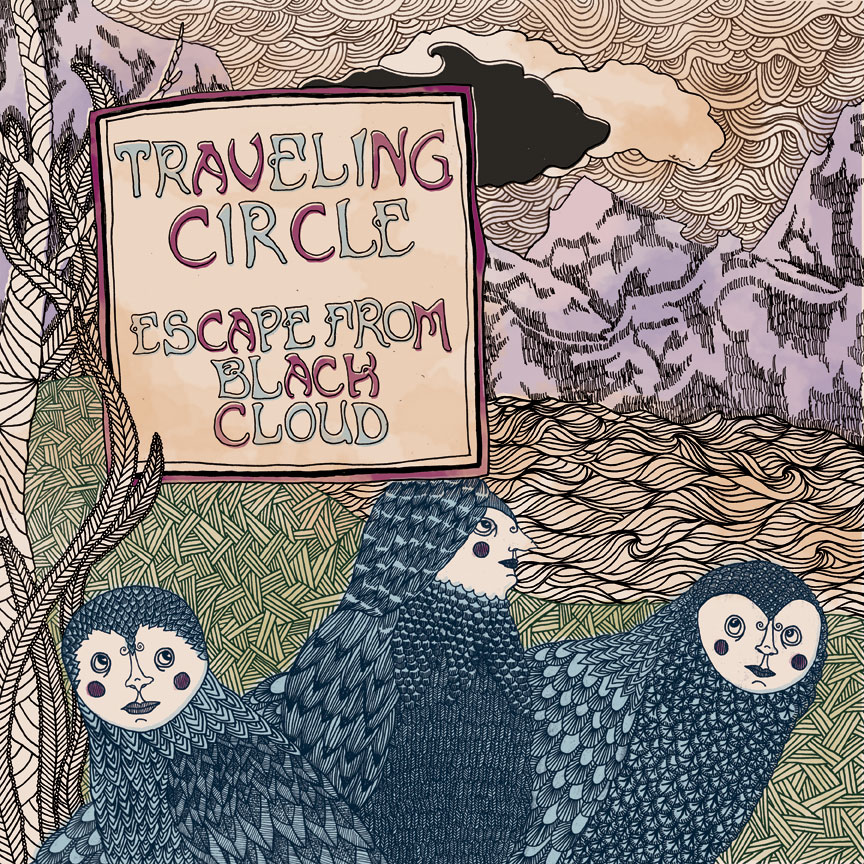
Escape From Black Cloud by Travelling Circle (album review)

Find yourself craving desert rock with a east-coast edge? Look no further than the new Traveling Circle LP, Escape From Black Cloud, ''an alchemy of disparate musical ingredients that will awaken your senses, clear the dormant catacombs of your mind and spin-cycle your neural fabric.'' - Review by Daniel Sharman.

Released in: 2012
Genre: Electric Progressive psychedelia/Desert rock
Record Label: Nasoni Records
Medium: Black Vinyl, Coloured Vinyl
Recorded at: Seaside Lounge in Brooklyn, NY

As of late, I've recently found myself craving some fresh, interesting desert rock to listen to, partly due to my recent interview with Nik Rayne of the fantastic Arizona desert-psych outfit, The Myrrors. To quote Dexter Romweber of the Flat Duo Jets, 'some things come your way when you want 'em', and much to my surprise, they have indeed it seems. 

Now, when I was first contacted by the Circle's drummer, Joshua Schultz, I wasn't quite sure what to expect judging from the band's name and ascetic, but like most bands, the music truly spoke volumes incommunicable by any of it's creators. Travelling Circle is one of those bands truly worthy of the phrase 'you've never heard of them but, you really, really should'. 

When I think Escape From Black Cloud, I think of a mellower, more melody-focused version of a Wooden Shjips LP. The outfit seem to evoke and forge the same sort of lulling, hypnotic vibe and spaced out grooves as the San Francisco four-piece but, by using a different mixture of ingredients.

Driving, sustained guitar leads are lush and plentiful in this album, often becoming the main basis for a songs rhythmic and melodic section, and rightly so, perfectly complementing the airy, falsetto vocals. It is clear that the band's guitarist, and the whole band in general for that matter, put a great amount of thought and care into their 'sound' and set-up, often being very tasteful with the effects imposed on the guitar sections and being sure not to over-expose instruments to modulating devices.

Even though opening tracks such as, Higher and The Candlelight Sway, provide intense, high-calibre bouts of fuzz and volume, later tracks such as, Newborn Shadow, adopt a calmer style, bestowing upon the listener a welcome change in pace and making the later tracks, which share the similar sound of the first two tracks, infinitely sweeter and more enjoyable.

It is also worth noting that most of the songs often tend to indulge themselves in their instrumental sections, normally dwelling on the relationship between the guitar and the drums. The drums, which, may I add, take a welcome approach tonally, not often heard on many rock records, opting for more of a Arabic, exotic sound.

If I had to harbour one complaint about the album, I would comment on the repetitiveness of the vocals, but due to the space-rock inclination of the band, simple lyrics tend to lend themselves to the rest of the music's rhythm section. And, even though the album does start to trail off towards the end, you have to understand, it's that kind of party.

If you find yourself, like me, yearning for a sizeable dose of solid, refreshing, effects-friendly desert-space rock, look now further than Escape From Black Cloud. Not only will this LP keep you entertained for a healthy 35 minutes, it's title track Higher has a vast amount of re-playability.

Critics Comment:  This album exceeds expectations in nearly all areas, begging the question, why is this the first we've heard of Travelling Circle? Get ready for a fully-stereo, fuzz driven thrill ride that will sit snugly into your Sunday evening and beyond...and yes, it's true bypass.

You can read Do You Even Psychedelic?'s interview with the band here!

You can find the whole of the new album here!

Like the band's Facebook page to keep up with events here!

Tuesday, 13 August 2013

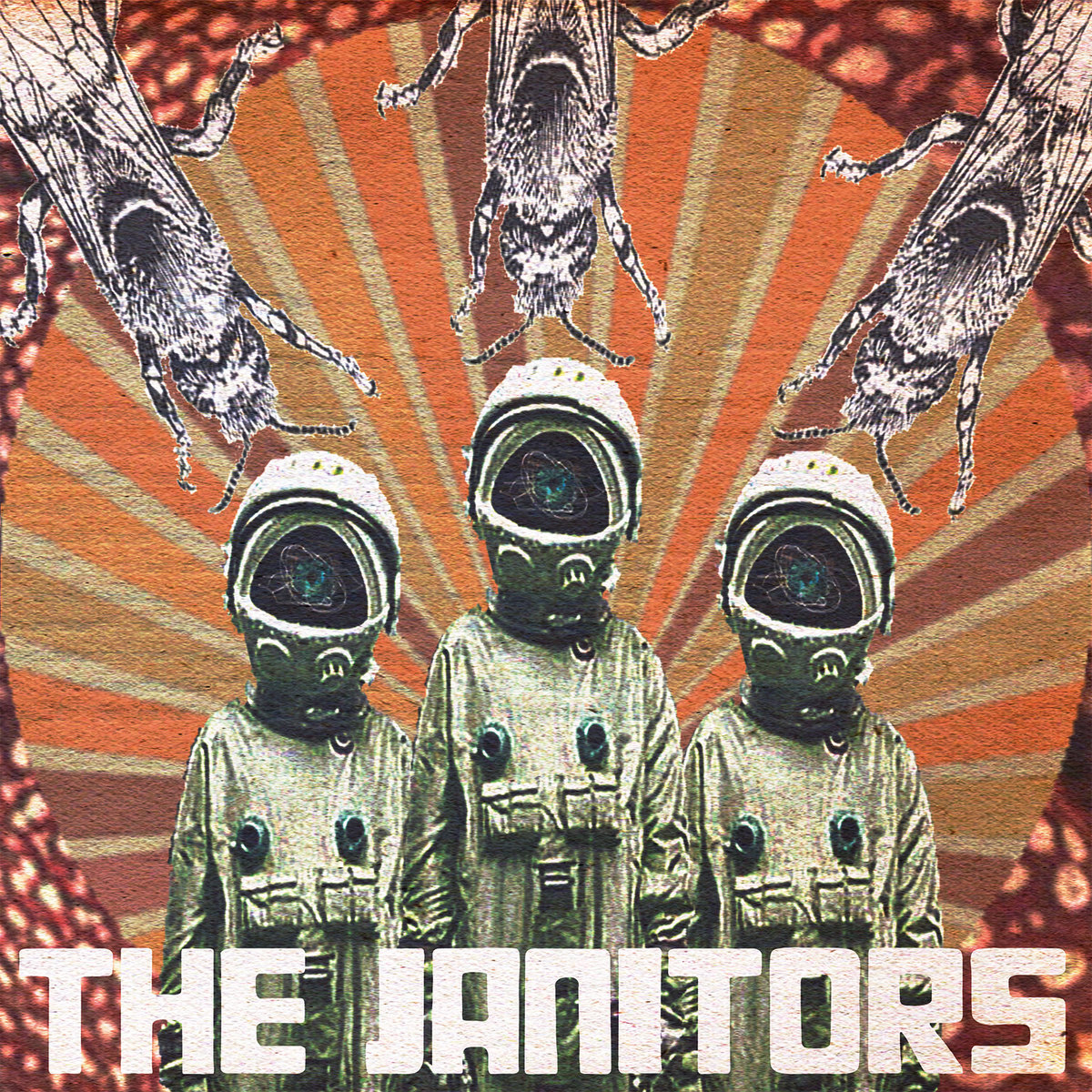
Drone Head - The Janitors (album review)


After Drone Head's release on Cardinal Fuzz Records on the 24th of June, D.Y.E.P catches up with the Swedish duo's latest sonic outing.

In the past, psychedelic music used to be a bit of an obscure obsession. I remember those driven pre-digital days, traipsing across town and dale in search of the latest EVA '60s garage comp, the hours spent lusting after the ridiculously expensive in-store used copy of Kaleidoscope's Beacon from Mars at the local hip record emporium, or the excitement I'd feel hearing "Tomorrow Never Knows" getting a rare spin on the radio. But with the dawning of the internet all that has changed, with today's generation becoming spoiled for choice; music of a psychedelic persuasion(in addition to just the original '60s stuff) is hard to miss any more and, as the sold out crowds at Tame Impala's US tour bear witness, it all suddenly threatens to become a bit too predictable. 


Music of a psychedelically inclined nature is what Sweden's, The Janitors, deliver in spadefuls. Their new double-LP Drone Head (Cardinal Fuzz, CFUL008), pairs the duo's two 2012 EP's Head Honcho and The Worker Drone Queen into one glorious gate-fold package on white vinyl. Hailing from Stockholm, this duo play what they claim is "Swedish evil shoegaze boogie woogie and stökpsych a go go!" Now my Swedish is a bit rusty these days, but last time I checked, stök roughly translates as "mess." Although I'm not entirely sure what mess-psych is, based on repeated listens to the menacing beauty that is Drone Head, I'm fairly certain these boys are fully cognizant of the messy and messed up legacies of their preferred musical genre. Indeed, they create a convincing and recognizably "psych" sound on this record, and one that fans of the likes of Spacemen 3 and Wooden Shjips will feel instantly familiar with.

Other reviewers have also taken note of the dark edge to this duo's distorted sound, their penchant for overdriven fuzz and reverb, the booming and sinuous throb of the low end that anchors the buzzing whip of the chainsaw whine throughout each of the record's songs. Take note: if you like your psych-rock heavy and dark, with a bit of demonic quarter-speed Bo Diddley pounding through the wash and wave of the froth and fuzz, then there's much to like here. Take the booming drum-driven intro of a song like "Strap Me Down" for example; its propulsive howl, perfectly timed pauses, and horror-echo vocals are so pitch-reminiscent of the epic psych melodrama of the Angels that you'll be sucked in from the outset. The song ends with a swirling, crashing tide of hypnotizing technicolored shimmer that puts me in mind of the sort of 'we-have-lift-off' opus that is the Austin Fab Four's luminous speciality. The last song on Drone Head is "Nevereverism," surely an homage--surely?--to the tune of nearly-the-same name on Directions To See A Ghost, and as it builds from a deliciously menacing stomp into a shredding, sparkling, guitar driven whirl we're snaking our way to the back of the blue bus and beyond. 


Listening to this, and tracks like the magisterial "A-Bow," all twelve-and-a-half elemental minutes of it, I'm dragged up that familiar kaleidoscopic psych-rock road right to the top of Holy Mountain, and it's clear that The Janitors ride their influences for all to hear. There are a few surprises on this record. The "Strssmmnt Remix" of "Coming Down" for instance, strays from the tried and tested formula of most of the rest of the songs for a slow hybrid burn that fuses electronica and shoegaze and puts me in mind of some of the more fanciful Tame Impala Innerspeaker remixes. And although I say "few surprises" like it's a bad thing, for a lot of psych-rock fans of course, 'few surprises' isn't a bad thing at all. We are after all fans of psychedelic rock. We enjoy its signature moves.

But isn't that surely a part of the problem of the aforementioned main-streaming of psych, it running the risk of becoming a set of musical cliches (reverberated vocals here, drone bliss-out there, backwards guitar bit over yonder, nirvanayada, yada), sonic transcendence rendered as corny cosmic shorthand? Holy Mountain as theme park. But also, wasn't it ever thus( . . . The Black Angels, Spacemen 3, and Wooden Shjips, after all . . .)? Or just maybe I'm one Binson Echorec shy of becoming a psych cynic? For all that, however, I'll always ever be the sucker for the epiphanic psychedelic catch phrase, and The Janitors do these up in style, and then some--and with heart too, it must be said. Simply put, if you love the flourishes of heavy psychedelic drone-esque spacerock and shoegaze then you'll absolutely love this record too.

Critics Rating: ★★★ - Good, no new suprises here, but ticks all the boxes for someone looking for straight up fuzz-heavy, drone rock to relax to at the end of a long day.


Written By Grow Fins (Phil Dickson) on 19:38, 13/08/2013.

Thursday, 25 July 2013

Band Case File: Wooden Shjips

Ripley Johnson playing
his Eastwood Airline 3P.
Can space-rock also sound earthy? Listen to Wooden Shjips, the linchpins of the current San Francisco psychedelic scene, and the answer is definitely in the affirmative. The band's three albums show a great example of how Sci-Fi synthesisers, fuzz drenched guitars, driving bass-lines, pumping drum beats and reverb'd vocals can come together to make the freshest sounding space rock in years.

The facts about the band you need to know:

Who plays what?:

Ripley Johnson(second from left) - Guitar and Vocals
Omar Ahsanuddin(far left) - Drums
Dusty Jermier(far right) - Bass
Nash Whalen(second from right) - Keyboard/organ


Where do they come from?

San Francisco, U.S.A

What is their specific style?

Psychedelic rock, but more specifically, drone and space rock.

For fans of:

Their labels?

Their main labels include Holy Mountain, Thrill Jockey and Sick Thirst.
Some of their less used labels include Subpop, Mexican Summer and The Great Pop Supplement.

What have they released?

3 studio albums: Their self-titled debut(2007), Dos(2009) and West(2011).
They have also released several 10 and 7 inch vinyl singles, as well as two tour albums pressed only on vinyl.
In addition to the albums mentioned, Wooden Shjips have collected said vinyl singles onto two albums, 'Vol.1' and 'Vol.2', compilation albums which are more widely available and are available on formats such as CD and digital download.

(For a more complete Discography go here)


Time for the important part, the music; some of my personal favourites:

Black Smoke Rise from the album West (2011).


A Great track with a rhythm guitar so dripping with fuzz; it's enough to make your eyeballs melt! Also note the great backing synthesiser melody, which fattens up the track and really gives it a feel of elevation. Stick around until 1:27 for a soundscape seemingly comprised of laser beams which have been gathered, allowed to build up energy and then re-released as sound using just a Farfisa. It is safe to say, the sonic soloing from Nash and his keyboard, is enough to make up for the belated hypnotic mangling of Ripley Johnson.

Flight from the album West(2011).


Another stunner from the same album as Black Smoke Rise. This ethereal track once again taps into ideas of weightlessness and levitation, whilst at the same time showing the bands interest with themes and motifs such as exploration, an interest they have cited before as an inspiration behind West. The album taking it's name from the idea of the first white American settlers moving West to explore the Americas.


Down By The Sea from the album Dos(2007)
A song from Wooden Shjips that really lives up to their name, sailing down the river of your consciousness and dropping anchors at the heart of your mind. Much like a ship(or in this case a Shjip) lost out at sea on a stormy night, this track starts calmly and unsuspecting, going through 2 minutes and 48 seconds of peace before even the first note of a solo is played. Continuing with the sea metaphor, the track proceeds to slowly work its way up into a insane fuzz frenzy, much like the increasing wrath of rain, wind and thunder of a monsoon on a cold winter's night. This volatile, orgiastic solo progresses to dominate the rest of the song for the tracks remaining seven minutes, really making you feel as if you were in the centre of a storm, superb.

Just some other stuff worth knowing:
- Wooden Shjip's guitarist, Ripley Johnson, is in a great psychedelic two-piece, Moon Duo.
- The band have appeared at the AustinPsychFest, which is run by The Black Angels.
- Wooden Shjip's have a fantastic show on KEXP, currently on YouTube.
- Nash Whalen uses AceTones and Farfisas to record with, vintage organs that he processes     electronically. Onstage he plays an Alesis.

By Dan Sharman, 21:36, 25/07/2013.